10 Beautiful Dutch Braid Hairstyles for Women That Will Elevate Your Entire Look
There is something undeniably captivating about a Dutch braid. It sits raised above the scalp, travels with precision from the crown to the nape, and creates a three-dimensional, sculptural quality that no other braiding technique quite replicates. Unlike the French braid, which folds hair inward and lies flat against the head, the Dutch braid works in reverse — each section crosses underneath rather than over, pushing the braid upward and making it stand out in bold relief against the hair. The result is a style that looks technically demanding but is completely achievable at home once you understand the basic technique. From sleek double braids to romantic boho crowns, from everyday half-up styles to full updo centerpieces, the Dutch braid adapts to every occasion, every hair length, and every personal aesthetic. These ten beautiful Dutch braid hairstyles for women are the ones worth knowing, mastering, and saving for every season ahead.
1. Classic Double Dutch Braids
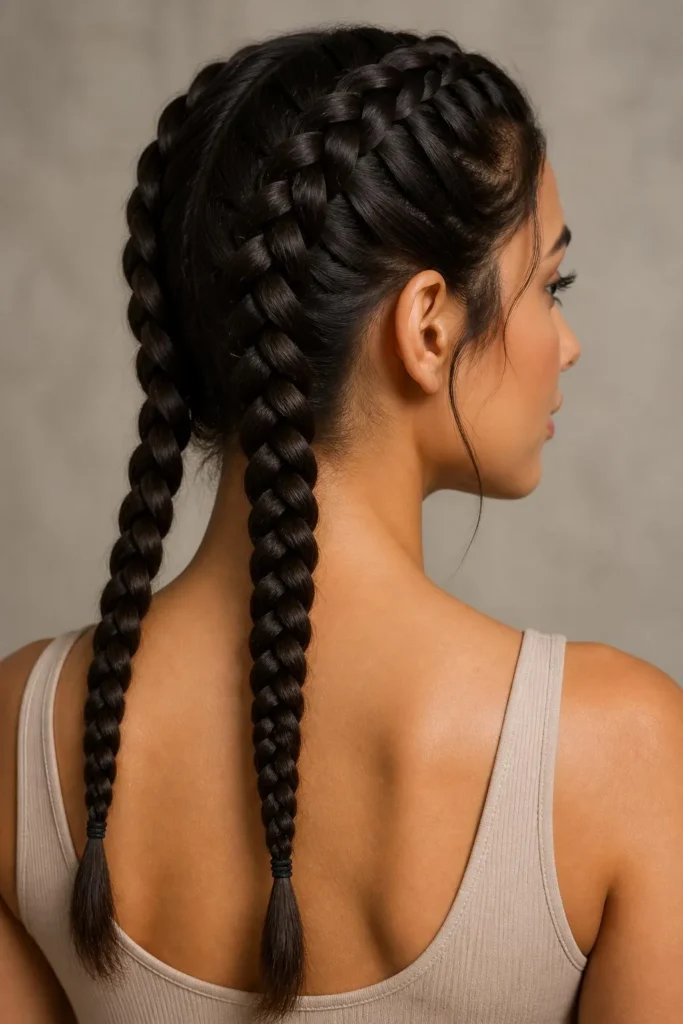
The classic double Dutch braid is the foundational style that introduced most women to this technique, and it remains one of the most versatile and flattering ways to wear Dutch braids to this day. Part your hair cleanly down the center from the forehead to the nape of the neck, creating two perfectly equal sections. Begin a Dutch braid on each side by dividing the front section into three strands, then cross the outer strands under the middle strand rather than over — this is the key motion that creates the raised, rope-like finish that defines the Dutch braid. Continue adding sections of hair from each side as you work downward, keeping the tension even throughout to ensure both braids match in thickness and placement. Secure the ends with small elastics. The double Dutch braid works on every hair length from medium to long, holds up beautifully through athletic activity, and looks equally appropriate worn to the gym, to school, or dressed up with a summer outfit. It is the style that starts your Dutch braid journey and never stops being useful.
2. Dutch Braid Crown
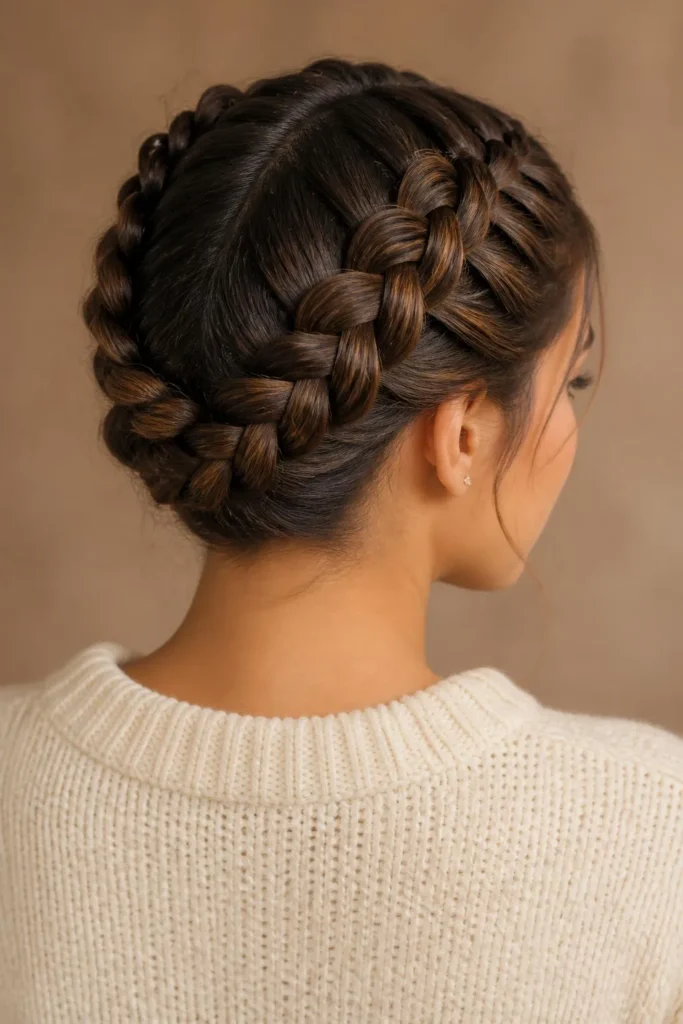
The Dutch braid crown is the most romantic and event-ready variation of this hairstyle family, creating a wreath-like band of braid that encircles the entire head and sits like a natural crown at the hairline. To achieve it, part your hair down the center and create two Dutch braids — one on each side — but instead of braiding straight back toward the nape, guide each braid in an arc across the scalp, following the curve of the head. Once both braids are complete, bring each one across to the opposite side of the head, pinning the ends securely beneath the other braid to hide them completely. Gently pull each section of the braid apart with your fingertips to add width and a fuller, more dimensional appearance. The Dutch braid crown is the definitive hairstyle for outdoor weddings, garden parties, bridal events, and spring and summer occasions where the look needs to be genuinely beautiful but also stable enough to last through hours of activity. Add tiny wildflowers, pearl pins, or delicate gold accessories tucked into the braid for a finishing detail that makes the whole look feel effortlessly magical.
3. Half-Up Dutch Braid
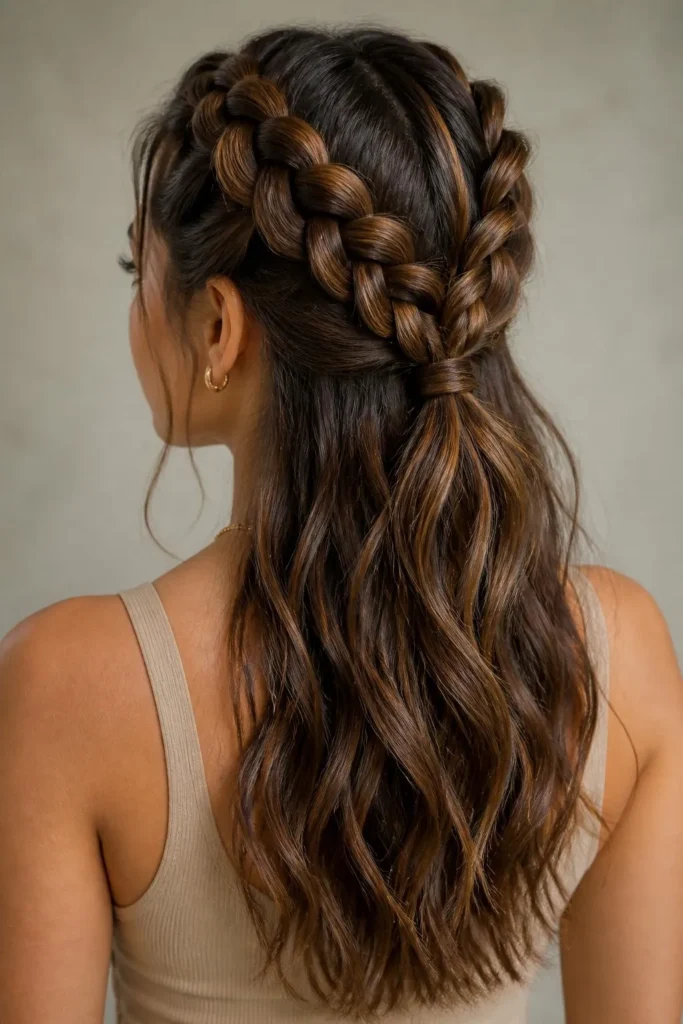
The half-up Dutch braid is the answer to every morning when you want your hair to look intentionally styled but cannot commit the time or energy to a full updo. Section off the top portion of your hair from roughly the temples back to the crown — approximately the upper third of your total hair volume — and create a single Dutch braid working backward from the hairline. Once you have incorporated all of the sectioned hair into the braid, secure it with a small elastic and allow the remaining length of your hair to fall freely in waves or natural texture below. The contrast between the structured, raised Dutch braid at the top and the loose, flowing hair underneath creates a visual dynamic that looks far more sophisticated than the effort required to achieve it. This style works beautifully on wavy and curly hair, where the natural texture of the loose bottom section adds effortless volume and movement. It transitions perfectly from daytime casual to evening elegant with just the addition of a few accessories or a change of outfit.
4. Dutch Braid into Low Bun
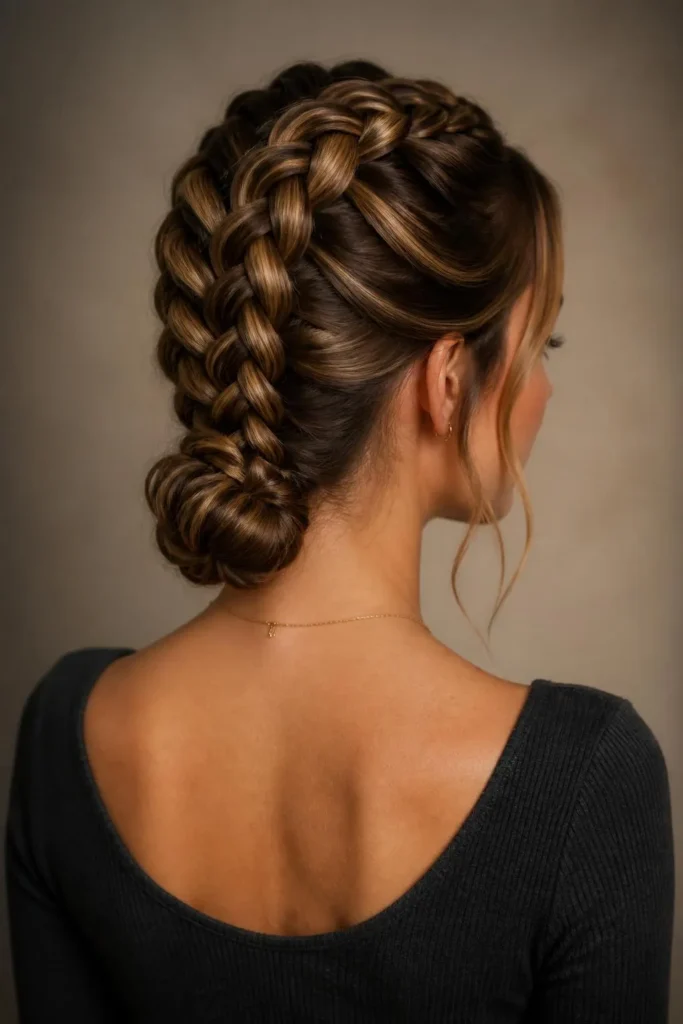
For women who love an updo but want something more interesting than a standard bun, the Dutch braid into low bun is the elevated version that delivers both structure and elegance without complexity. Begin with a single Dutch braid at the center of the hairline, working it straight back along the center of the scalp until you have incorporated all of the hair on top of the head into the braid. Continue braiding the remaining loose hair in a regular three-strand braid until you reach about two-thirds of the way to the ends, then gather the remaining length, coil it into a low bun at the nape of the neck, and secure it with pins. The visual effect — a clean, prominent Dutch braid flowing down the back of the head into a neat, sophisticated bun — is one of the most timeless updo finishes available. It suits professional environments, formal events, and any occasion where the hair needs to be off the face and neck but the style should still look polished and considered. This is a particularly strong choice for humid weather or outdoor summer events where a loose style would not last.
5. Side Dutch Braid
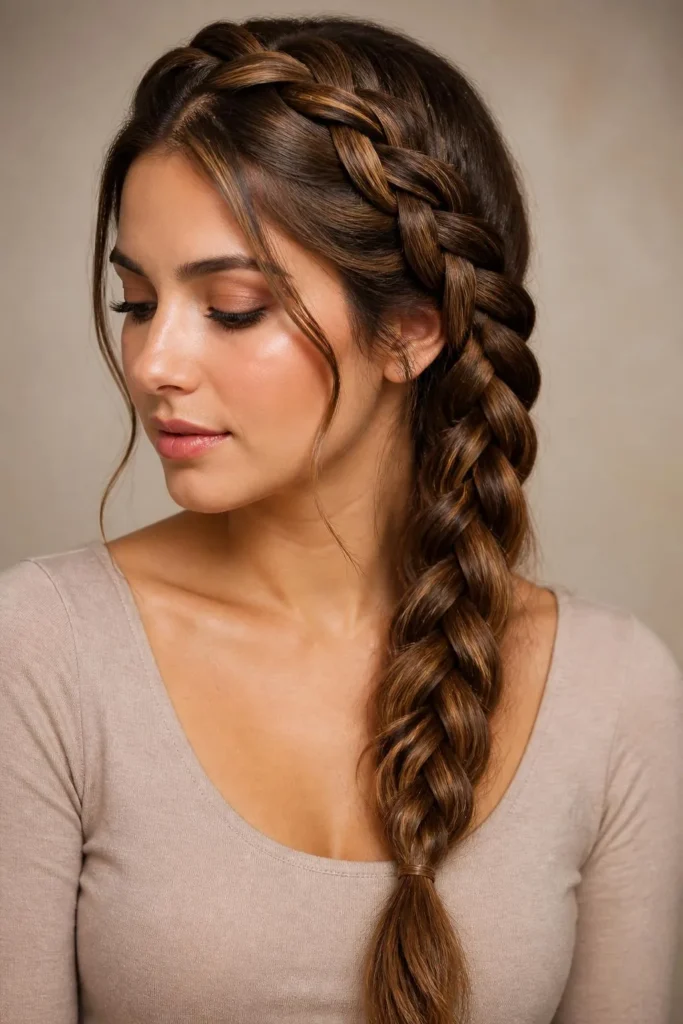
The side Dutch braid is the most romantic and asymmetric variation of this style — it sweeps all of the hair to one side of the head and creates a single broad braid that travels from the hairline diagonally across the scalp and down over one shoulder. Begin the braid at the temple on your stronger side, incorporating hair from across the top of the head as you work diagonally downward toward the opposite shoulder. The diagonal path of the braid creates a line that travels across the full width of the scalp, which is more visually dynamic than a straight central or parallel braid. Allow the finished braid to rest over one shoulder, and gently pull the sections apart for added width and a softer, more relaxed finish. The side Dutch braid is one of the most photographed hairstyles on Pinterest for a reason — it frames the face beautifully, showcases the technique from a flattering angle, and creates a look that is simultaneously casual and refined. It is a natural choice for date nights, casual events, and any occasion where the hair should feel dressed up without looking overly formal.
6. Dutch Braid Ponytail
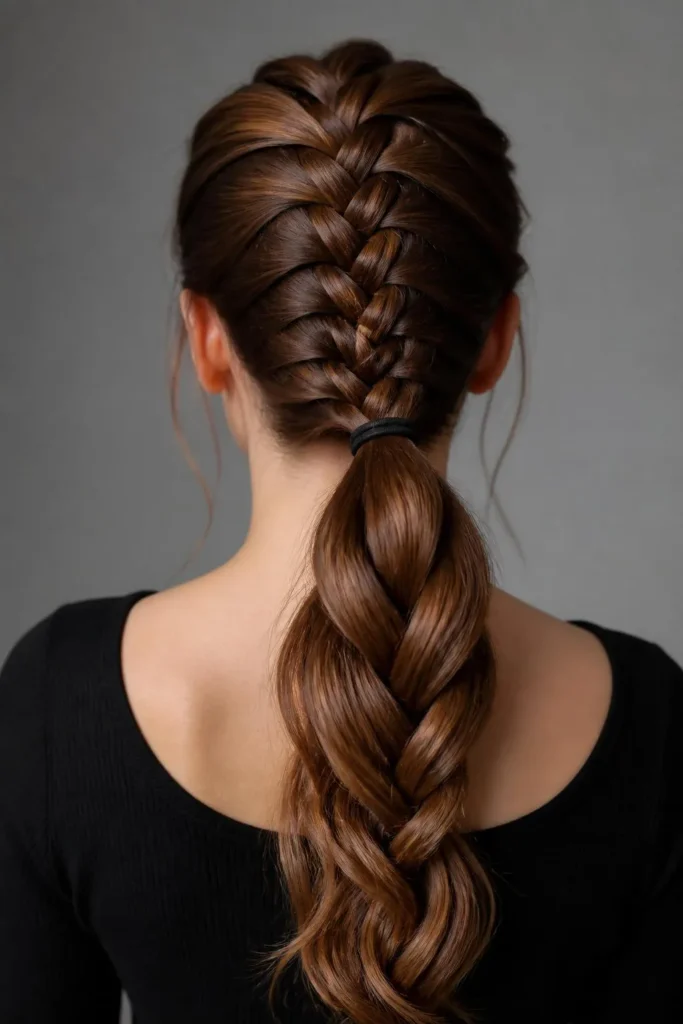
The Dutch braid ponytail combines two completely different styling aesthetics — the sculptural, textured quality of braiding and the clean, gathered simplicity of a ponytail — into a single style that manages to feel fresh and contemporary every time it is worn. Begin a Dutch braid at the very front of the hairline, working it straight back along the center of the scalp and incorporating sections from each side as you go. Continue until all of the hair on the top and sides of the head has been pulled into the braid, then transition into a regular ponytail at the back of the head, securing with an elastic at whatever height feels right — high for energy and volume, mid for balance, low for elegance. The resulting style shows a detailed, raised Dutch braid across the top of the head that flows seamlessly into a clean ponytail at the back, creating a look that is dynamic from every angle. Wrap a section of hair from the ponytail around the elastic to conceal it for a more polished finish. This style holds up through long active days and looks strong worn to work, to events, or anywhere in between.
7. Boho Dutch Braid with Loose Tendrils
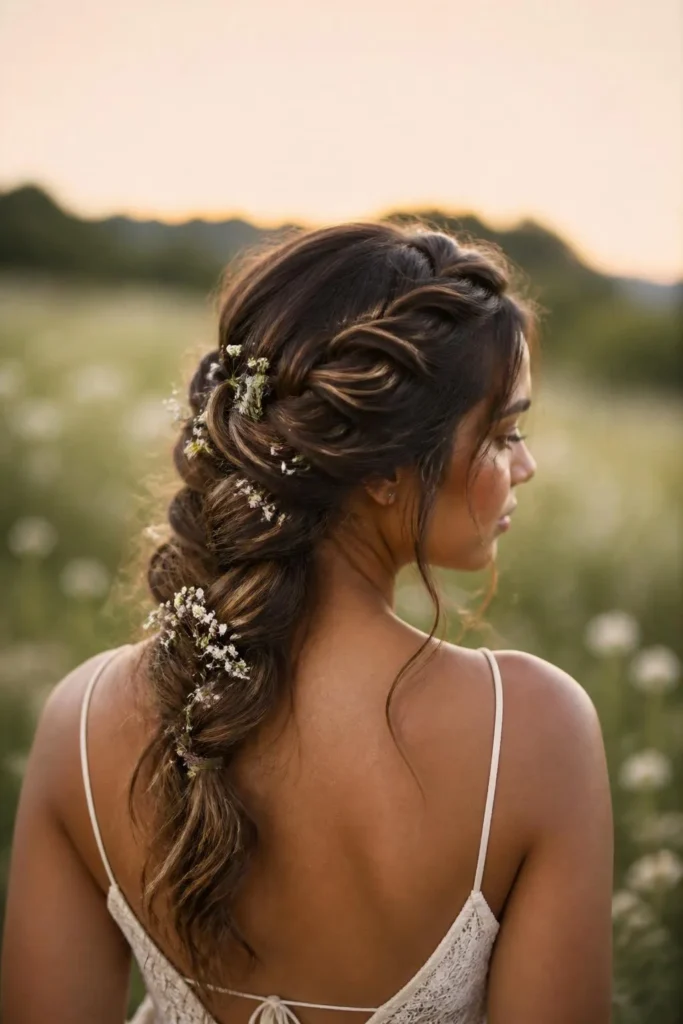
The bohemian Dutch braid is defined by intentional imperfection — a deliberately relaxed, textured finish that prioritizes movement and softness over precision and control. Begin a Dutch braid in your preferred placement, but work with looser tension than you would for a sleek, formal version. Once the braid is complete, go back through each section and gently tug the loops outward using your thumbnail or a pin to create width and a fuller, more voluminous appearance. Pull a few tendrils free around the face — at the temples, at the ears, and at the nape of the neck — and allow them to curl or wave naturally. These loose face-framing pieces are the defining feature of the boho variation and the detail that softens the entire look from structured to romantic. Finish with a light-hold texturizing spray to enhance the natural texture of both the braid and the loose pieces. The boho Dutch braid is the style for outdoor events, music festivals, beach days, and any occasion where the beauty standard is effortless, free-spirited, and entirely your own.
8. Dutch Braid Updo for Special Occasions
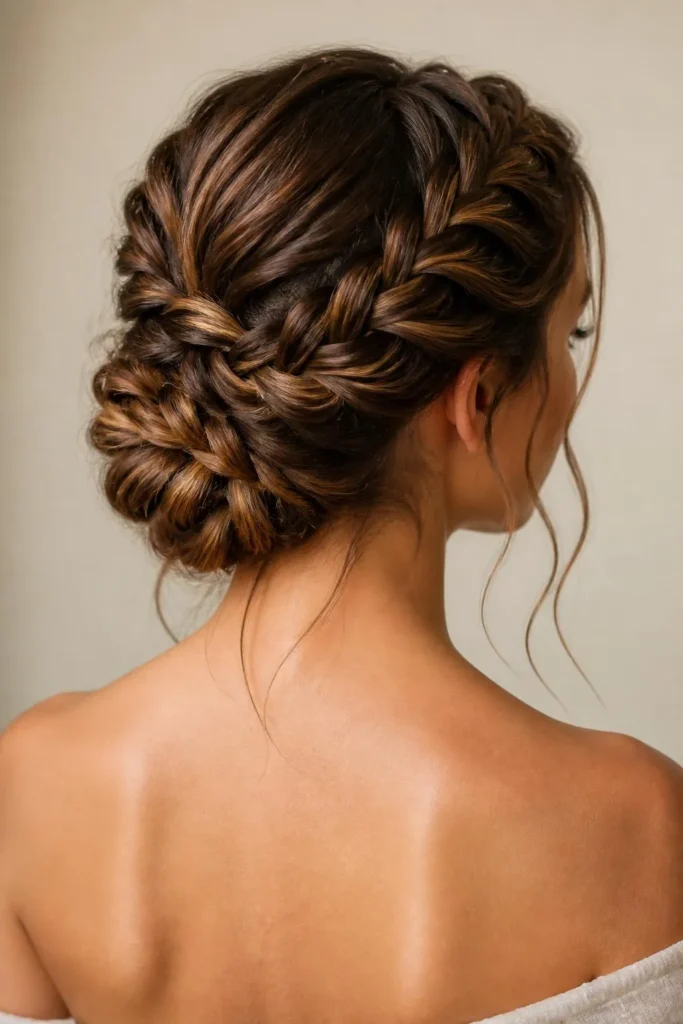
When the occasion calls for something genuinely spectacular — a wedding, a gala, a formal dinner, or a graduation ceremony — the Dutch braid updo delivers the kind of finish that photographs beautifully and commands attention in person. This variation typically involves multiple Dutch braids worked across the scalp in a deliberate pattern — two parallel braids meeting at the back, a central braid flanked by two side braids, or a combination of cornrow-style Dutch braiding across the full head — with all of the resulting braids gathered and coiled into an elegant updo at the nape or crown. The multi-braid updo creates an intricate, architectural quality across the entire scalp that elevates the style far beyond a single braid alone. This is a style best planned in advance, either with the help of a professional stylist or through practiced preparation at home, since the detail work requires time and precision to execute well. Add pearl pins, delicate floral accessories, or fine chain hair jewelry for a finishing layer that makes the style genuinely worthy of the occasion.
9. Waterfall Dutch Braid
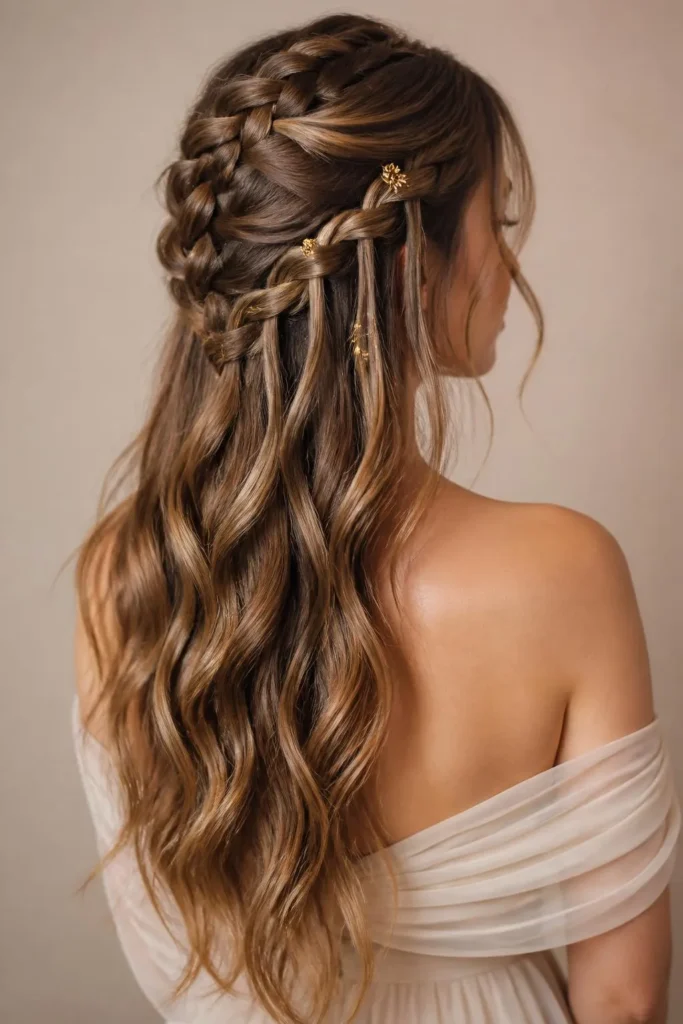
The waterfall Dutch braid is the most ethereal and visually distinctive variation in this entire collection — a style where selected strands are intentionally dropped from the braid as it progresses, allowing them to cascade downward through the braid like falling water rather than being incorporated into the ongoing structure. Begin the braid at the temple and work horizontally across the scalp, but each time you would normally add a bottom strand into the braid, instead drop it and replace it with a new strand from the hair above. The dropped strands fall freely through the gaps in the braid, creating the flowing, layered effect that gives the style its name. The result is a braid that appears to have hair pouring through it — a visual effect that is genuinely unlike any other hairstyle technique. The waterfall Dutch braid is particularly beautiful on long, wavy hair, where the dropped strands have enough length and natural movement to create a dramatic cascading effect. It is a style for women who want their hair to look like something truly exceptional — the kind of hairstyle that makes people stop and ask how it was done.
10. Dutch Braid with Hair Accessories
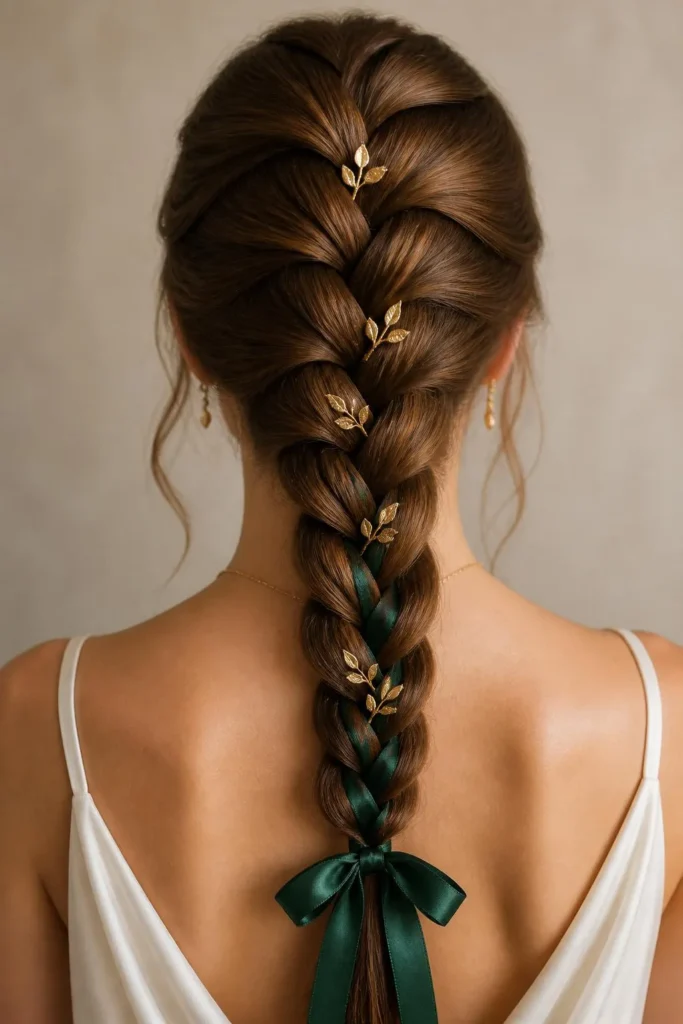
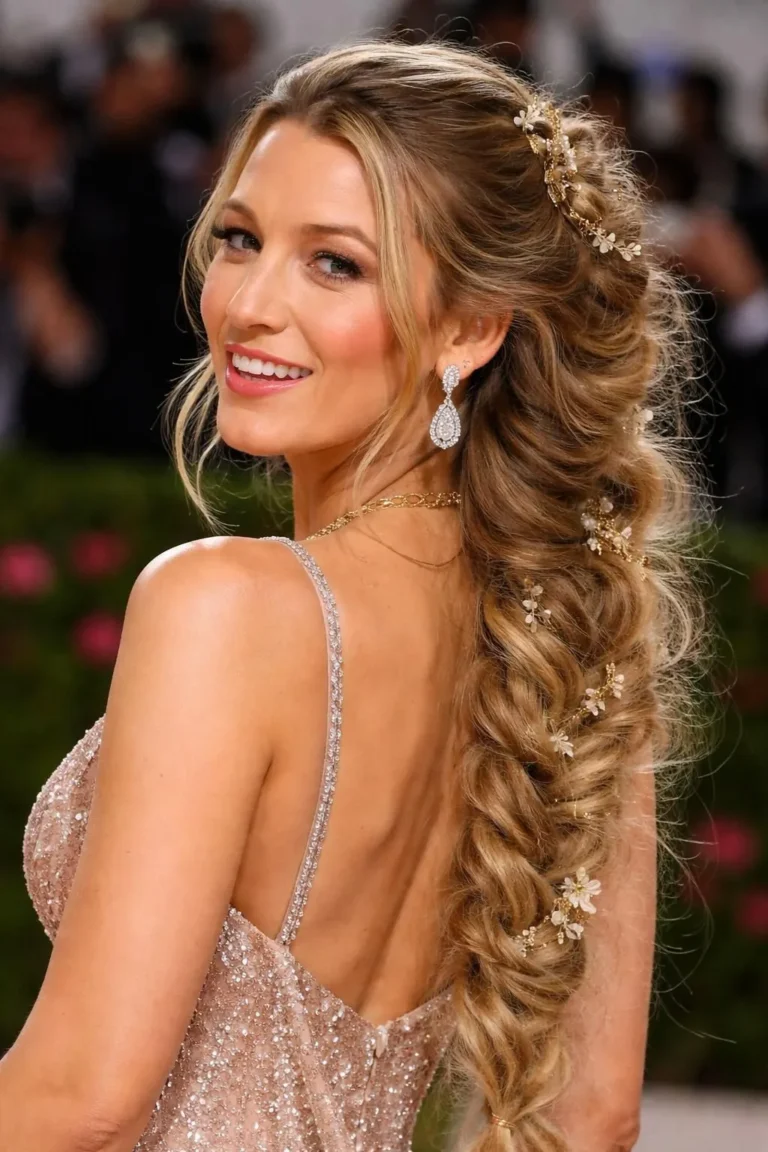
The Dutch braid becomes a completely different style depending on which accessories are incorporated into it, and this versatility is one of its greatest strengths as a foundational hairstyle. A single Dutch braid with a satin ribbon woven through it transforms from athletic to romantic. The same braid with metallic cuffs placed at intervals along its length reads as edgy and contemporary. Delicate gold or silver chain threaded through the sections creates a jeweled, luxurious finish. Pearl pins scattered through a loosened Dutch braid crown give it a bridal quality. Small floral clips tucked along the length make it feel seasonal and fresh. The braid itself provides the structure, while the accessories provide the personality — meaning you can adapt the same basic Dutch braid technique to suit every season, every mood, and every dress code simply by changing what you add to it. Ribbon accessories work beautifully for romantic and feminine looks; metal and chain accessories suit editorial and fashion-forward aesthetics; floral and natural accessories are the natural companion to outdoor and seasonal events. The Dutch braid is a canvas, and accessories are how you make it yours.
The Dutch braid is one of those rare hairstyle techniques that rewards the time invested in learning it with a lifetime of versatility. Once the basic motion — under, not over — becomes instinctive, every variation in this list becomes accessible, and the range of looks you can create from a single foundational technique is genuinely remarkable. Save these ten styles, practice on a relaxed afternoon, and discover which versions feel most like the best version of you.
Dutch braid hairstyles, beautiful Dutch braids for women, Dutch braid styles, double Dutch braids, Dutch braid crown, half up Dutch braid, Dutch braid ponytail, boho Dutch braid, Dutch braid updo, waterfall Dutch braid, Dutch braid with accessories, easy Dutch braid tutorial