
Japanese Sushi Recipe
Making sushi at home is easier than you think. That intimidating wall of the sushi bar — the vinegared rice, the tight rolls, the razor-clean slices — comes down to a handful of techniques anyone can learn in an afternoon. With our foolproof method for seasoned sushi rice and simple rolling techniques, you’ll be crafting beautiful maki rolls in no time, no special equipment required beyond a bamboo mat and a sharp knife.

Why This Recipe Works
The sushi rice is seasoned with a balanced vinegar mixture that mimics traditional sushi chef techniques, giving you glossy, faintly sweet grains that hold their shape. Step-by-step rolling instructions with photos ensure even beginners can roll tight, perfect cylinders. And flexible filling options let you customize to your taste, from classic cucumber to fresh salmon.
Servings: 4 | Prep time: 30 minutes | Cook time: 20 minutes | Total time: 50 minutes
Ingredients
- 2 cups Japanese short-grain rice (e.g., Koshihikari)
- 2 1/2 cups water
- 1/2 cup rice vinegar
- 2 tablespoons sugar
- 1 teaspoon salt
- 4 sheets nori (seaweed), full size
- 1 cucumber, peeled, seeded, and cut into thin strips
- 1 avocado, sliced
- 4 oz fresh salmon or tuna (sashimi-grade), cut into strips
- Wasabi and pickled ginger, for serving
- Soy sauce, for dipping
- Bamboo sushi mat
- Plastic wrap
Instructions
- Rinse and Cook the Rice: Rinse the rice under cold water until the water runs clear, about 3-4 times. Drain well. Combine rice and water in a medium saucepan. Bring to a boil over medium-high heat, then reduce heat to low, cover, and simmer for 15 minutes. Do not lift the lid. Remove from heat and let stand, covered, for 10 minutes.
- Season the Rice: While the rice cooks, combine rice vinegar, sugar, and salt in a small saucepan over low heat, stirring until dissolved. Transfer the cooked rice to a large bowl (preferably wooden). Pour the vinegar mixture over the rice and gently fold with a rice paddle or spatula to combine. Fan the rice to cool to room temperature. This makes the rice glossy and flavorful.
- Prepare the Fillings: Cut cucumber, avocado, and fish into long, thin strips, about 1/4-inch thick. Keep ingredients organized and within reach.
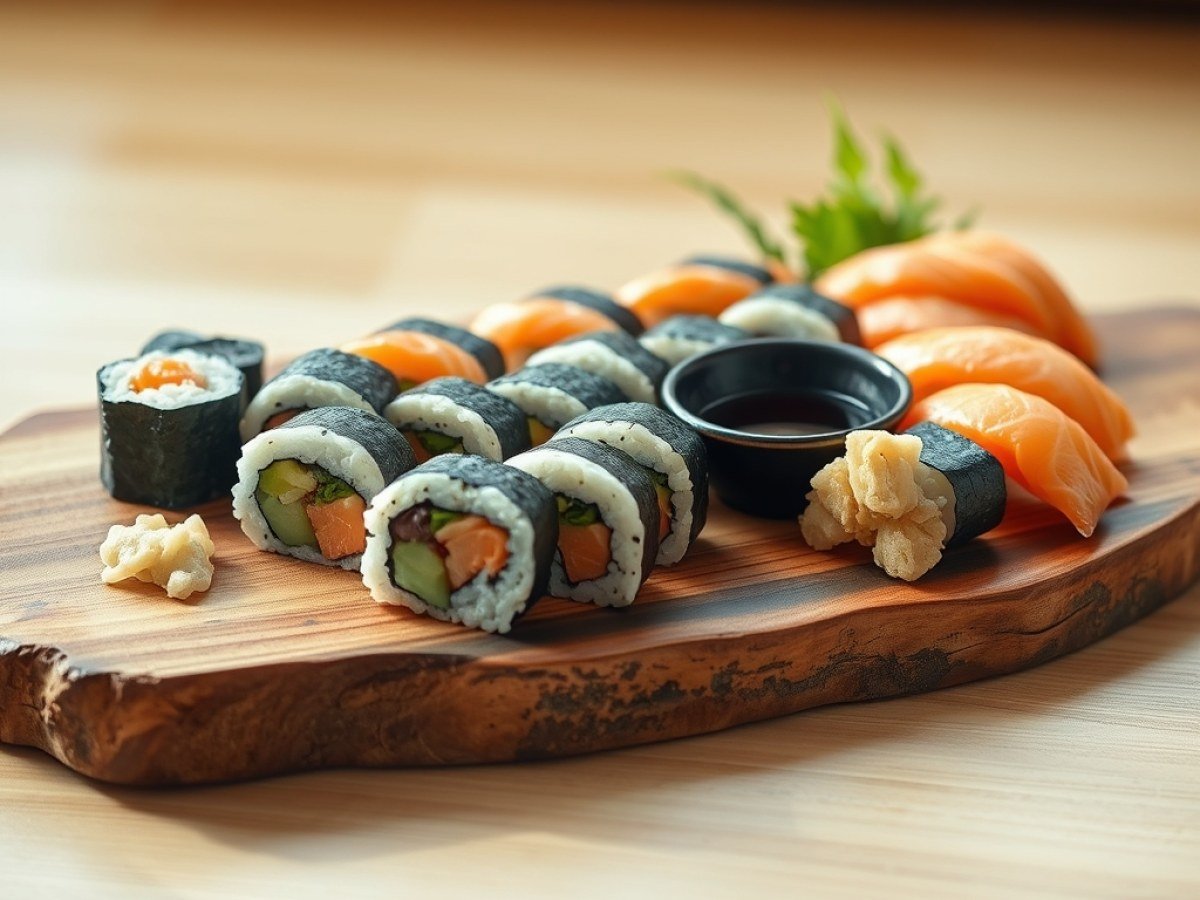
- Set Up Your Rolling Station: Wrap your bamboo mat in plastic wrap to prevent sticking. Place a bowl of water mixed with a splash of rice vinegar nearby to dip your fingers (prevents rice from sticking). Have nori sheets, rice, fillings, and a sharp knife ready.
- Spread the Rice: Place one nori sheet shiny side down on the mat. Dip your fingers in the vinegar water and grab a handful of rice (about 1/2 cup). Spread it evenly over the nori, leaving a 1-inch border at the top. Don’t press too hard; you want a layer about 1/4-inch thick.
- Add Fillings: Arrange a few strips of cucumber, avocado, and fish in a horizontal line across the center of the rice. Be careful not to overfill.

- Roll the Sushi: Lift the edge of the mat closest to you and fold it over the filling, using your fingers to tuck the ingredients in. Continue rolling forward, pressing gently to shape a tight cylinder. Wet the exposed nori border with a little water to seal. Repeat with remaining ingredients.
- Slice and Serve: Use a sharp, wet knife to cut each roll in half, then cut each half into 4 pieces. Clean the knife between cuts for clean slices. Serve with wasabi, pickled ginger, and soy sauce.
Tips & Variations
- Use a rice cooker for perfect sushi rice: follow the manufacturer’s instructions for short-grain rice.
- If you don’t have a bamboo mat, use a clean kitchen towel or parchment paper to roll.
- For a vegetarian version, omit fish and add strips of bell pepper, carrot, or tofu.
- To make inside-out rolls (uramaki), spread rice on the nori, flip it over, add fillings, and roll with rice on the outside.
- Keep your hands wet while handling rice to prevent sticking.
- Toast nori sheets briefly over a flame to enhance flavor and make them more pliable.
- For spicy mayo, mix mayonnaise with Sriracha to taste and drizzle over rolls.
Storage & Make-Ahead
Sushi is best enjoyed fresh. Store leftover rolls in an airtight container in the refrigerator for up to 24 hours. To prevent rice from drying out, wrap rolls tightly in plastic wrap. Reheat in the microwave for 10-15 seconds if desired, but note that cold sushi is also delicious. Sushi rice can be made ahead and kept at room temperature for up to 4 hours; refrigerate leftovers and reheat gently.
Nutrition Information
- Calories: 350 kcal
- Carbohydrates: 60 g
- Protein: 10 g
- Fat: 8 g
- Saturated Fat: 1.5 g
- Fiber: 4 g
- Sugar: 6 g
- Sodium: 600 mg
These values are an estimate and will vary based on your exact ingredients and portion sizes.
FAQs
Can I use regular rice instead of sushi rice?
Sushi rice is a short-grain japonica rice that becomes sticky when cooked, which is essential for shaping sushi. Regular long-grain rice like jasmine or basmati won’t hold together properly. If you must substitute, use another short-grain rice like Arborio, but the texture will differ.
Is it safe to eat raw fish at home?
Only consume raw fish that is labeled ‘sashimi-grade’ or ‘sushi-grade,’ which means it has been handled and frozen according to safety standards to kill parasites. Purchase from a reputable fishmonger and keep it refrigerated until use. If you’re unsure, cook the fish or use cooked shrimp or imitation crab.
How do I prevent my sushi rolls from falling apart?
Roll tightly and avoid overfilling. Use a bamboo mat to apply even pressure. Also, make sure your rice is sticky but not too wet; if it’s too dry, add a little more vinegar mixture. Wet your knife before slicing to prevent sticking and tearing.
Can I make sushi without a bamboo mat?
Yes! You can use a clean kitchen towel or a piece of parchment paper. Place the nori on the towel, add rice and fillings, then roll tightly using the towel to help shape. Alternatively, you can make hand rolls (temaki) by simply rolling the nori into a cone by hand.
What can I do with leftover sushi rice?
Leftover sushi rice can be used to make onigiri (rice balls), or you can reheat it gently in the microwave with a damp paper towel to restore moisture. It’s also great in a stir-fry or as a base for a rice bowl.