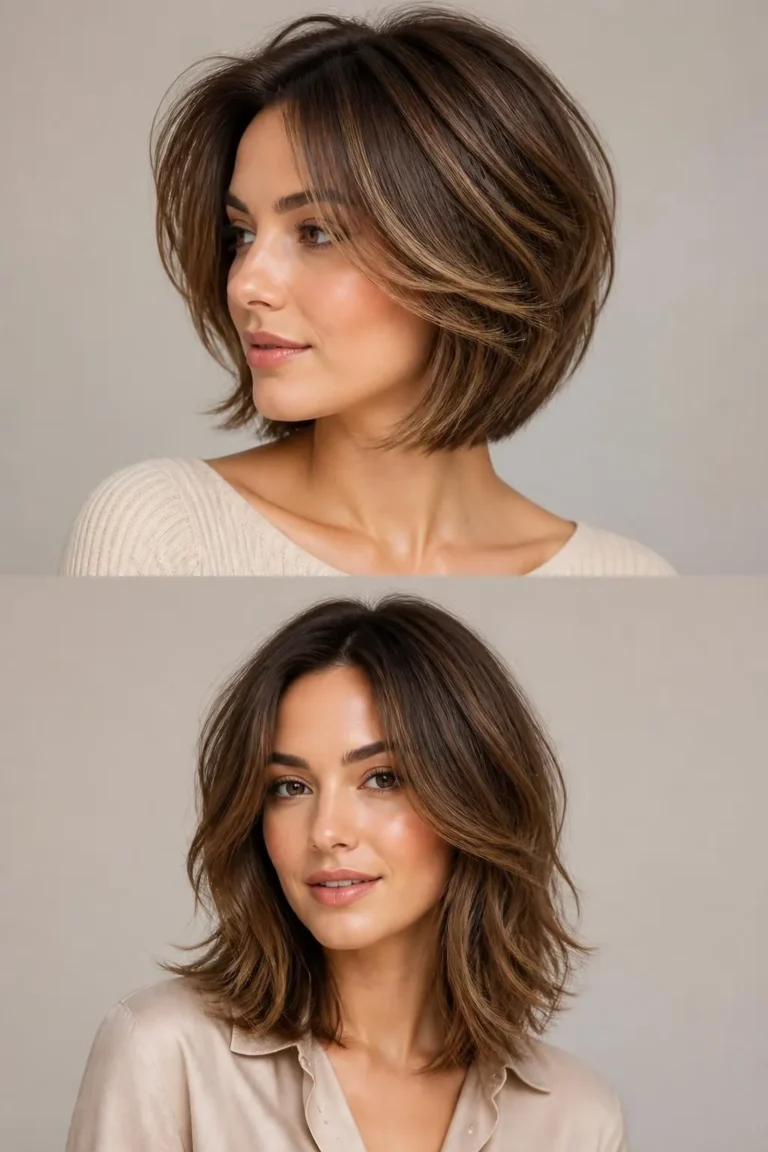
22 Shag Hairstyles for Thin Fine Hair Over 50 Wanting Volume and Youthful Lift
Thin, fine hair after 50 doesn’t have to mean flat, tired-looking styles. The shag haircut, with its choppy layers and airy movement, is one of the best cuts for adding instant volume, texture, and a youthful bounce to hair that’s lost some of its natural thickness. Because the layers are cut to build height and separation rather than weight, a shag tricks the eye into seeing fuller, healthier-looking hair.
Below are 22 shag hairstyles chosen specifically for thin and fine hair over 50. Each one focuses on lift at the roots, movement through the ends, and styles that are easy to maintain without hours in front of a mirror. Whatever your length preference or lifestyle, there’s a shag here to help you look and feel more vibrant.
Here are 22 flattering shag hairstyles that bring volume, texture, and a youthful lift to thin, fine hair over 50.
1. Classic Layered Shag
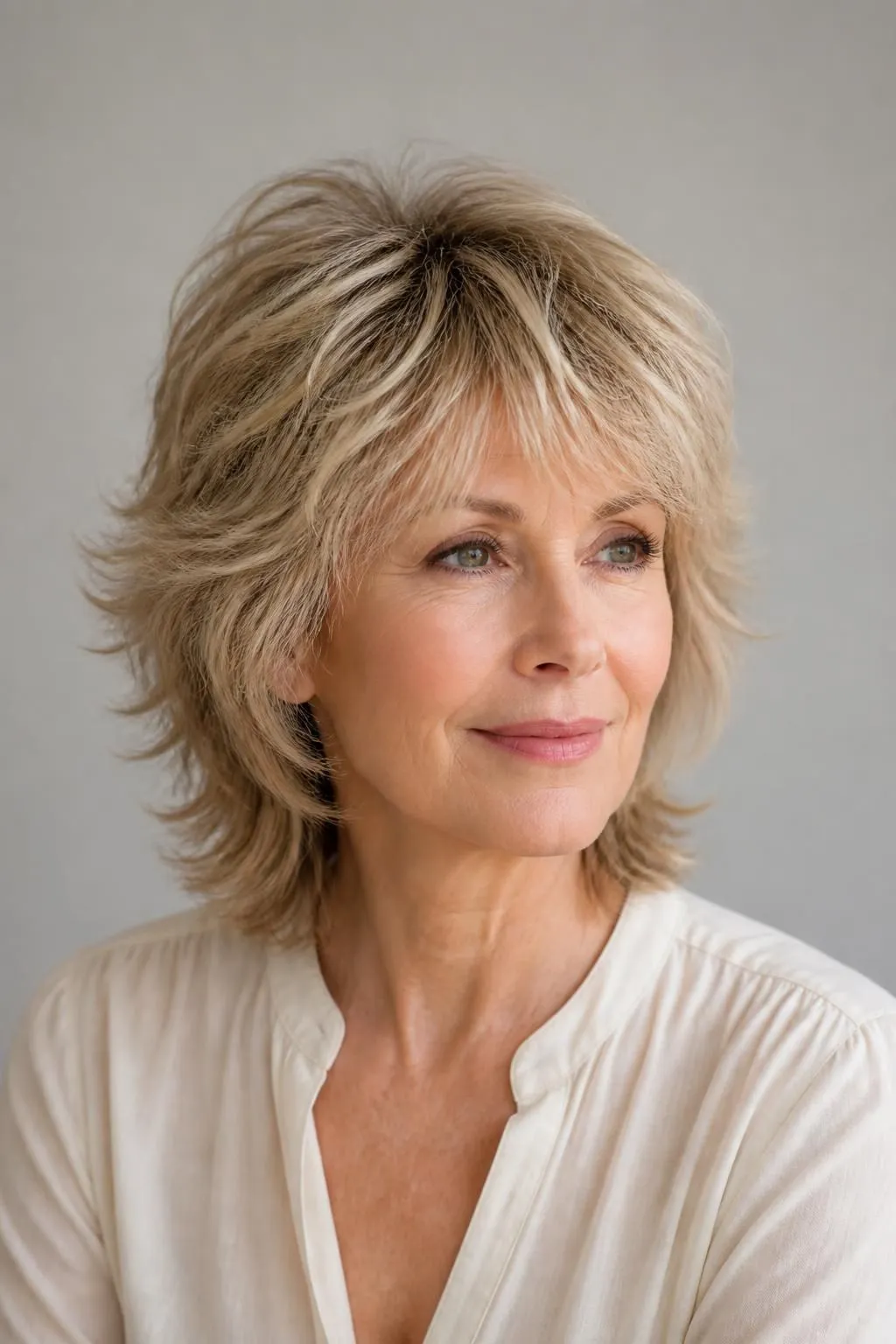
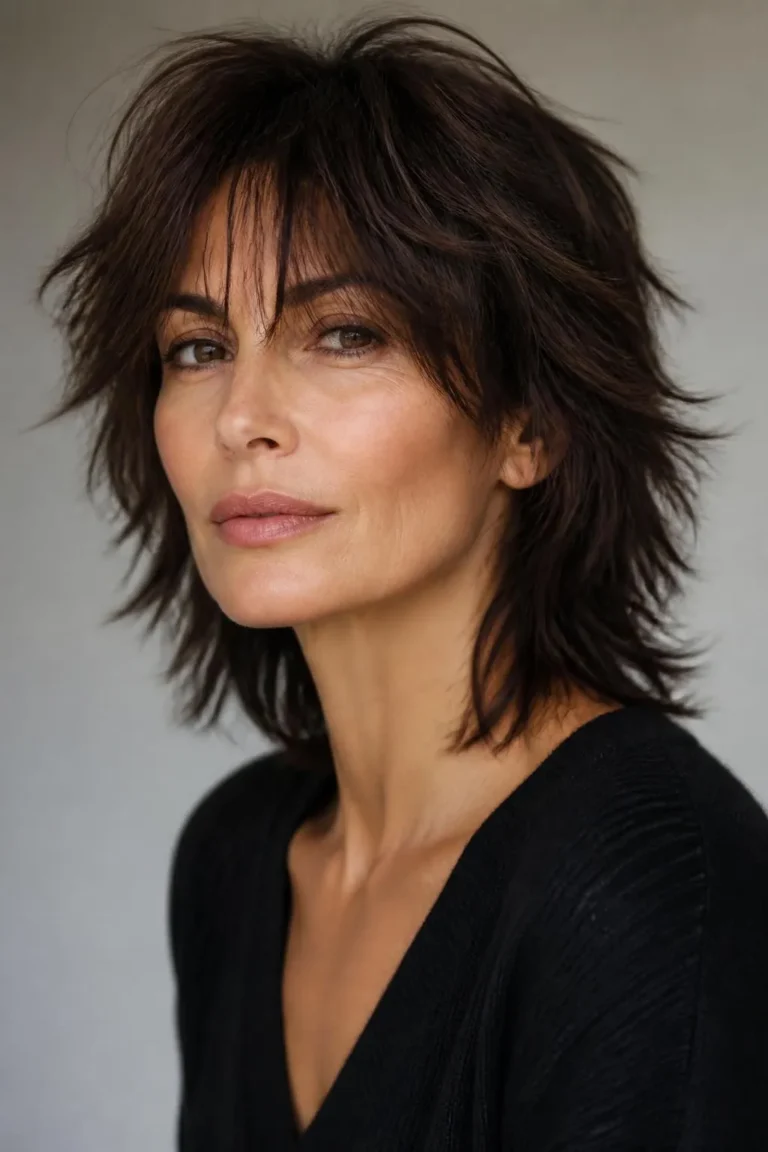
The classic layered shag is the foundation for every variation on this list. Choppy layers are cut throughout the hair, starting shorter near the crown and gradually lengthening toward the ends. For thin, fine hair, this layering technique builds height at the roots while adding texture and separation through the mid-lengths, making hair look noticeably thicker.
This cut works at nearly any length and suits most face shapes, which is part of why it has remained a timeless choice for decades. It’s also relatively low-maintenance once cut correctly, since the layers naturally fall into place with minimal styling.
Tips for Styling a Classic Layered Shag
- Ask your stylist for shorter layers at the crown to maximize root lift.
- Use a volumizing mousse on damp hair before blow-drying upside down.
- Finish with a texturizing spray for extra separation between layers.
2. Shag with Curtain Bangs
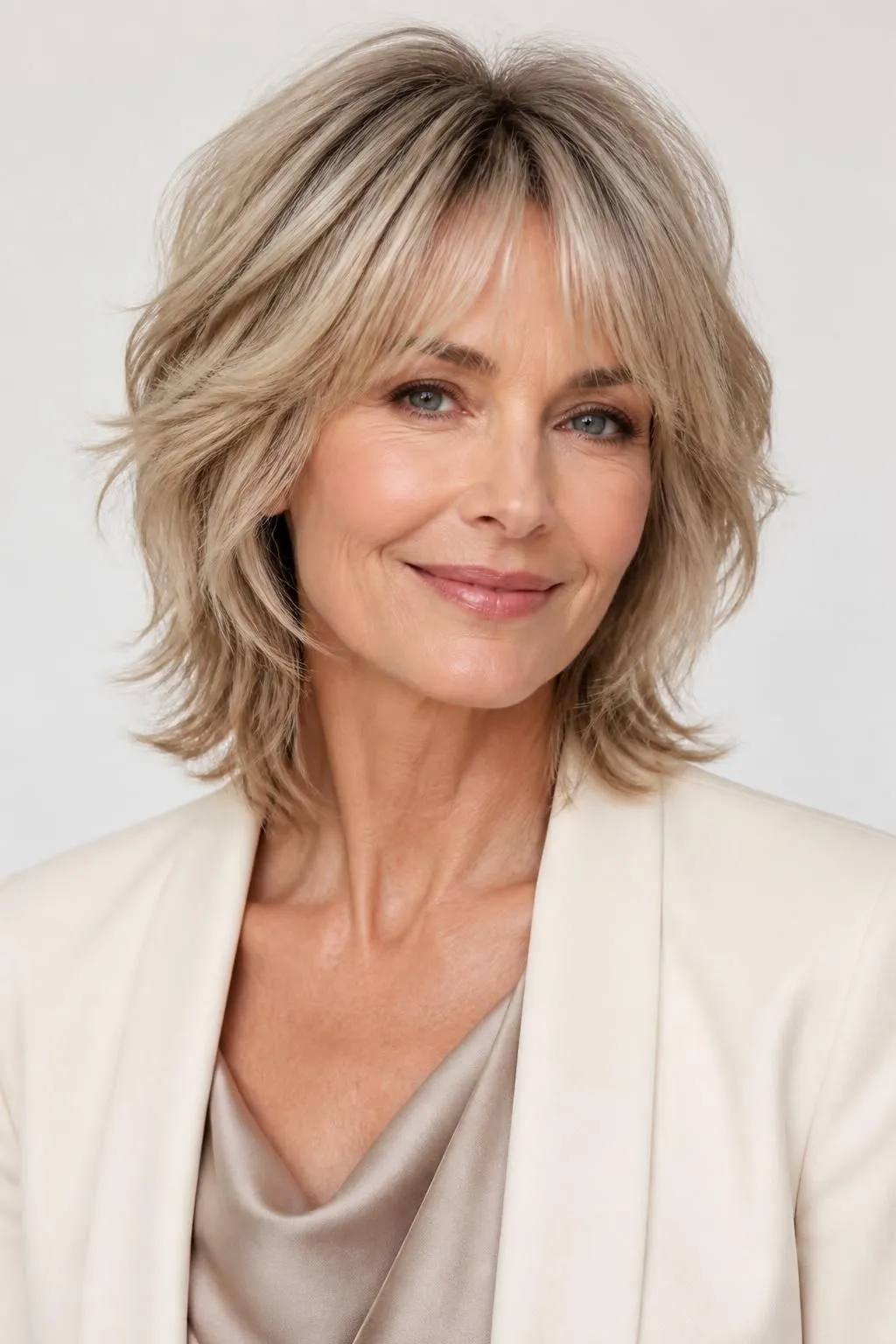
Pairing a shag with curtain bangs softens the face while adding fullness around the forehead and cheekbones. The bangs blend seamlessly into the layered sides, creating a continuous flow of movement that makes fine hair appear thicker from the front. This combination is especially flattering for those wanting a face-framing effect without a harsh, blunt fringe.
Curtain bangs also grow out gracefully, blending back into the layers over time, which makes this a practical choice for anyone who doesn’t want frequent bang trims.
Tips for Styling a Shag with Curtain Bangs
- Round-brush bangs outward while blow-drying for a soft, swept look.
- Use a small amount of styling cream to prevent bangs from looking flat.
- Part hair slightly off-center to enhance the curtain effect.
3. Long Shag with Face-Framing Layers
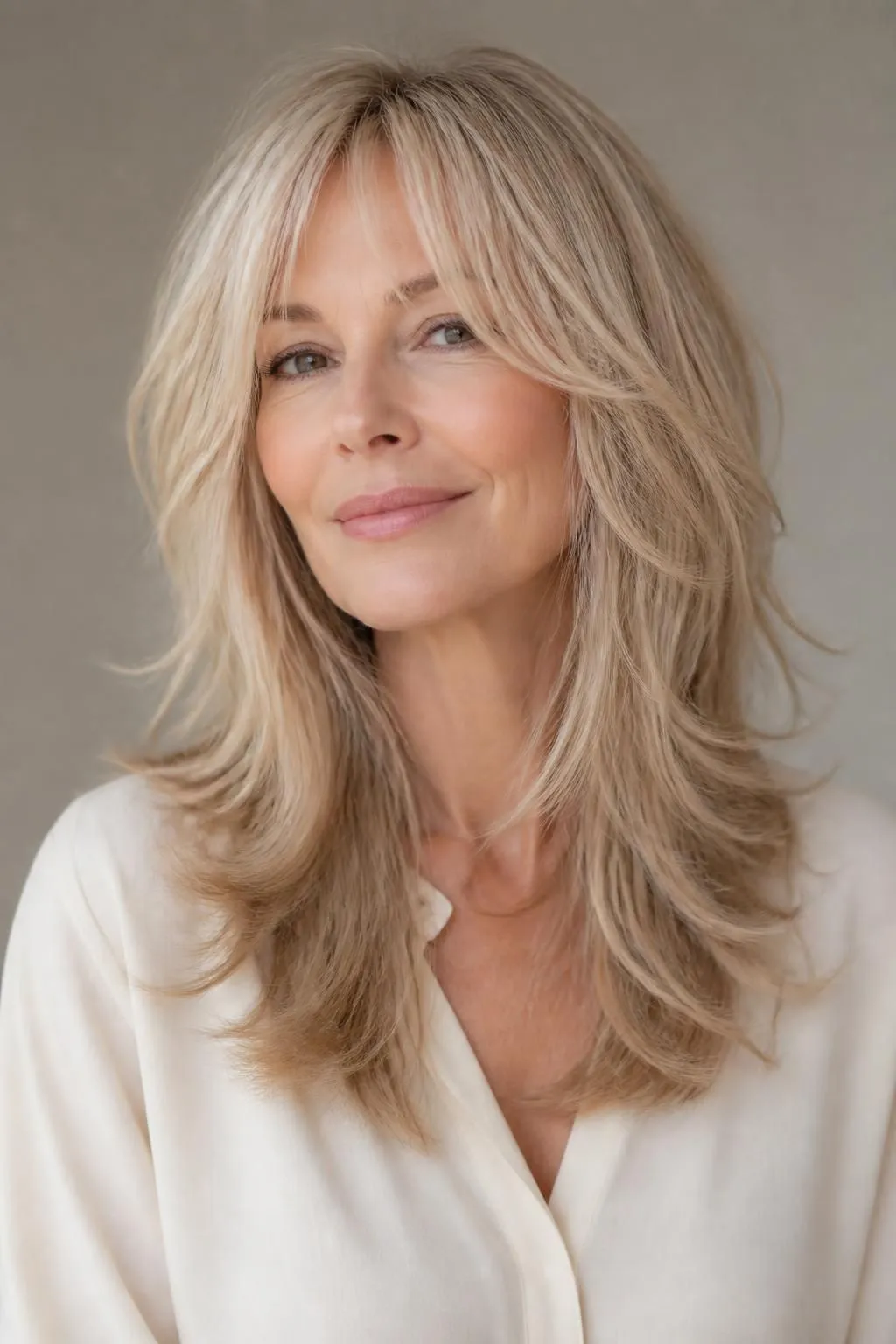
A long shag keeps length past the shoulders while adding face-framing layers around the front. This style proves that thin hair doesn’t need to be cut short to look voluminous. The layers are strategically placed to add movement near the face while shorter layers underneath build hidden volume throughout the crown.
Long shags also offer versatility, since the added texture makes hair easier to style in loose waves, braids, or half-up looks without looking stringy.
Tips for Styling a Long Shag
- Use a large-barrel curling iron for loose waves that enhance the layers.
- Apply volumizing powder at the roots to keep length from weighing hair down.
- Avoid brushing out curls completely; finger-comb for a natural, full finish.
4. Shoulder-Length Shag
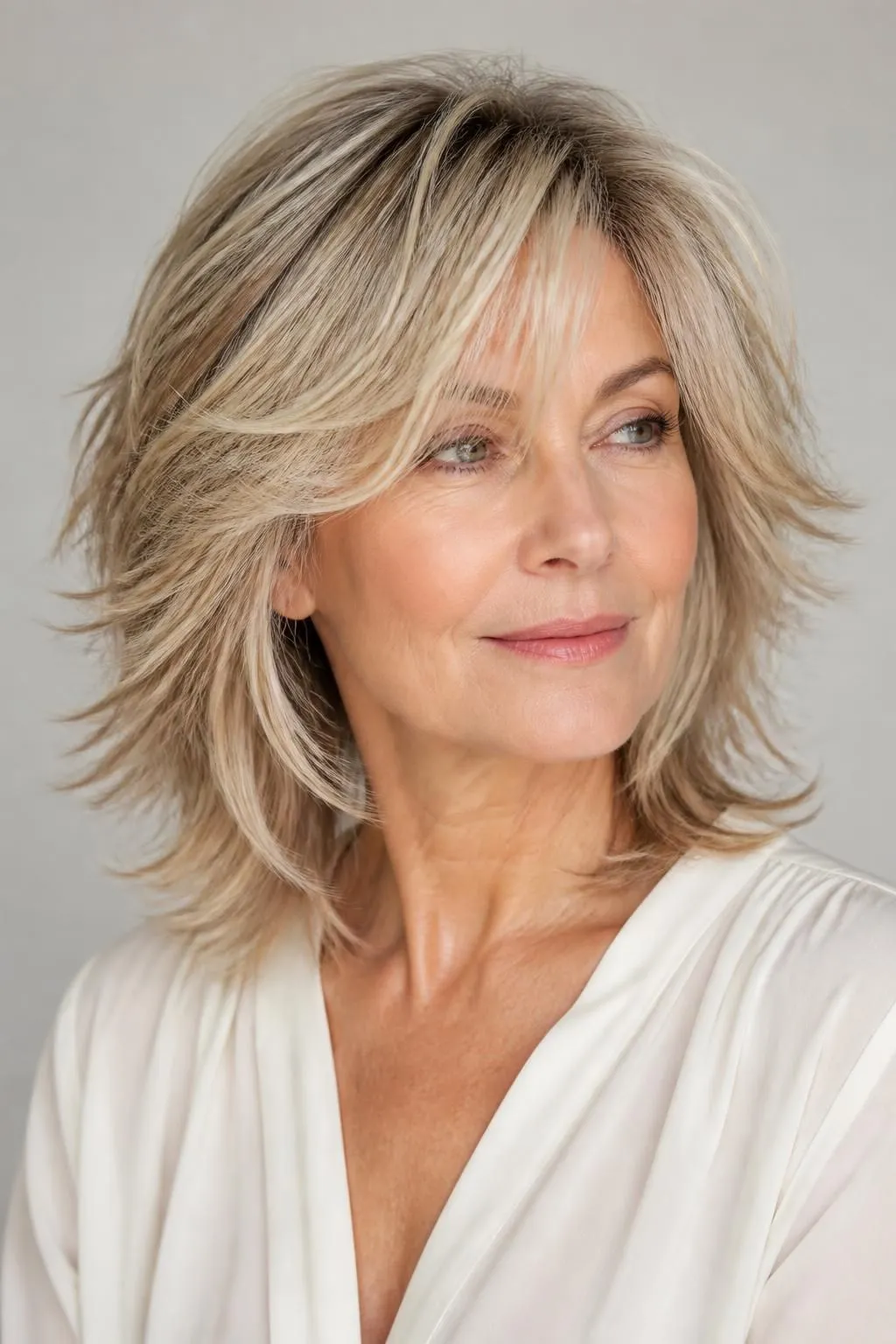
A shoulder-length shag hits a flattering middle ground, offering enough length for versatile styling while staying short enough to avoid dragging hair down flat. The layers at this length create noticeable movement and bounce, which is particularly helpful for thin hair that tends to lose shape throughout the day.
This length is also easy to maintain between salon visits, since the layered structure holds its shape well even as hair grows out slightly.
Tips for Styling a Shoulder-Length Shag
- Blow-dry with a round brush, lifting at the roots section by section.
- Use a light-hold hairspray to maintain volume without stiffness.
- Try a low-heat wave for soft texture that lasts through the day.
5. Pixie Shag
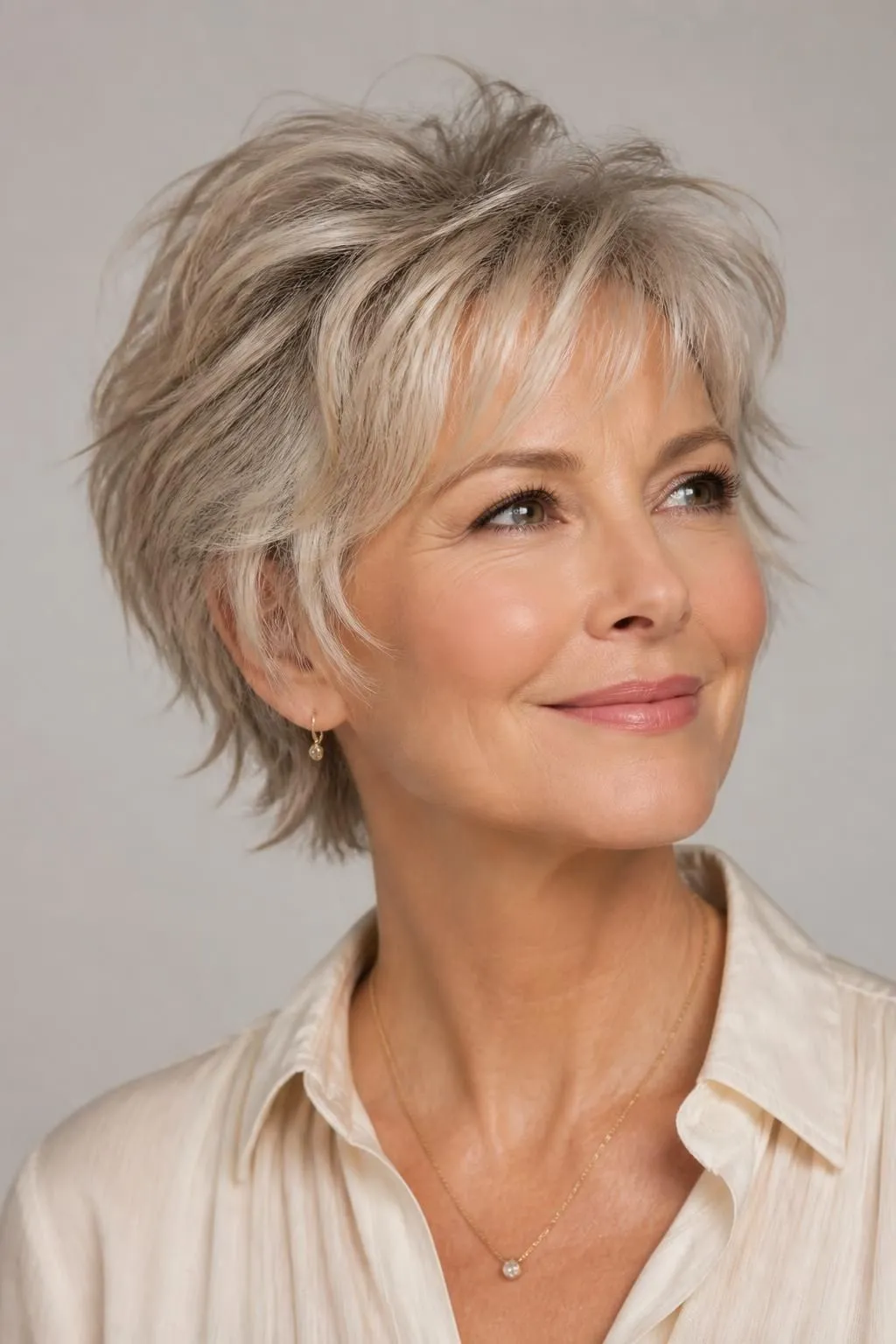
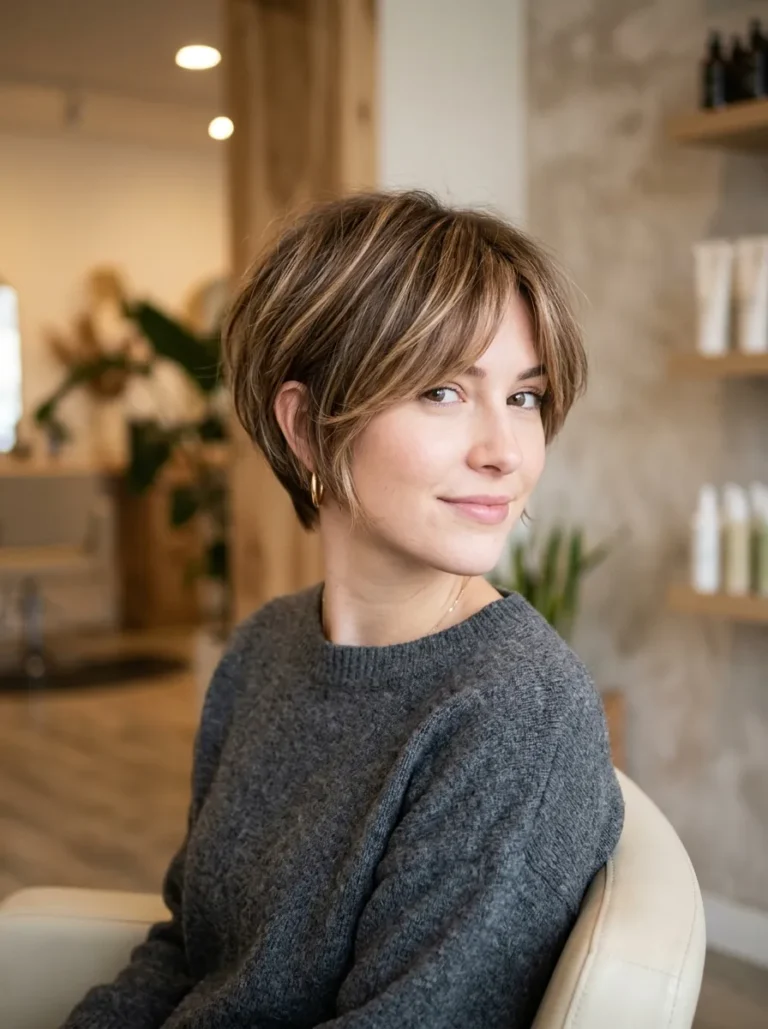
The pixie shag combines the cropped length of a pixie cut with the choppy, textured layers of a shag. This is one of the most effective styles for maximizing volume on very fine hair, since shorter hair naturally has less weight pulling it down. The layered texture on top adds height and movement, giving the whole style a playful, youthful energy.
This cut is extremely low-maintenance, drying quickly and requiring minimal product to hold its shape, making it ideal for busy mornings.
Tips for Styling a Pixie Shag
- Apply a small amount of texturizing paste to dry hair, working it into the tips.
- Use your fingers instead of a brush to preserve choppy texture.
- Blow-dry with your head tilted forward for extra root lift.
6. Bob-Length Shag (Shob)
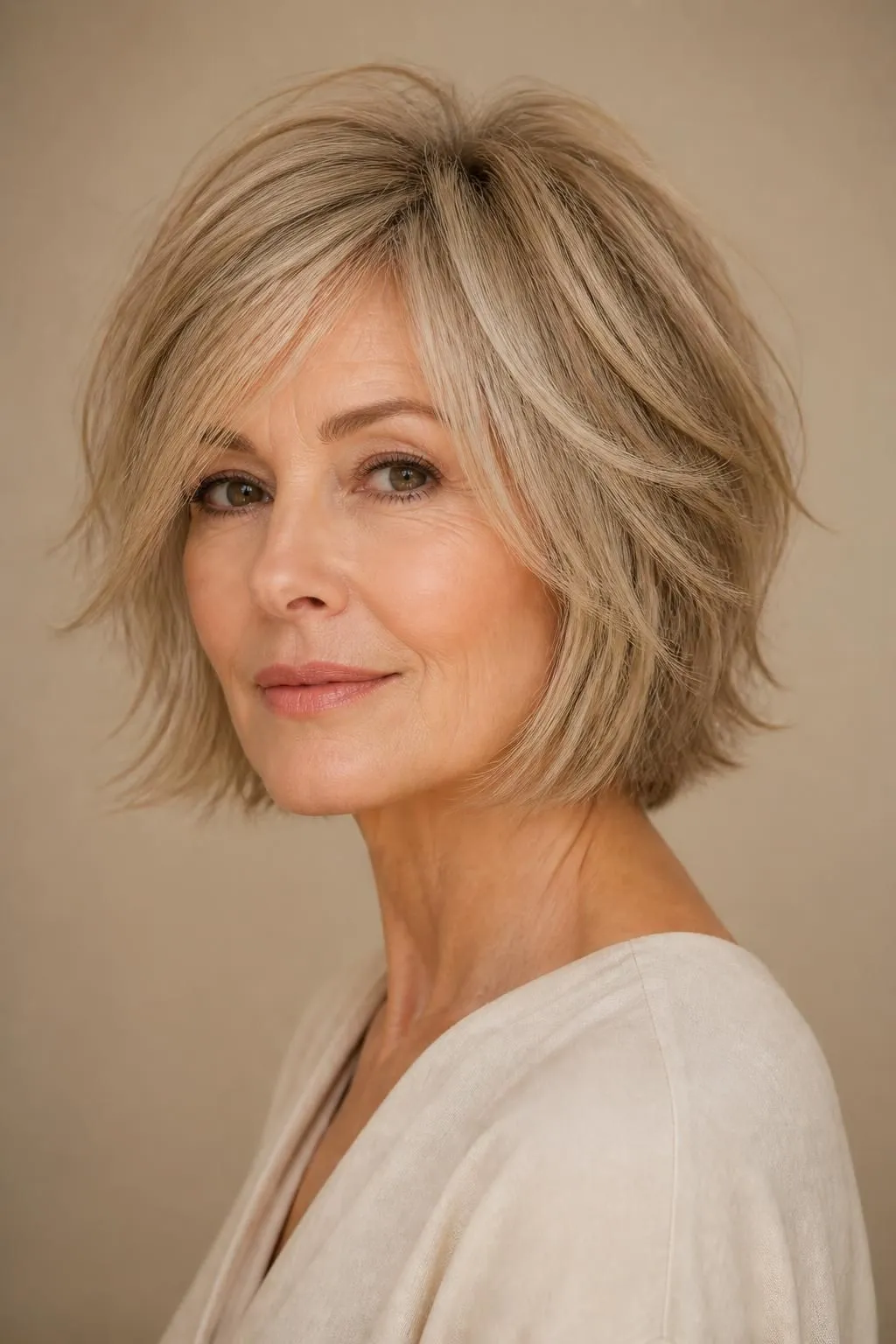
The “shob,” or shag bob, blends the structure of a bob with the texture of a shag, landing at chin to collarbone length. This hybrid style is excellent for thin hair because it keeps enough length to add weight and body while still incorporating layers that create lift and movement.
This cut looks polished yet effortless, transitioning easily from professional settings to casual weekends without much restyling.
Tips for Styling a Shob
- Use a round brush to curve the ends slightly inward for a soft, rounded shape.
- Apply a lightweight serum to smooth flyaways without weighing hair down.
- Try air-drying with a diffuser for natural texture on wavy hair types.
7. Shag with Wispy Bangs
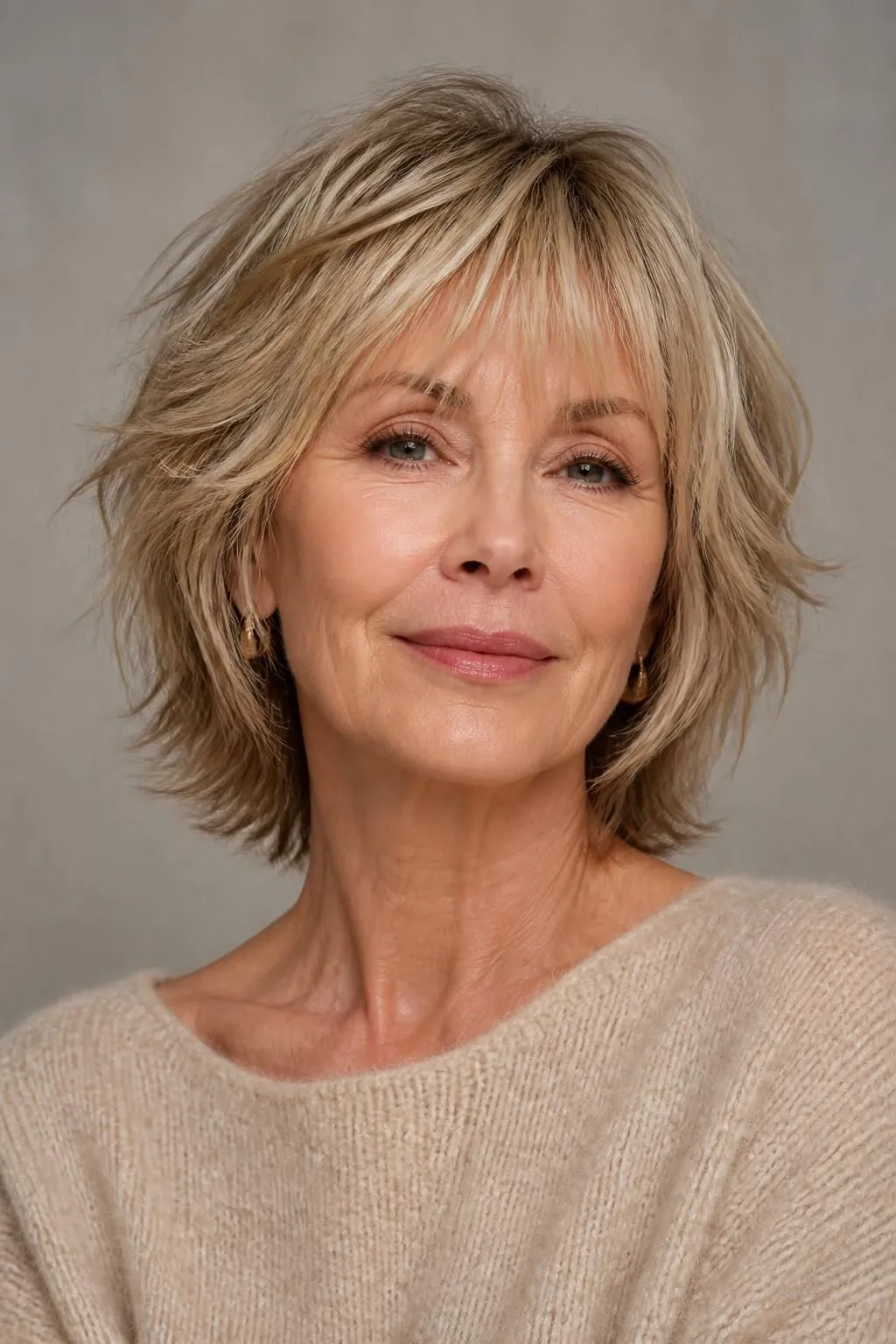
Wispy bangs are thin, feathered pieces that sit softly across the forehead rather than a full, blunt fringe. Paired with a shag, these bangs add a delicate frame to the face without adding heaviness, which is ideal for those with thin hair who still want a fringe. The wispy texture blends naturally into the surrounding layers.
This style softens facial features and can help create the appearance of a more youthful hairline, especially for those noticing thinning near the forehead.
Tips for Styling Wispy Bangs
- Use a fine-tooth comb to separate bangs into thin, textured pieces.
- Apply a tiny amount of pomade to the tips only for definition without grease.
- Blow-dry bangs on a low setting to avoid frizz and maintain softness.
8. Feathered Shag
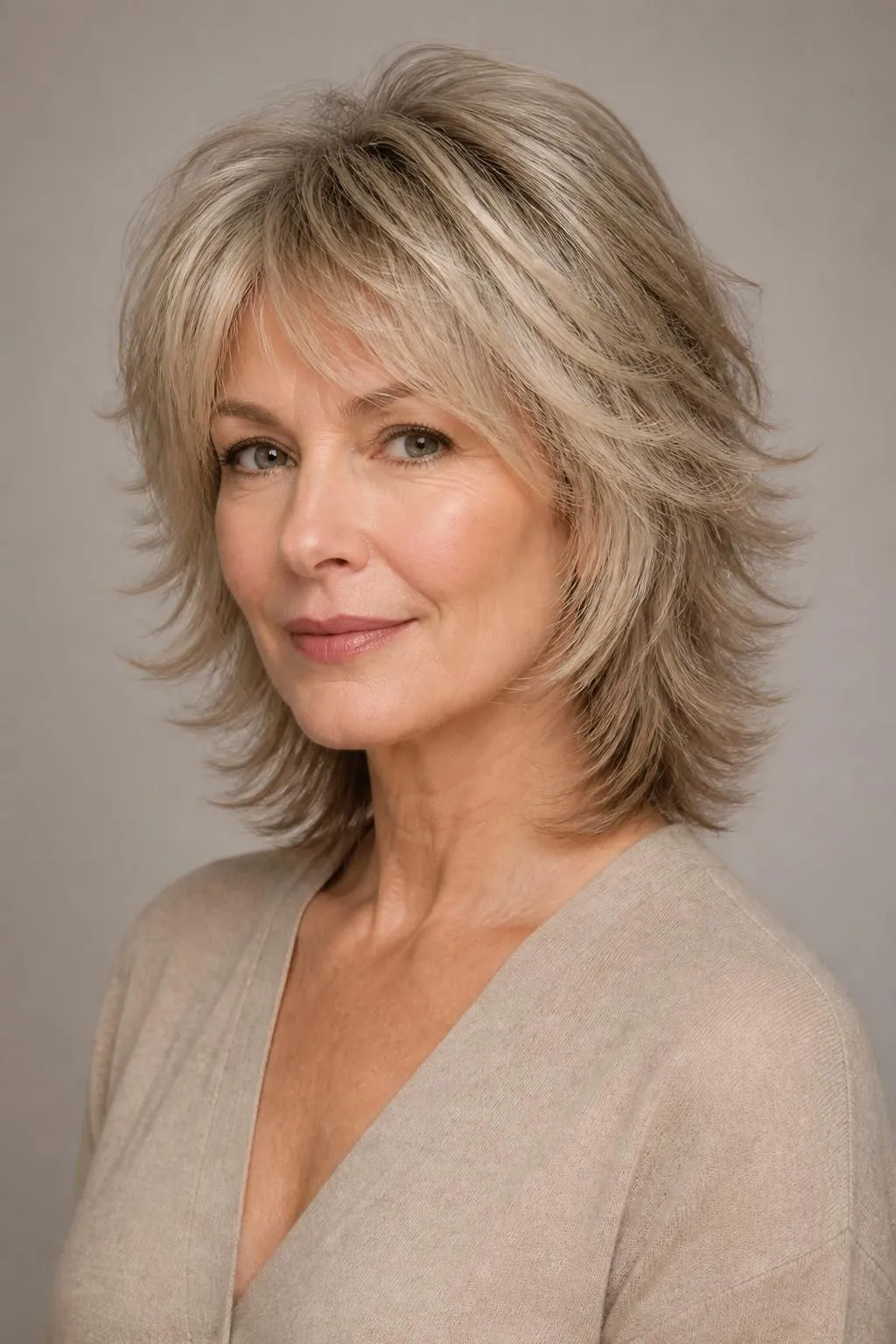
The feathered shag features layers that flip outward at the ends, creating a soft, winged effect reminiscent of 70s glamour. This technique adds noticeable volume and movement, particularly around the crown and sides, making it a fantastic option for thin hair that needs extra dimension.
This style has made a strong comeback because it photographs beautifully and offers a nostalgic, glamorous feel while remaining easy to recreate at home.
Tips for Styling a Feathered Shag
- Use a round brush to flip ends outward while blow-drying.
- Set curls briefly with a cool shot of air to help them hold their flip.
- Finish with a flexible-hold hairspray to maintain movement all day.
9. Shag with Root Volume (Perm or Blow-Dry Technique)
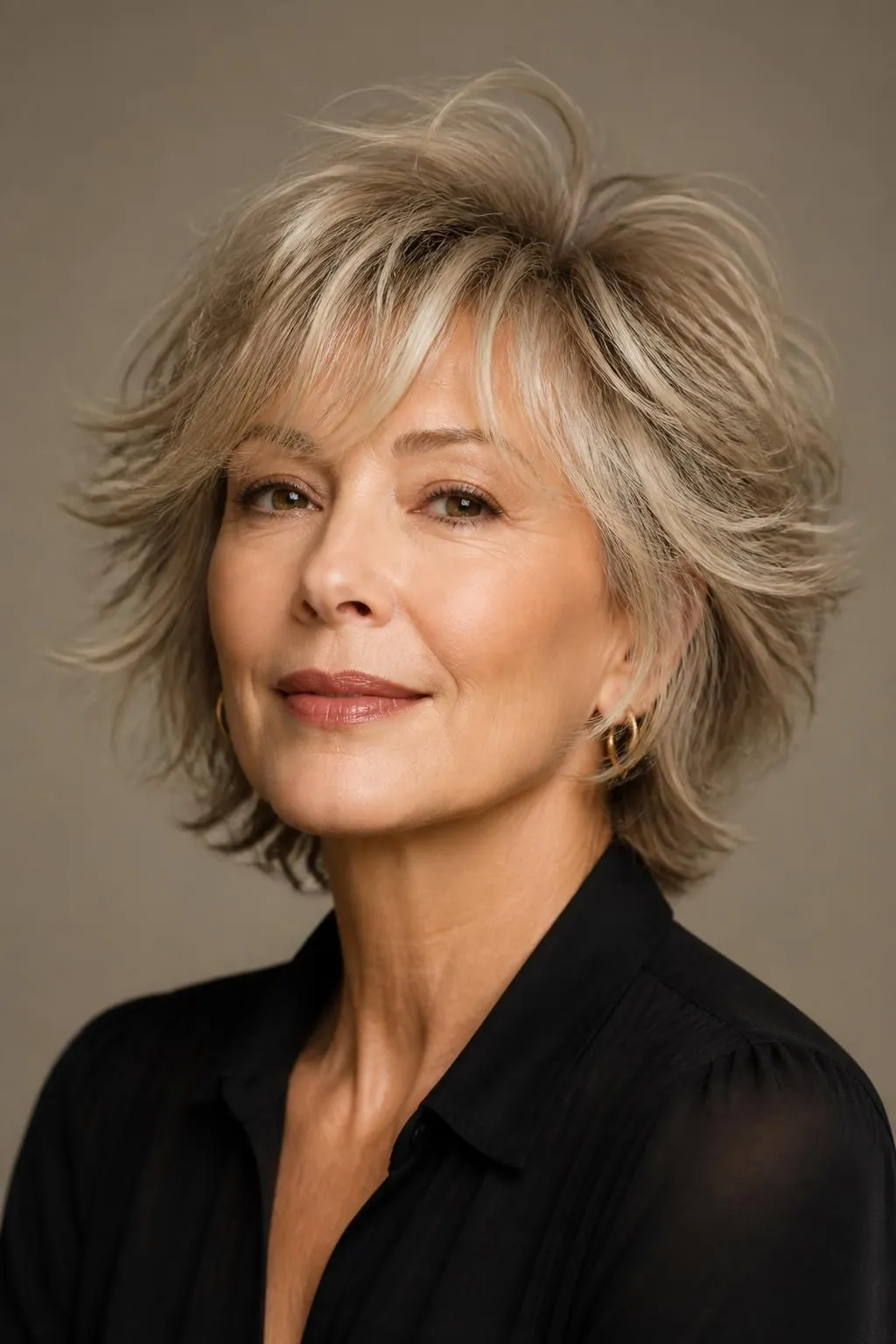
For those whose fine hair falls flat no matter what products they use, a shag paired with added root volume can be transformative. This can be achieved through a gentle volumizing perm or a dedicated blow-drying routine focused entirely on lifting the roots. The layers of the shag then add texture on top of that base volume.
This approach is especially useful for those wanting long-lasting lift without daily styling effort, as root perms can maintain their shape for several weeks.
Tips for Boosting Root Volume
- Ask your stylist about a light volumizing perm limited to the root area.
- Use velcro rollers at the crown while hair air-dries for gentle lift.
- Apply root-lifting spray directly to the scalp before blow-drying.
10. Textured Shag with Balayage
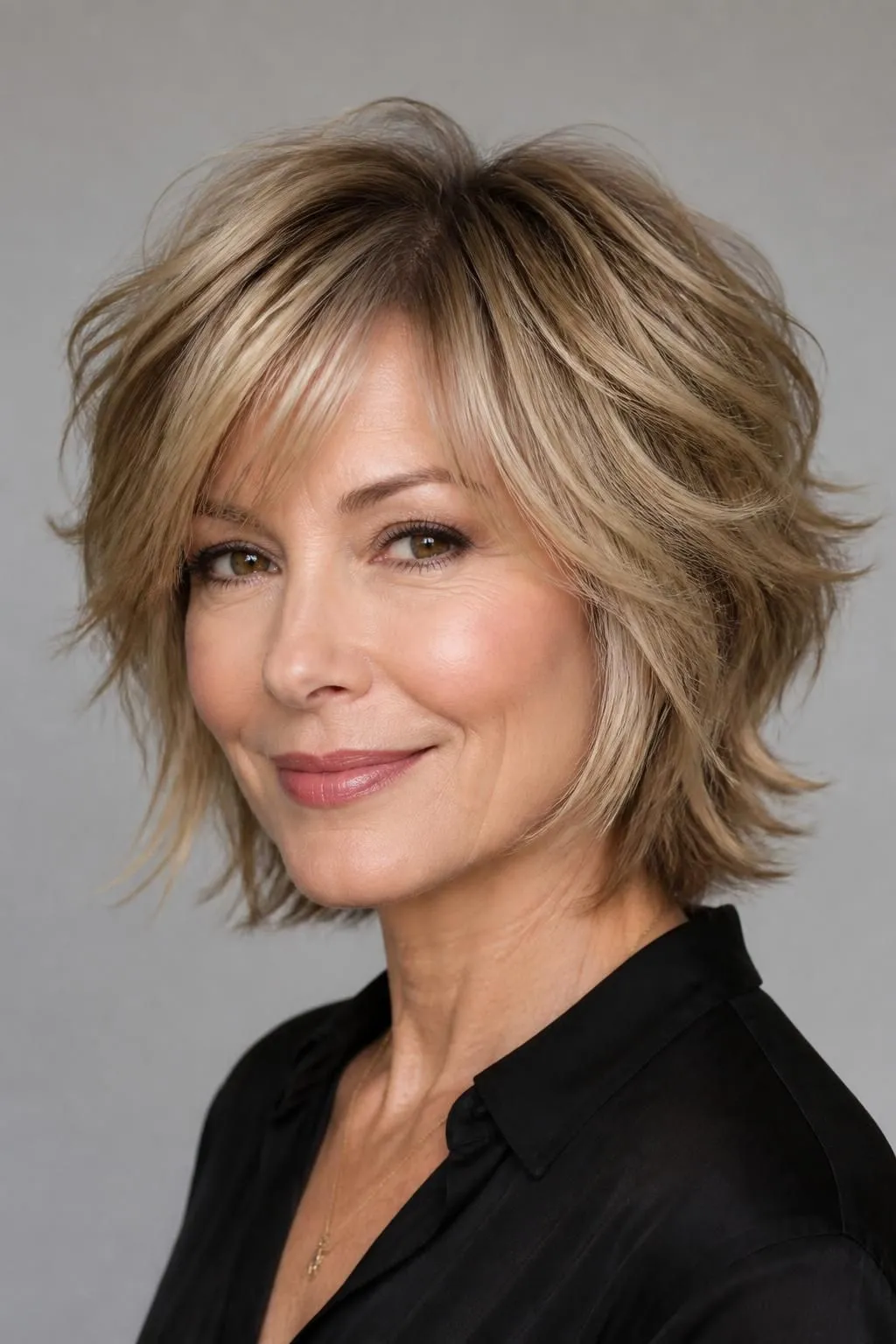
Adding balayage to a shag enhances the layers by highlighting individual pieces of hair, which creates the illusion of extra dimension and thickness. The multi-tonal color catches light differently across the layers, making thin hair appear fuller and more textured than a single, flat color would.
This combination is particularly flattering for those wanting a soft, sun-kissed look that also camouflages any visible scalp or thinning areas.
Tips for Maintaining a Balayage Shag
- Use a color-safe, sulfate-free shampoo to protect vibrancy between salon visits.
- Schedule a gloss treatment every few months to keep tones fresh.
- Apply a leave-in conditioner to prevent color-treated ends from feeling brittle.
11. Shag with Side-Swept Bangs
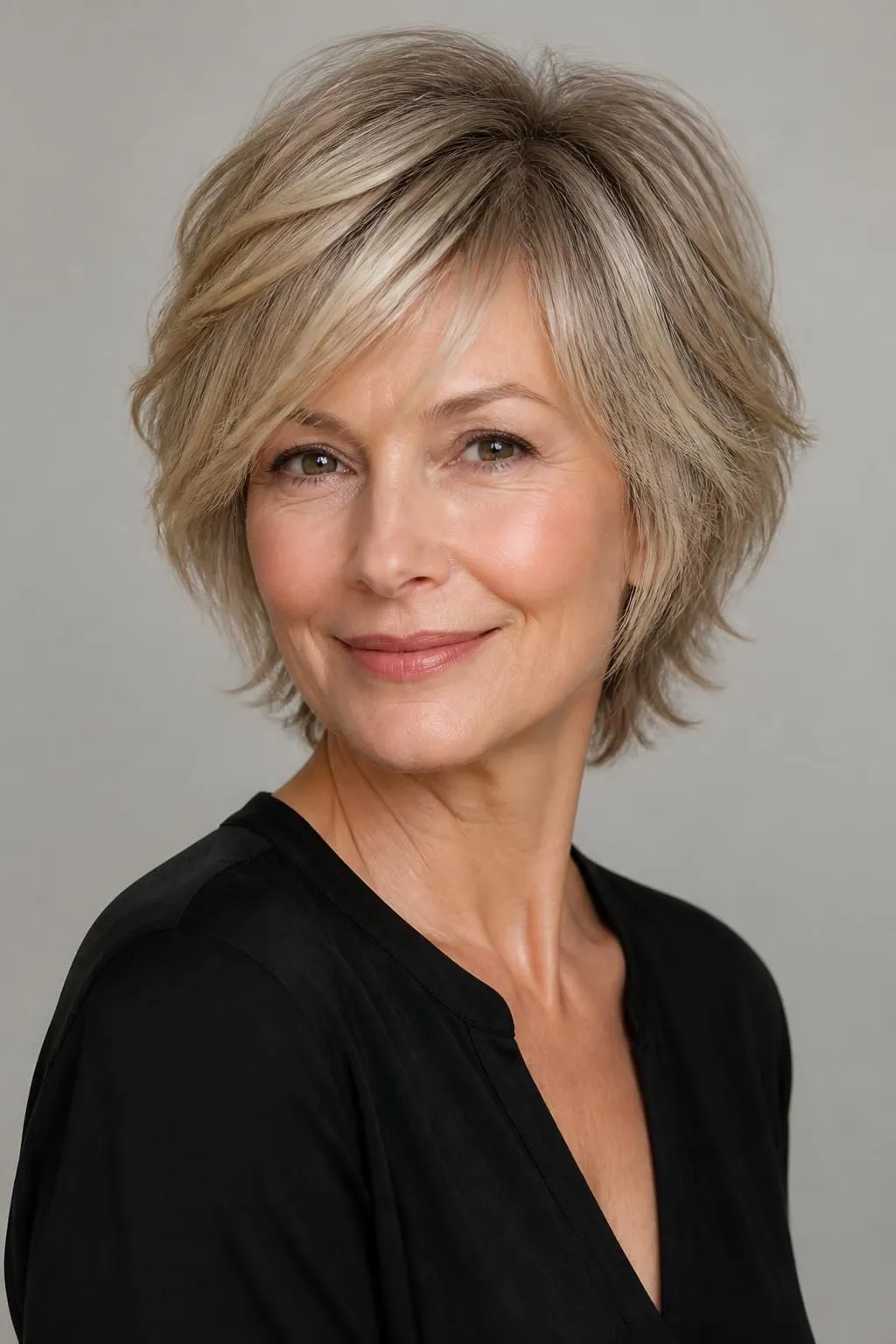
Side-swept bangs angle across the forehead rather than falling straight down, blending naturally into the layers of a shag. This style adds softness and can help balance face shape, particularly for those with rounder or squarer features. The angled bangs also add subtle volume near the crown.
Because they’re swept to one side, these bangs are easier to grow out or adjust compared to a full, blunt fringe, offering more styling flexibility over time.
Tips for Styling Side-Swept Bangs
- Blow-dry bangs in the direction you want them to fall using a round brush.
- Use a bobby pin to hold bangs in place while they cool for lasting shape.
- Apply a light hairspray to keep bangs from shifting throughout the day.
12. Choppy Shag
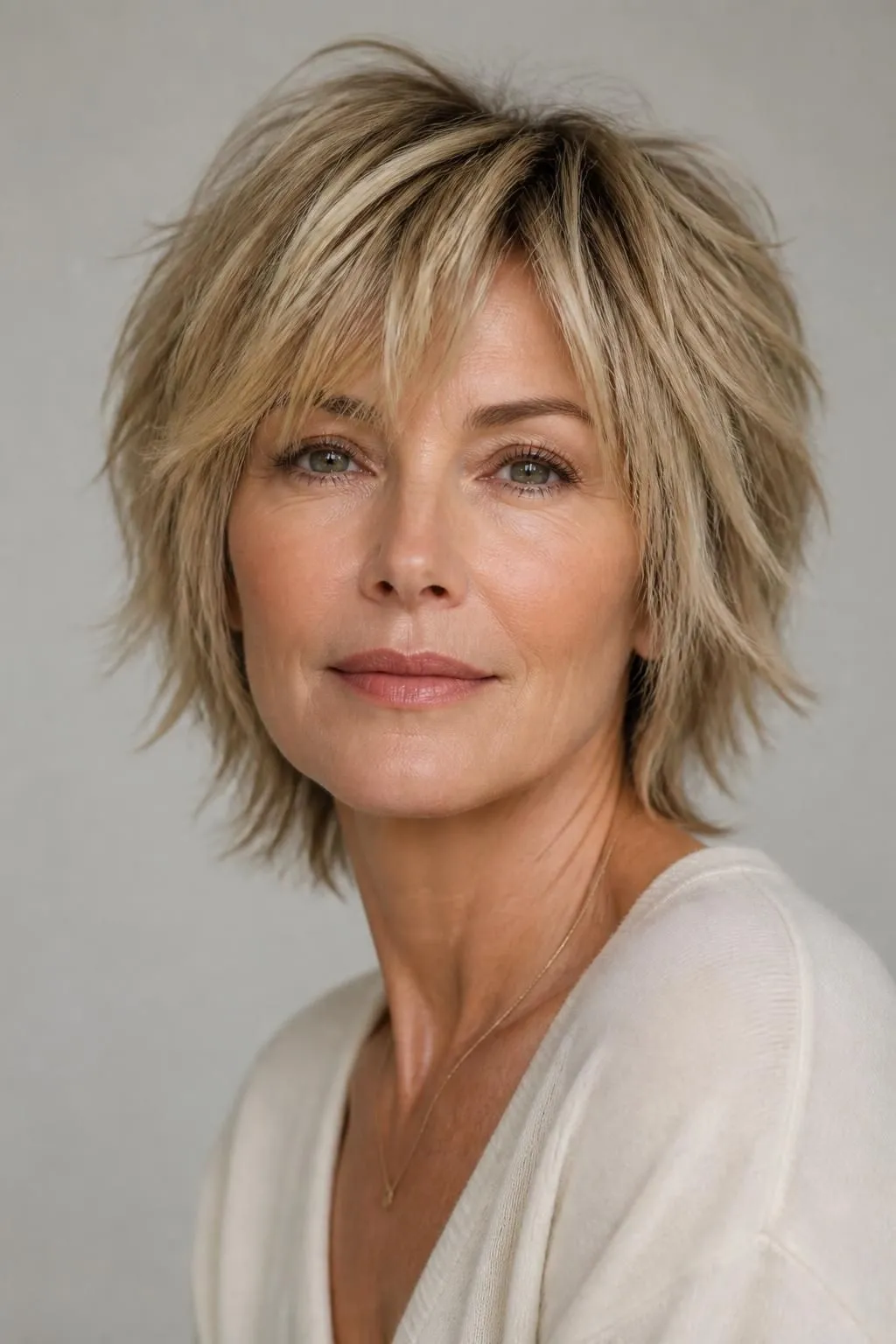
A choppy shag uses razor-cut or point-cut techniques to create jagged, textured ends throughout the layers. This adds a slightly edgy, undone quality that works exceptionally well for thin hair, since the uneven cutting removes weight strategically without stripping away volume. The result looks effortlessly cool rather than overly styled.
This cut is ideal for those wanting a low-maintenance look that still appears intentional, even when air-dried or lightly tousled.
Tips for Styling a Choppy Shag
- Use a texturizing pomade on dry hair to define choppy pieces.
- Avoid smoothing brushes, which flatten the piece-y texture.
- Scrunch hair gently while drying to enhance natural texture.
13. Shag with Face-Framing Highlights
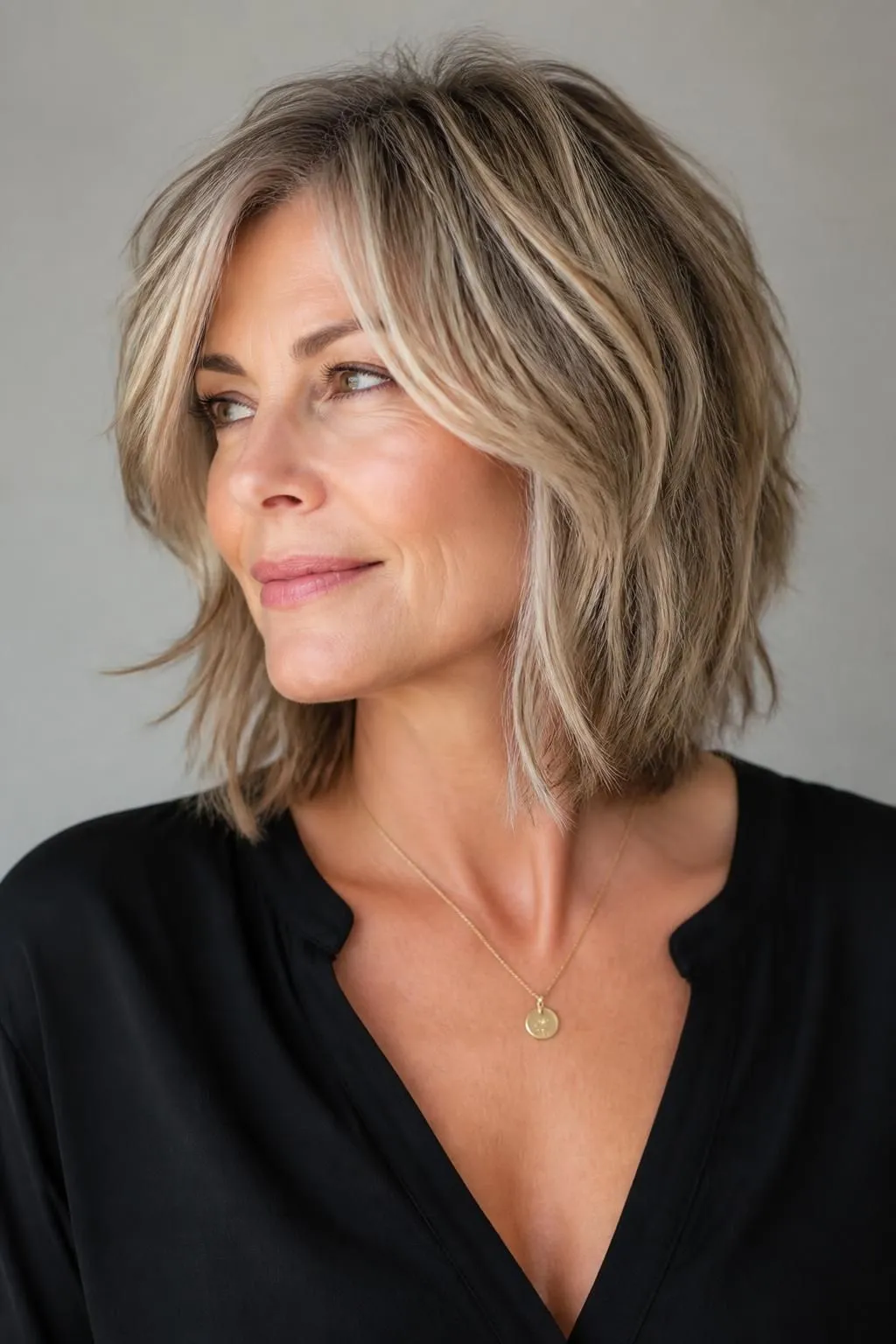
Rather than full balayage, subtle face-framing highlights placed strategically around the front pieces of a shag can brighten the complexion and add dimension exactly where it’s most visible. This targeted approach requires less maintenance than full-head color while still delivering a noticeable lift in both tone and perceived volume.
This technique works especially well for softening the transition to gray or adding warmth back into hair that’s lost some of its natural vibrancy.
Tips for Maintaining Face-Framing Highlights
- Touch up highlights every 8 to 10 weeks to keep them looking fresh.
- Use a purple or blue-toned shampoo if highlights are blonde or gray to prevent brassiness.
- Apply a hydrating hair mask weekly to keep highlighted strands healthy.
14. Voluminous Crown Shag
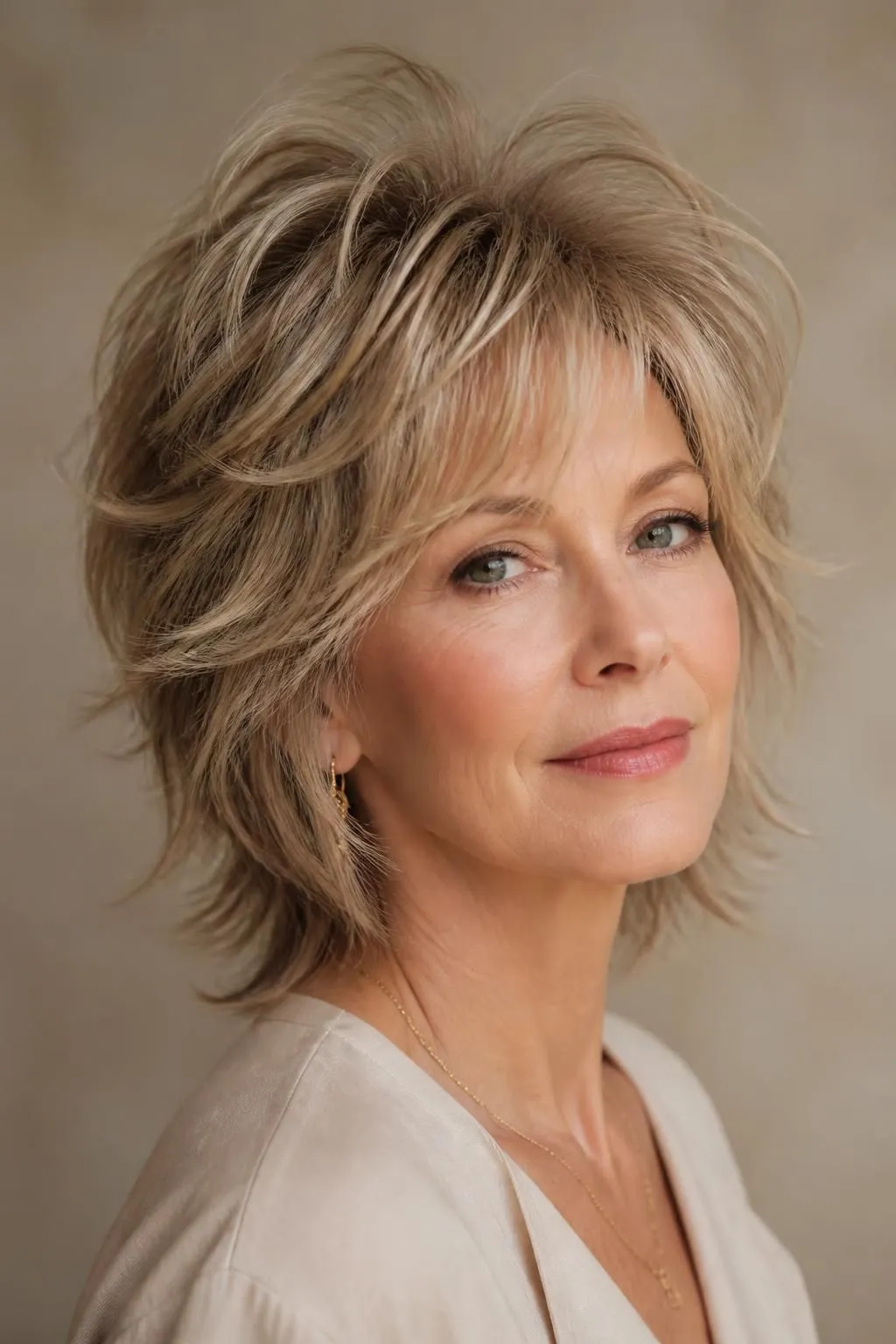
This variation focuses layering specifically at the crown, where thin hair tends to lose volume most noticeably as we age. Shorter, more concentrated layers at the top of the head create built-in lift, while the rest of the shag flows more naturally toward the ends. This targeted approach addresses one of the most common concerns for thinning hair.
The result is a style that looks full and lifted from the moment you finish styling, without requiring constant touch-ups throughout the day.
Tips for Styling a Voluminous Crown Shag
- Blow-dry the crown section upside down for maximum lift before styling the rest.
- Use root-lifting spray focused only at the crown to avoid weighing hair down.
- Consider a light dusting of dry shampoo at the roots for texture and grip.
15. Shag with Full Fringe
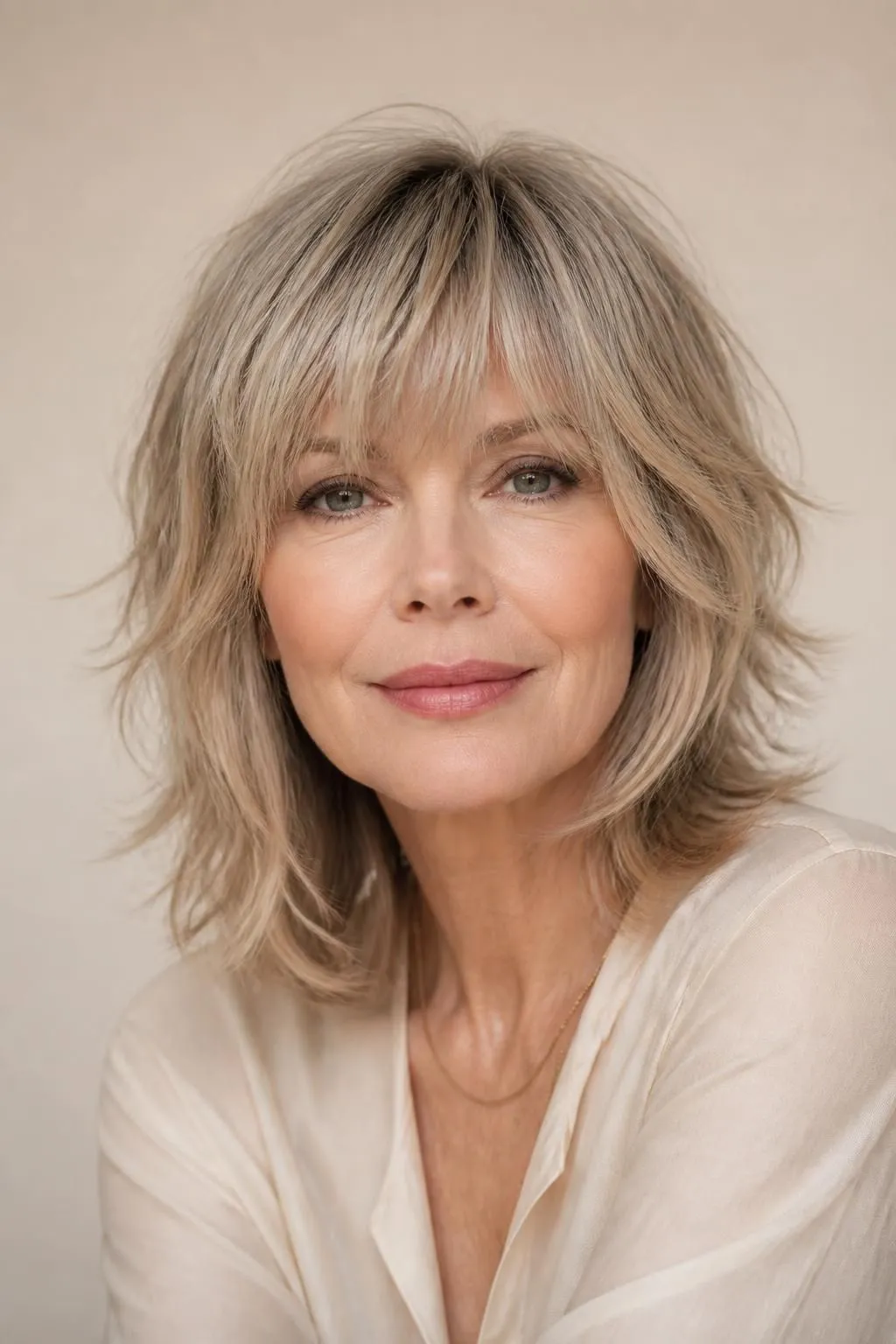
A full, blunt fringe paired with shag layers creates a bold, statement-making look that instantly adds fullness to the upper face. Unlike wispy bangs, a full fringe covers more of the forehead, which can visually balance a longer face shape while drawing attention to the eyes.
This combination works particularly well for those wanting a dramatic change, as the contrast between the blunt fringe and choppy shag layers creates striking visual interest.
Tips for Styling a Shag with Full Fringe
- Trim fringe every 3 to 4 weeks to maintain a crisp, intentional shape.
- Blow-dry fringe flat using a paddle brush for a smooth finish.
- Use a small amount of anti-frizz serum to keep fringe polished in humidity.
16. Wavy Shag
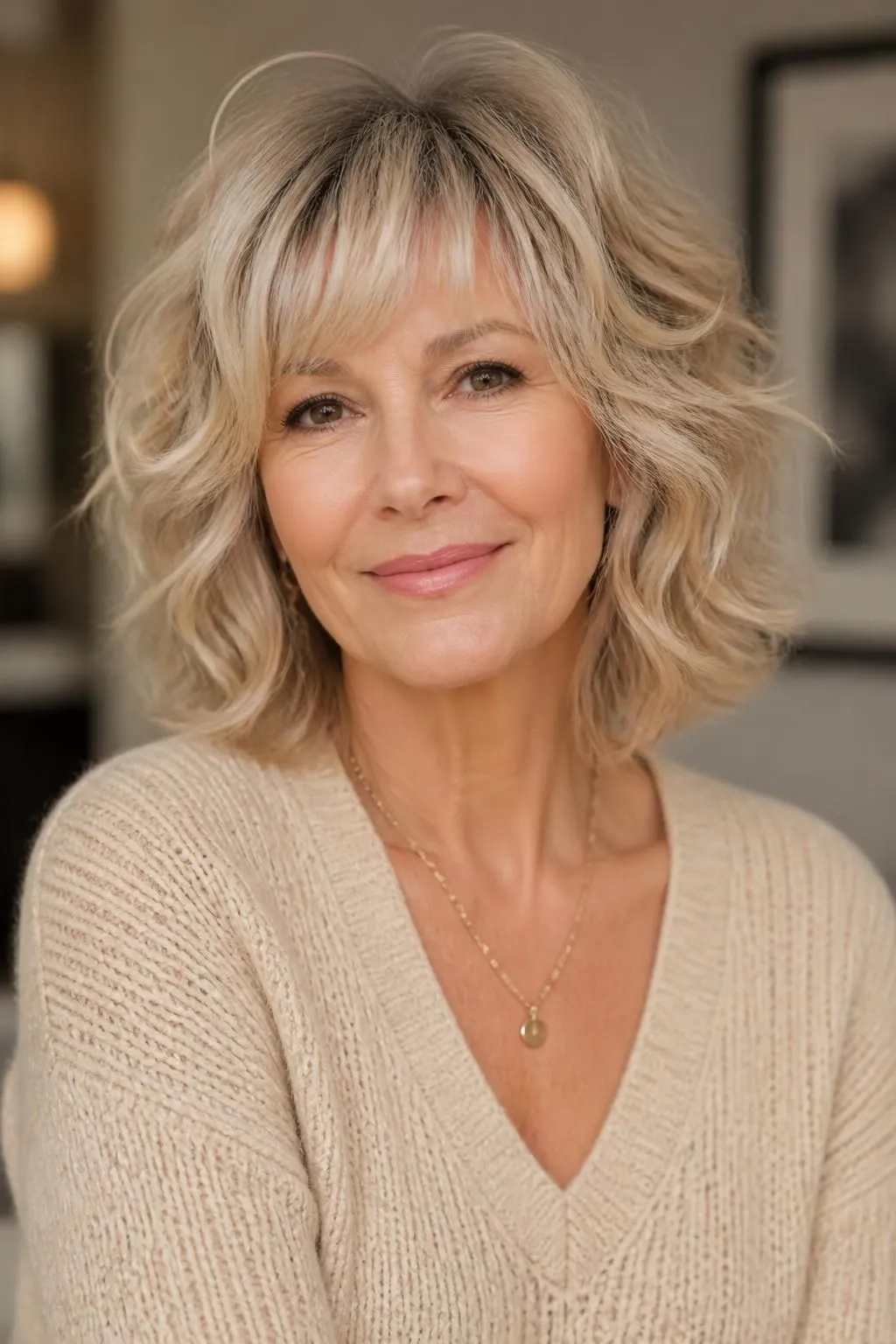
A wavy shag embraces natural texture, letting loose waves enhance the separation between layers. For thin hair, waves add dimension and movement that straight styles often lack, creating the appearance of thicker, more textured hair overall. This look is relaxed and effortless, perfect for everyday wear.
The key to this style is keeping waves loose and undefined rather than tight or uniform, which helps maintain a natural, youthful appearance.
Tips for Getting Waves on a Shag
- Braid damp hair loosely overnight for heatless waves by morning.
- Use a 1-inch curling wand, alternating curl direction for natural movement.
- Apply a texturizing spray to damp hair before air-drying for added grip.
17. Shag with Undercut Layers
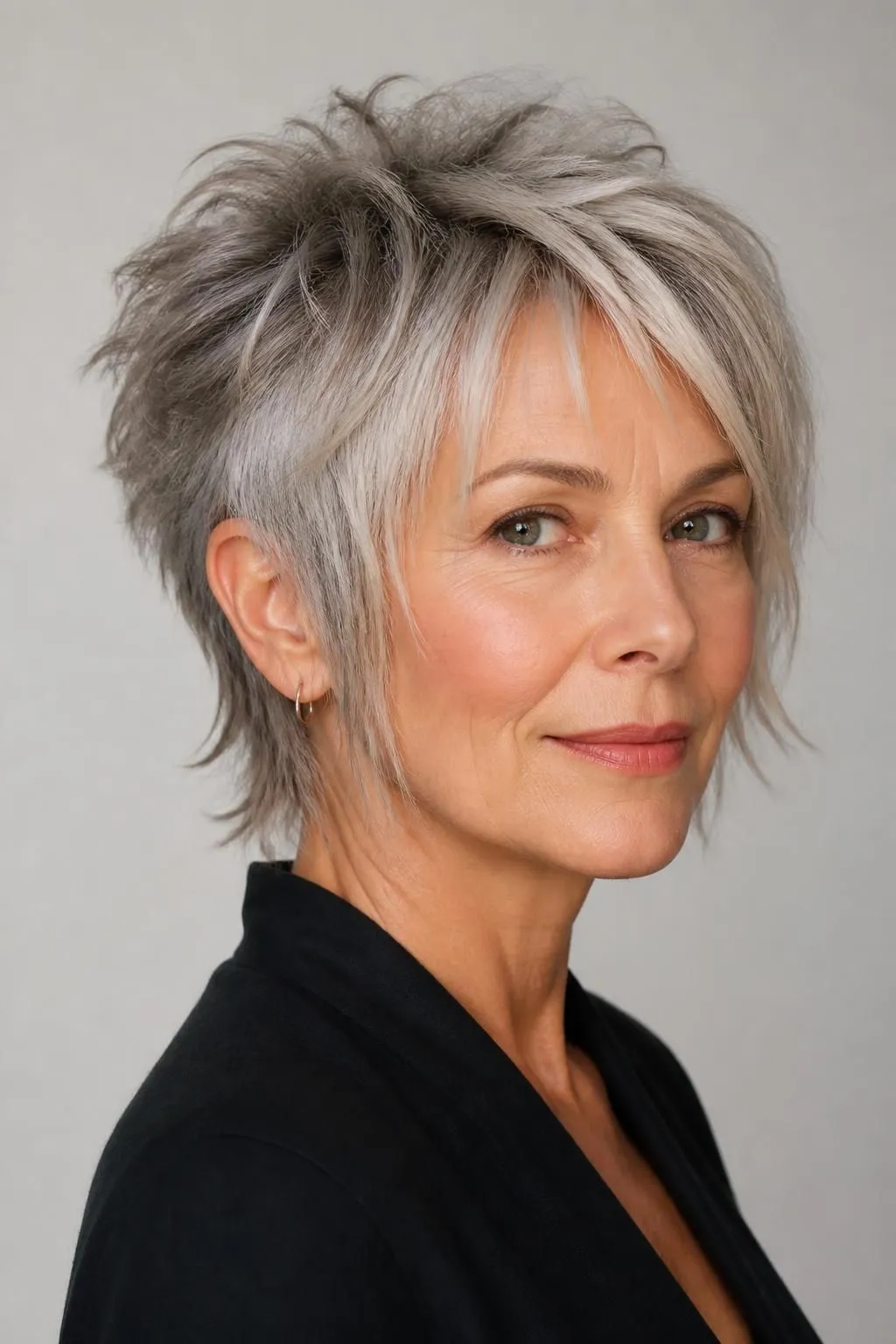
Hidden undercut layers beneath the top section of hair remove bulk from underneath while preserving length and volume on top. This technique is particularly useful for thin hair that feels heavy or lifeless despite its actual thinness, as it lightens the overall weight without shortening the visible length.
This style also creates a lighter, airier feel, which can make hair easier to style and quicker to dry.
Tips for Maintaining Undercut Shag Layers
- Schedule maintenance trims every 6 to 8 weeks to keep underlayers from growing out unevenly.
- Use a lightweight mousse on top sections to avoid flattening the added lift.
- Avoid heavy conditioners on underlayers, which can weigh down the effect.
18. Silver or Gray Shag
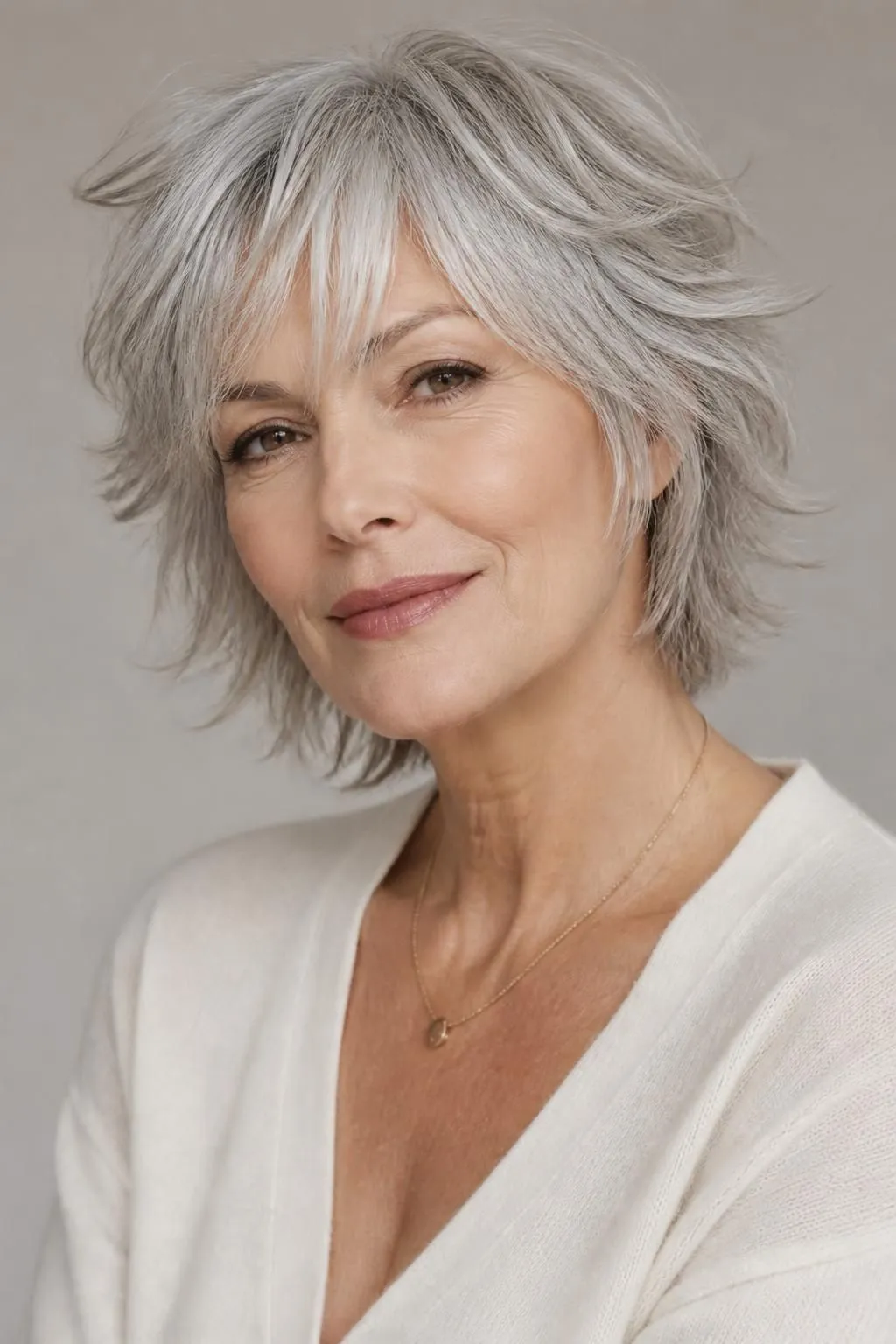
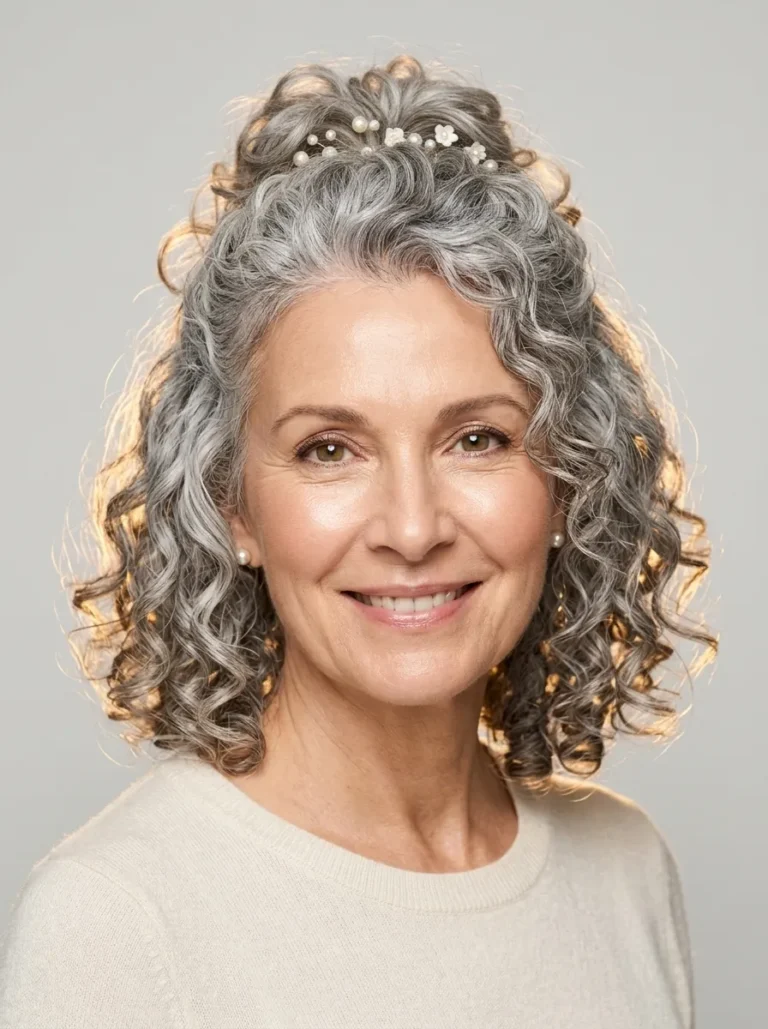
Embracing natural gray or silver tones with a shag haircut is a beautiful, low-maintenance option for those transitioning away from color. The choppy layers of a shag add texture and movement to gray hair, which can sometimes appear flat or coarse, helping it look more vibrant and full.
This style celebrates natural hair color while using the shag’s structure to keep the overall look modern and youthful rather than dated.
Tips for Styling a Silver or Gray Shag
- Use a purple-toned shampoo weekly to keep gray tones bright and prevent yellowing.
- Apply a hydrating leave-in treatment, as gray hair often feels drier and coarser.
- Add a glossing treatment for extra shine and smoothness between cuts.
19. Shag with Micro-Layers
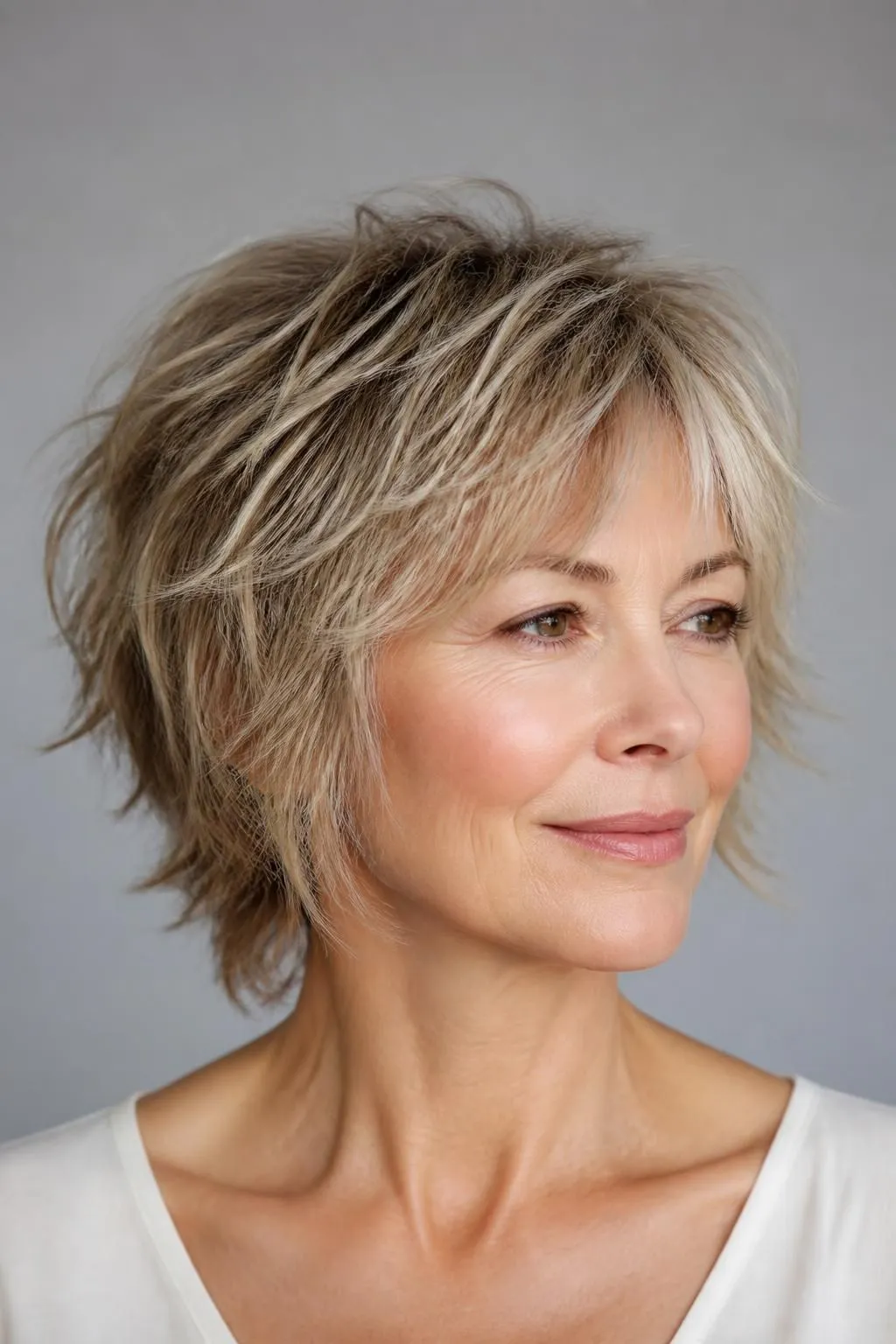
Micro-layers are extremely fine, closely spaced layers cut throughout the hair, creating soft, feathery movement rather than distinct, chunky pieces. This subtle approach works well for those wanting the volume benefits of a shag without a dramatically choppy appearance. The layers blend seamlessly for a softer, more polished finish.
This style suits those who prefer a more refined, elegant look while still benefiting from the lift and texture a shag provides.
Tips for Styling a Shag with Micro-Layers
- Use a round brush to smooth and shape layers during blow-drying.
- Apply a lightweight shine spray to enhance the soft, blended look.
- Avoid heavy texturizing products, which can disrupt the subtle layering effect.
20. Asymmetrical Shag
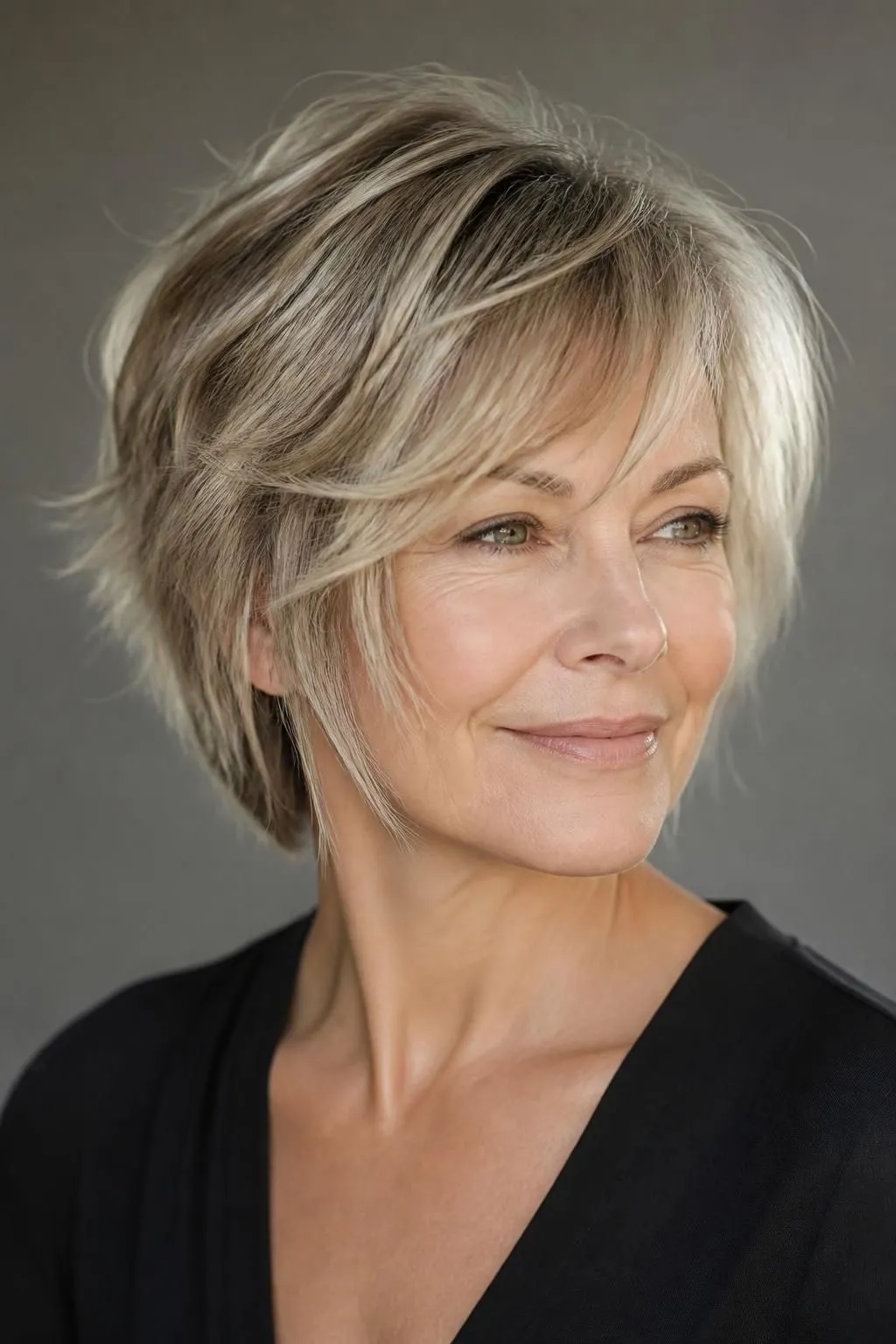
An asymmetrical shag features uneven lengths between the two sides, adding a modern, edgy twist to the classic layered cut. This bold styling choice draws the eye diagonally across the face, which can create a slimming effect while making thin hair appear more structured and intentional.
This style works particularly well for those wanting a distinctive, statement-making haircut that stands out while still offering the volume benefits of a shag.
Tips for Styling an Asymmetrical Shag
- Keep the shorter side styled close to the face to emphasize the angle.
- Use a flat iron to define the longer side for contrast against textured layers.
- Ask your stylist to keep the asymmetry subtle for an easier everyday style.
21. Shag with Blunt Ends and Soft Layers

Combining blunt ends with softer, more subtle layering throughout the rest of the hair offers a middle ground between a traditional shag and a blunt cut. The blunt ends add the appearance of thickness, since more hair is stacked together at the bottom, while the internal layering still provides movement and lift.
This style is a great option for those who want the volume benefits of a shag without a heavily choppy or textured appearance.
Tips for Styling Blunt Ends with Soft Layers
- Use a flat iron on the ends only to keep the blunt line crisp and defined.
- Apply volumizing mousse to the roots and mid-lengths before blow-drying.
- Avoid over-brushing, which can soften the blunt line too much.
22. Modern Mullet-Inspired Shag
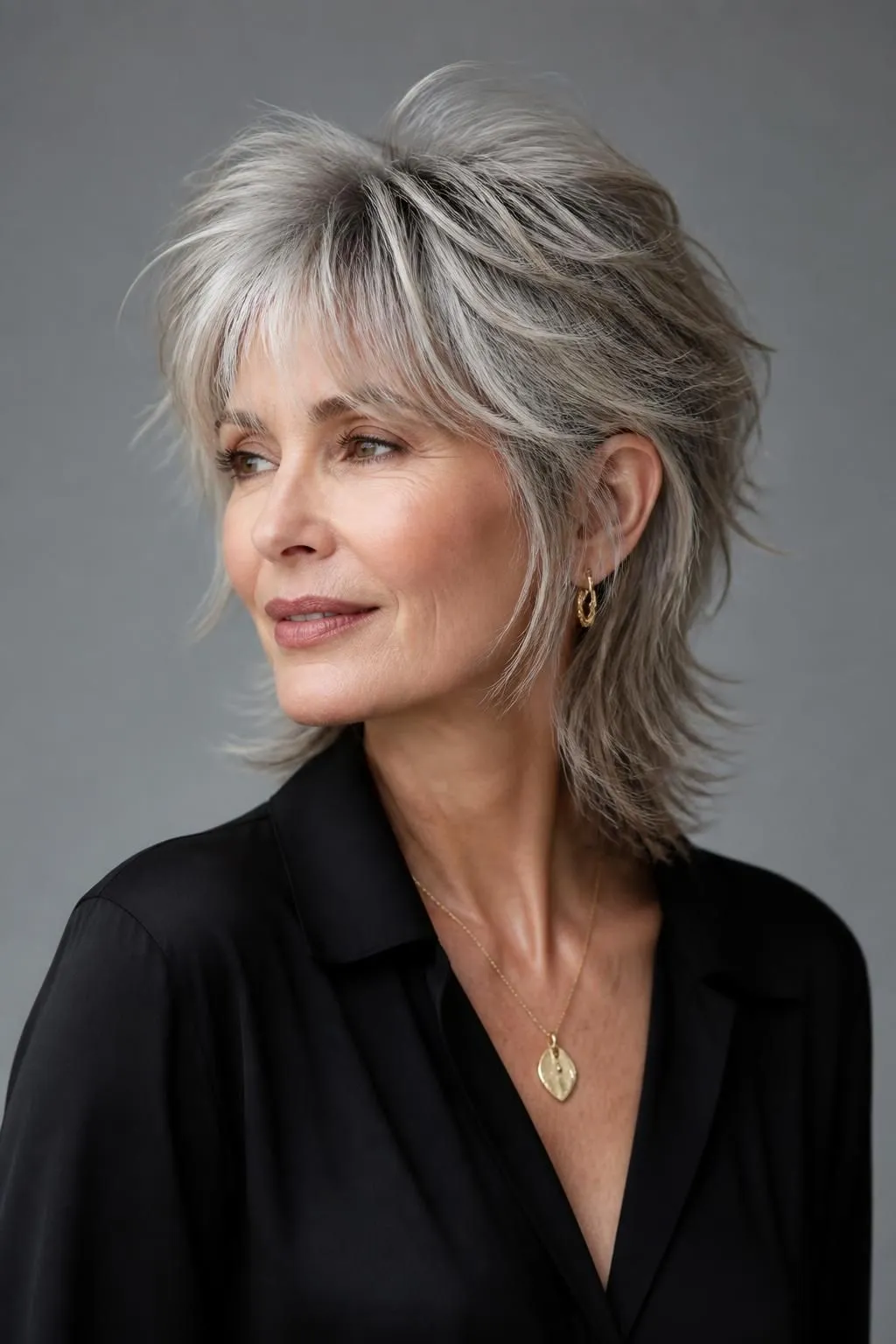
The modern mullet-shag hybrid takes cues from the classic mullet, with shorter layers on top and slightly longer pieces toward the back, blended with the airy texture of a traditional shag. This bold, trend-forward style creates dramatic volume at the crown while maintaining a soft, wearable shape overall.
This cut is ideal for those wanting a fashion-forward, youthful style that stands out from more traditional layered cuts while still being flattering for thin hair.
Tips for Styling a Modern Mullet-Shag
- Focus root-lifting product application at the crown for maximum volume.
- Use a texturizing spray on the ends to enhance the shaggy, undone finish.
- Blow-dry with your fingers rather than a brush to keep the texture loose and modern.
FAQs
Does a shag haircut make thin hair look thicker? Yes, the layered, choppy structure of a shag adds visual texture and separation, which creates the appearance of fuller, thicker hair even when the actual hair density hasn’t changed.
What is the best shag length for thin fine hair over 50? Shoulder-length to chin-length shags tend to work especially well, offering enough weight to hold shape while remaining short enough to avoid looking flat.
How often should a shag be trimmed to maintain volume? Most shag haircuts benefit from a trim every 6 to 8 weeks to keep the layers fresh and prevent them from growing out into a heavier, less voluminous shape.
Are bangs necessary for a shag hairstyle? No, bangs are optional. Many shag variations look just as full and youthful without a fringe, though bangs can add extra softness and volume around the face for those who want them.
Best Products for Volumizing Thin Fine Hair Shags
The right products make a real difference in how full a shag looks day to day. Lightweight volumizing mousses, root-lifting sprays, and texturizing dry shampoos all help build lasting lift without weighing hair down. Avoid heavy oils, silicone-based creams, or thick conditioners near the roots, since these tend to flatten fine hair. Instead, save richer products for the ends only. Pairing the right shag cut with the right styling products ensures your hair stays bouncy, textured, and youthful from morning to night.
Final Words
Thin, fine hair over 50 doesn’t have to mean giving up on volume or style. These 22 shag hairstyles show just how versatile this cut can be, offering options for every length, texture, and lifestyle. Whether you choose a classic layered shag, a bold mullet-inspired version, or a soft wavy style with curtain bangs, each one is designed to bring lift, texture, and a youthful glow to your everyday look. Talk to your stylist about which variation suits your face shape and hair goals, and enjoy a haircut that works with your hair instead of against it.