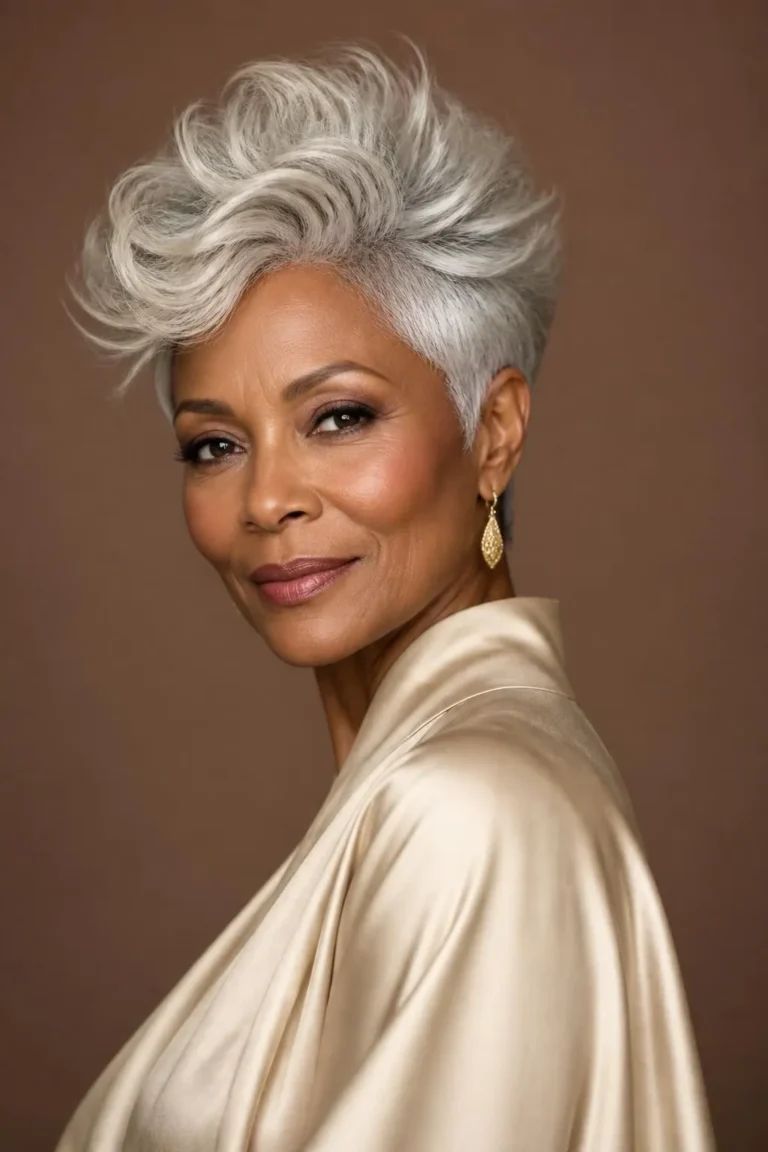
18 Short Shag Haircuts For Women Over 40 With Fine Hair That Add Instant Fullness
Fine hair has a way of falling flat by mid-morning, no matter how much product you pile on — and once you’re over 40, hormonal changes can make that thinning, limp texture even more noticeable. The good news is that the right haircut does more heavy lifting than any volumizing spray ever could, and the short shag is one of the best cuts out there for exactly this problem.
Built on choppy layers and textured ends, a shag creates the illusion of thickness by breaking up the hair into pieces that catch air and movement instead of lying in one heavy sheet. Below are eighteen short shag variations that flatter fine hair specifically, each one bringing a slightly different level of edge, softness, or drama to the table.
Ready to find the shag that gives your hair its bounce back? Here are eighteen cuts worth bringing to your stylist.
1. The Classic Choppy Shag

The original shag is still one of the best options for fine hair, and for good reason. Heavily textured layers, cut at varying lengths throughout, create the appearance of density even when your actual hair strand count is on the lower side. Every layer catches light and movement differently, which tricks the eye into seeing fullness that isn’t naturally there.
This version works especially well chin-to-shoulder length, since anything longer tends to weigh the choppy layers down and flatten the volume they’re meant to create. It’s a low-maintenance cut too — a quick tousle with your fingers after air-drying is often all it needs.
Tips for styling a classic choppy shag:
- Use a texturizing spray on damp hair before blow-drying to enhance the choppy effect.
- Scrunch rather than brush after drying to keep the piece-y texture intact.
- Ask your stylist to point-cut the ends rather than blunt-cutting for a softer, wispier finish.
2. Shag With Curtain Bangs
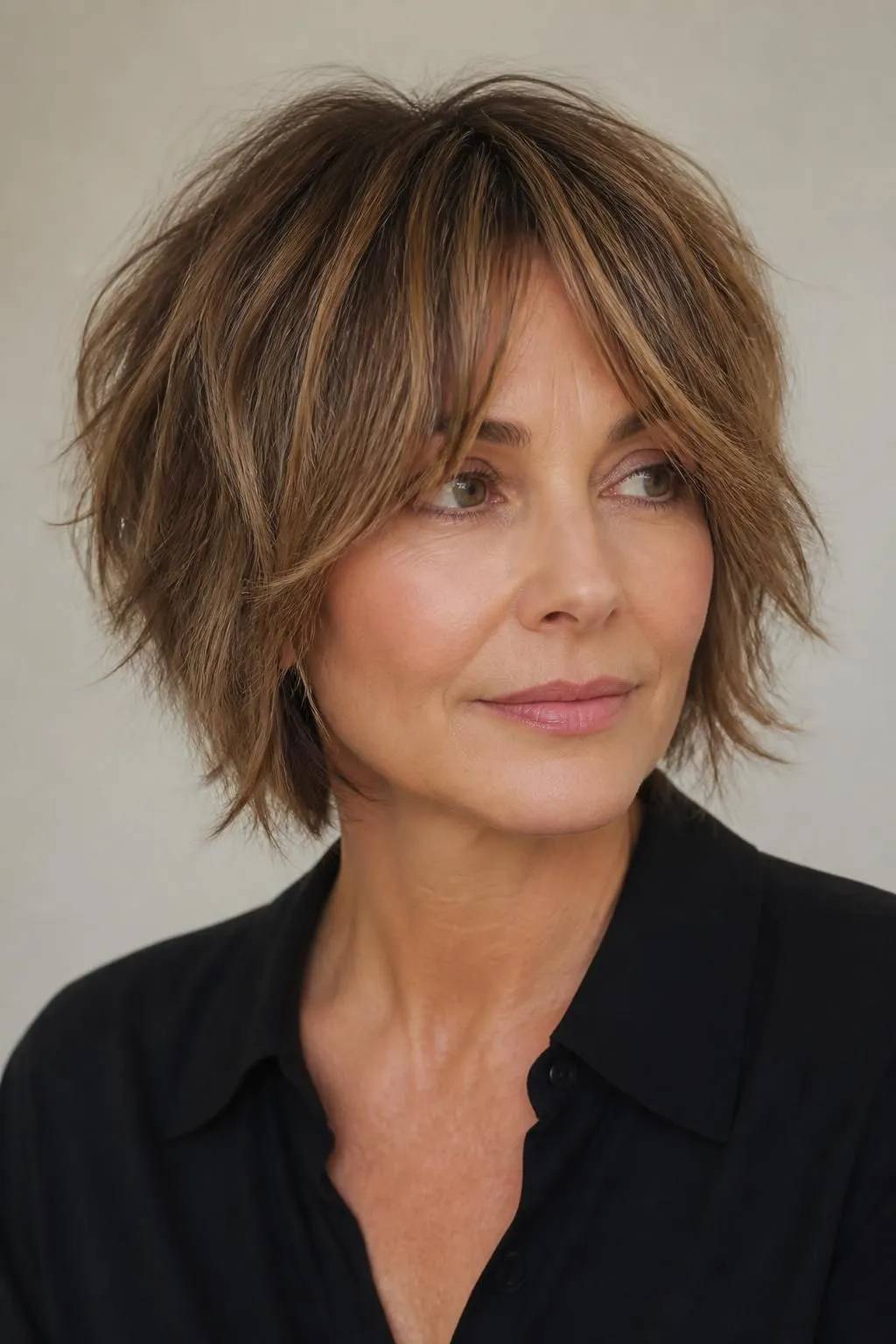
Pairing a shag with curtain bangs is one of the most flattering combinations for fine hair, since the soft, face-framing fringe adds volume right where it’s needed most — around the face. The layers of the shag then continue that same textured energy through the rest of the cut.
Curtain bangs also grow out more gracefully than a full fringe, making this a forgiving choice if you’re not ready to commit to constant trims. Styled with a round brush, they curve softly away from the face for extra lift at the roots.
Tips for styling curtain bangs with a shag:
- Blow-dry bangs with a round brush, curving them away from your face for lift.
- A lightweight mousse at the roots keeps bangs from looking flat by midday.
- Trim bangs every 4–6 weeks to maintain the face-framing shape.
3. The Wolf Cut Shag
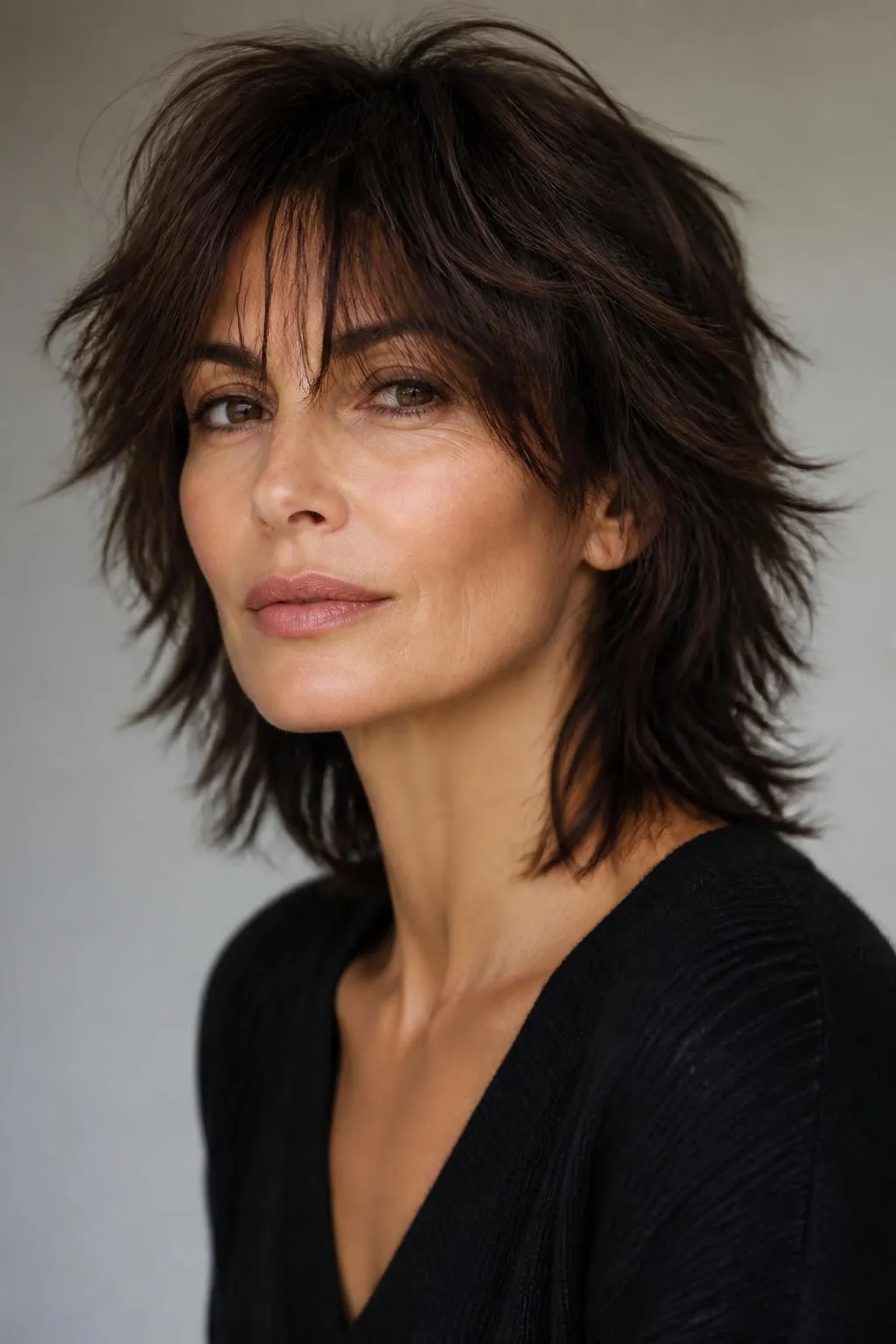
A hybrid between a shag and a mullet, the wolf cut has become one of the most requested cuts for fine hair thanks to its dramatic layering and heavy texture. Shorter, choppier layers on top build volume at the crown, while longer pieces underneath keep the overall shape from looking too severe.
This cut works particularly well if your hair tends to go flat at the roots throughout the day, since the shorter top layers naturally stand away from the scalp and hold their shape longer than a single-length cut ever could.
Tips for styling a wolf cut:
- Blow-dry upside down to maximize root lift before styling the top layers.
- Use a small amount of texturizing paste on the ends only to avoid weighing down the crown.
- A light dry shampoo at the roots each morning extends the volume between washes.
4. Pixie Shag
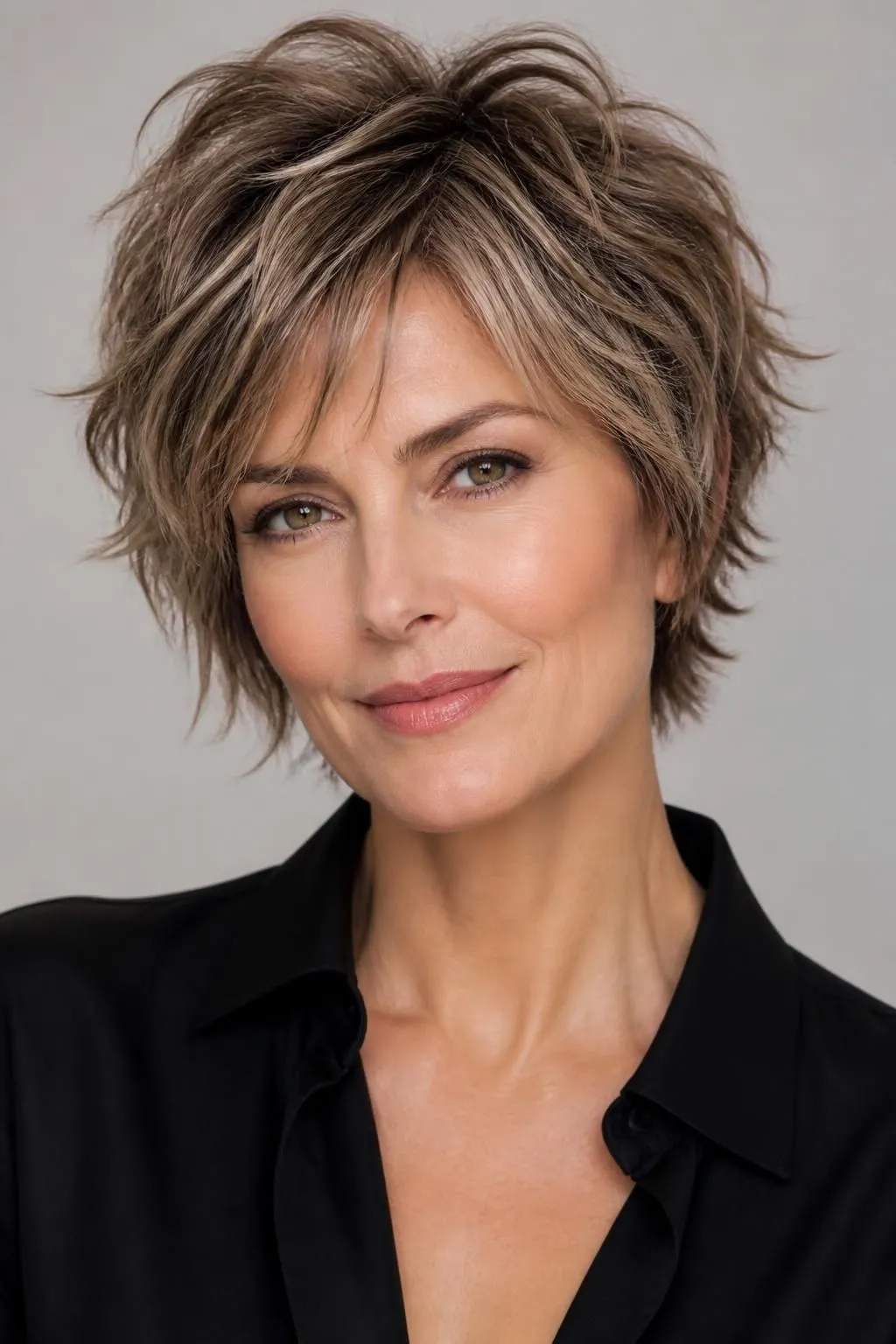
For those ready to go really short, a pixie shag combines the cropped length of a pixie cut with the choppy, textured layering of a shag. The result is a cut with serious volume at the crown and enough texture throughout to avoid the flat, helmet-like look fine hair can sometimes fall into with a plain pixie.
This is one of the lowest-maintenance options on the list, often requiring nothing more than a bit of texturizing cream worked through with your fingers. It also tends to make hair appear noticeably thicker than it actually is, since there’s simply less length for fine strands to be weighed down by.
Tips for styling a pixie shag:
- Apply texturizing cream to damp hair before drying to define individual pieces.
- Ask your stylist for extra texturizing at the crown for maximum lift.
- Keep up with trims every 4–5 weeks, since shorter cuts grow out more visibly.
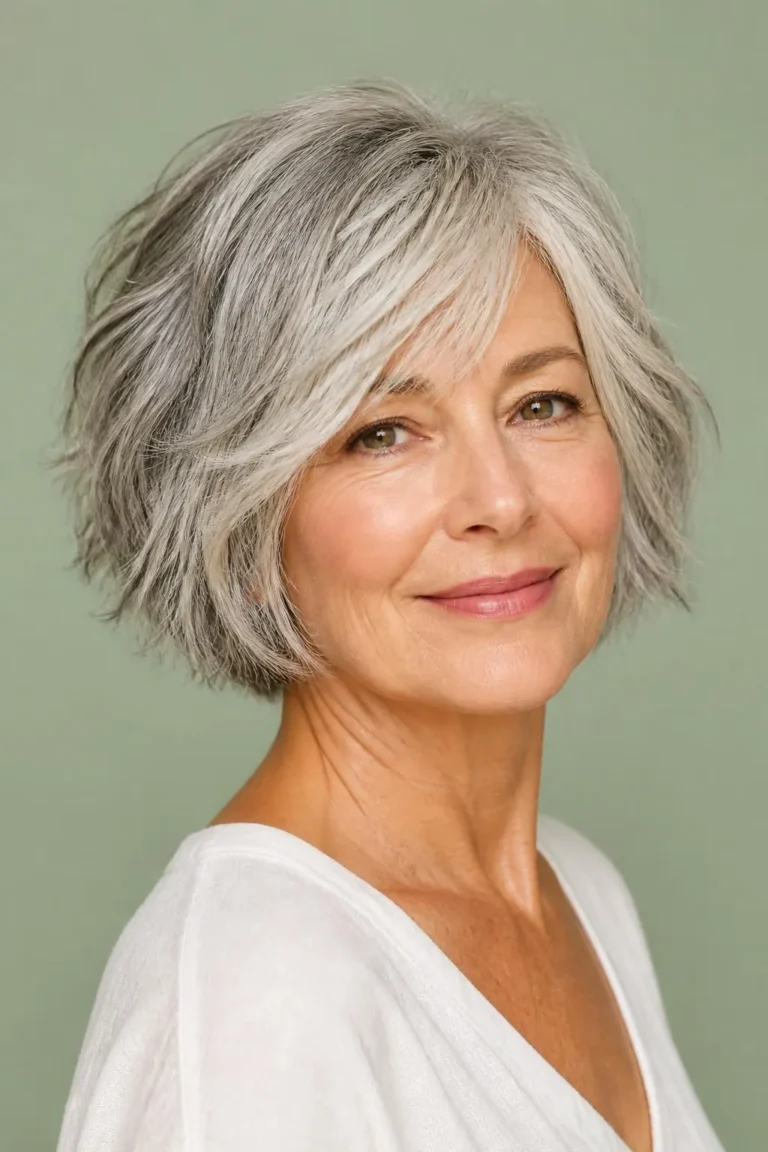
5. Shaggy Bob
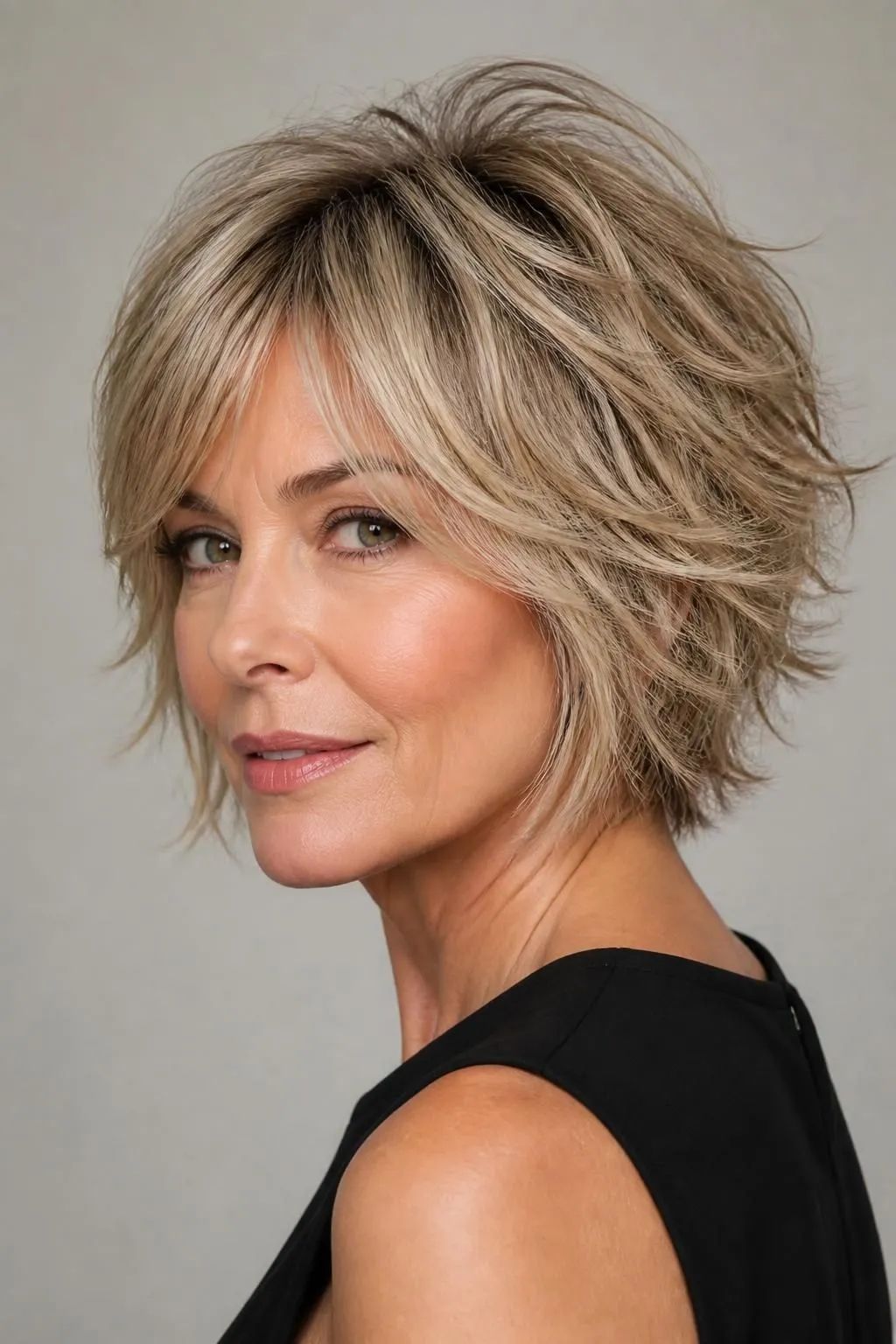
A shaggy bob takes the classic bob silhouette and roughs it up with heavy layering and textured ends, giving fine hair the volume and movement a blunt bob often lacks. It’s a great middle-ground option if you want the fullness of a shag without going too short.
The layering throughout also prevents the “triangle” shape that can happen with fine hair in a plain bob, where the ends look thin and the top looks flat. Instead, the shaggy version distributes volume more evenly from root to tip.
Tips for styling a shaggy bob:
- Use a volumizing mousse at the roots before blow-drying with a round brush.
- Finish with a texturizing spray on the mid-lengths and ends for added grip.
- Avoid heavy oils, which can quickly weigh down fine hair in this length.
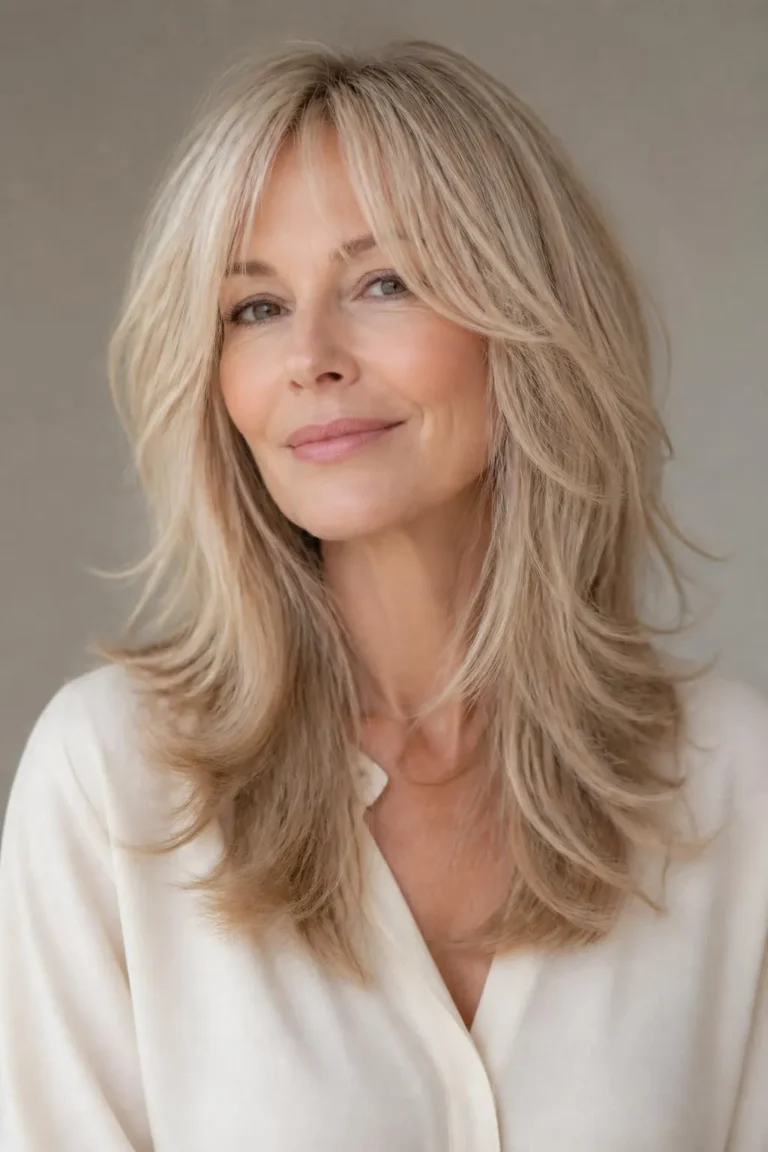
6. Feathered Shag
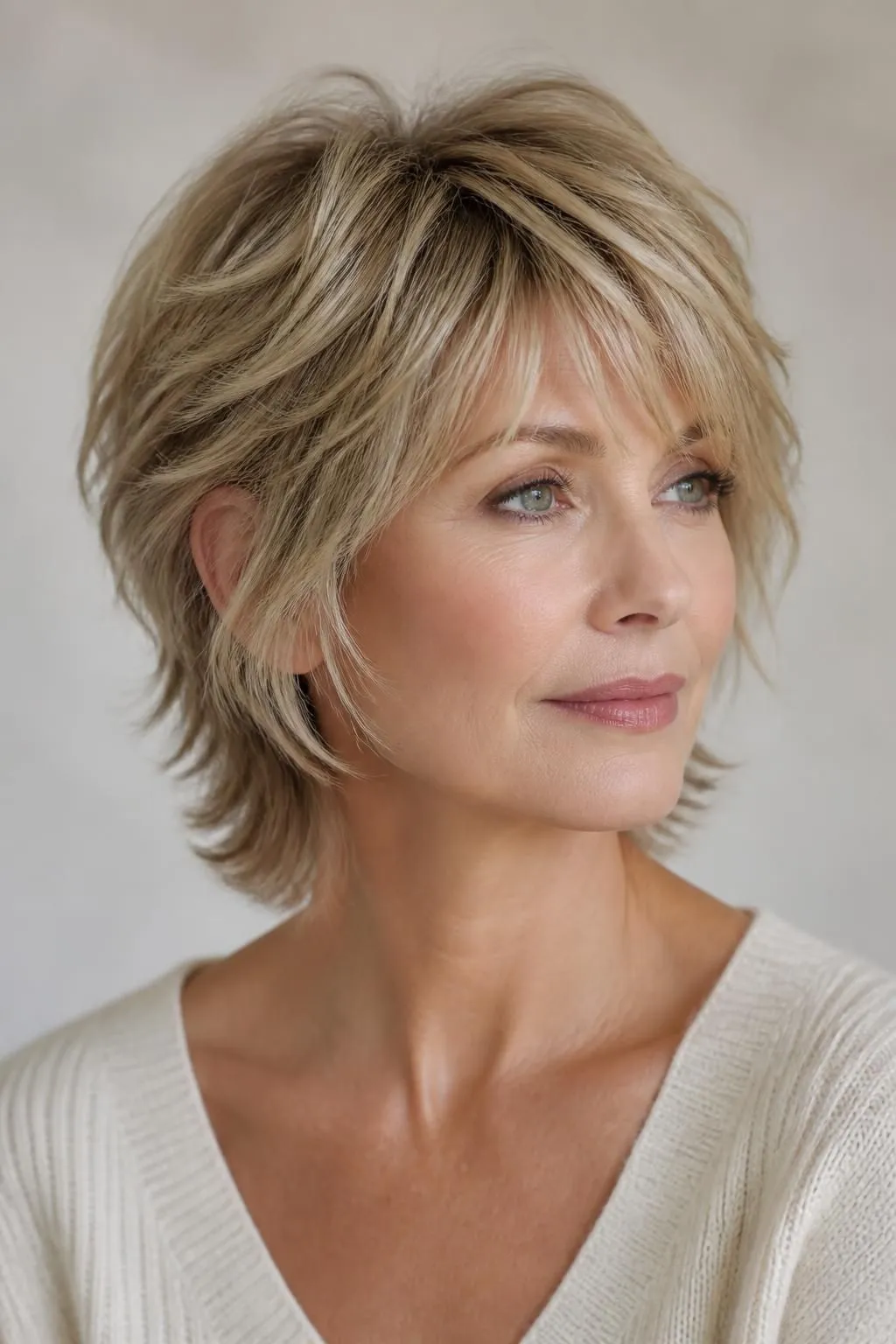
Feathered layers — soft, blended pieces that flip slightly outward at the ends — bring a retro-inspired softness to the shag silhouette. This version tends to look a little more polished than a choppy shag while still delivering plenty of texture and volume.
It’s a particularly good option for fine hair with a bit of natural wave, since the feathered layers enhance movement that’s already there rather than fighting against your natural texture.
Tips for styling a feathered shag:
- Use a round brush to flip ends outward slightly while blow-drying.
- A light-hold hairspray keeps the feathered shape from falling flat.
- Avoid over-brushing once dry, which can smooth out the feathered effect.
7. Shag With Face-Framing Layers
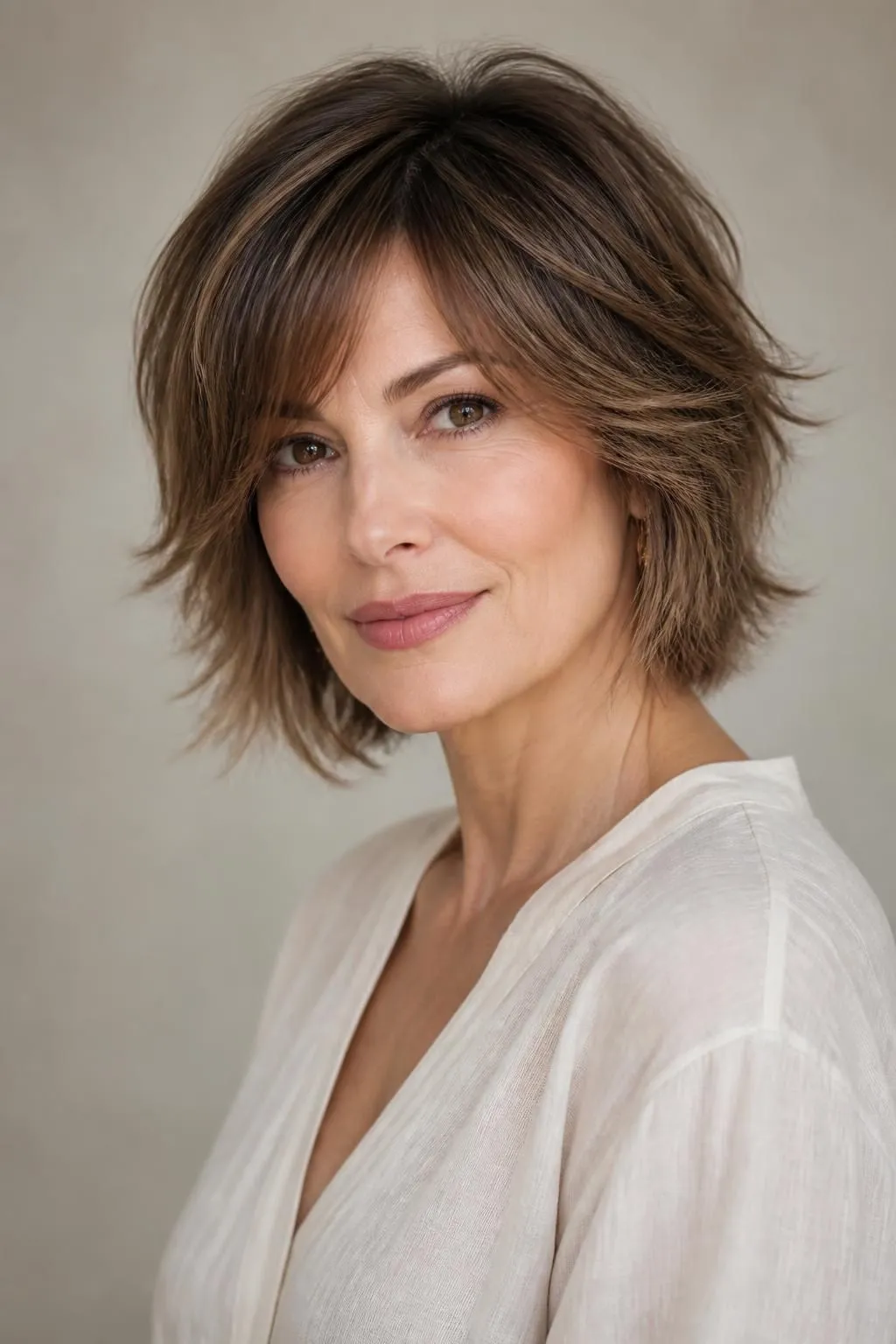
If you want a shag that emphasizes your face shape, adding longer face-framing layers to the front is an easy way to do it. These layers draw the eye upward and outward, softening the face while the rest of the shag builds volume throughout the back and crown.
This version is especially flattering for rounder or fuller face shapes, since the angled layers create the illusion of more definition without needing a dramatic haircut change.
Tips for styling face-framing layers:
- Curl the front pieces slightly away from your face for a soft, opening effect.
- Use a small round brush to add movement to just the face-framing sections.
- Keep the rest of the shag textured but slightly less voluminous to keep focus on the face.
8. Root-Volume Shag

This version of the shag is specifically layered to maximize lift right at the roots, making it one of the best options if your biggest complaint about fine hair is flatness at the crown. Shorter layers closer to the scalp create natural lift, while the rest of the shag builds texture down the length.
Pairing this cut with the right blow-dry technique makes a huge difference — root-focused volumizing products and a good round brush routine can keep this cut looking full well past your usual “flat by noon” mark.
Tips for maximizing root volume:
- Apply a root-lifting mousse directly to towel-dried roots before blow-drying.
- Blow-dry roots in the opposite direction of your natural part for extra lift.
- Set with a cool blast of air at the end to help the lift hold longer.
9. Shag With Micro Bangs
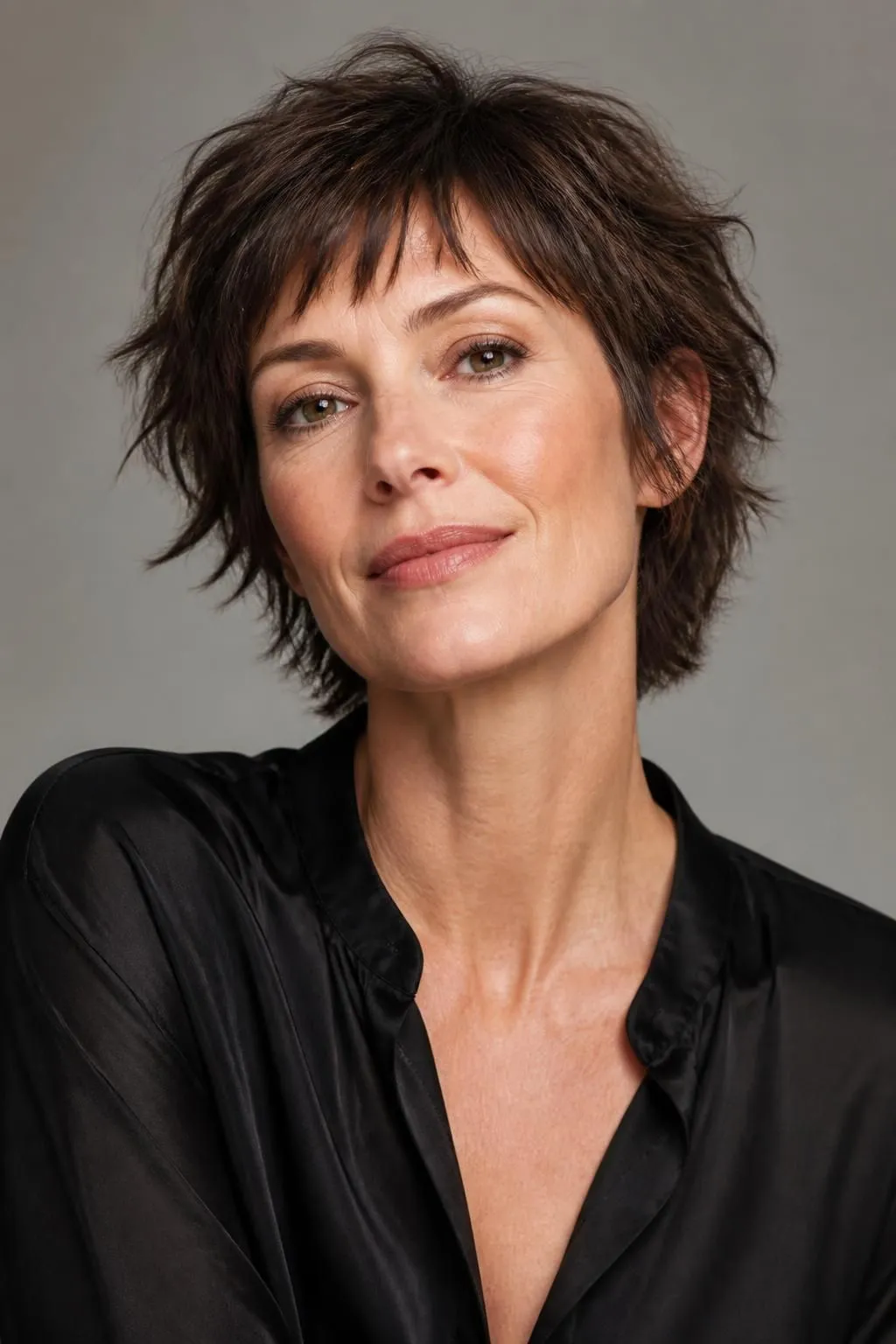
For a bolder statement, pairing a shag with short, blunt micro bangs creates striking contrast between the choppy layers and the crisp, graphic fringe. It’s a look that reads as confident and current, especially on fine hair that can carry the lighter weight of very short bangs easily.
Because micro bangs sit well above the brow, they also draw attention upward, subtly balancing out length and volume elsewhere in the cut.
Tips for styling micro bangs with a shag:
- Blow-dry bangs straight down with a paddle brush for the cleanest line.
- Trim every 3–4 weeks, since micro bangs grow out noticeably faster than longer fringe.
- Keep the rest of the shag textured and undone to balance the bangs’ precision.
10. Asymmetrical Shag
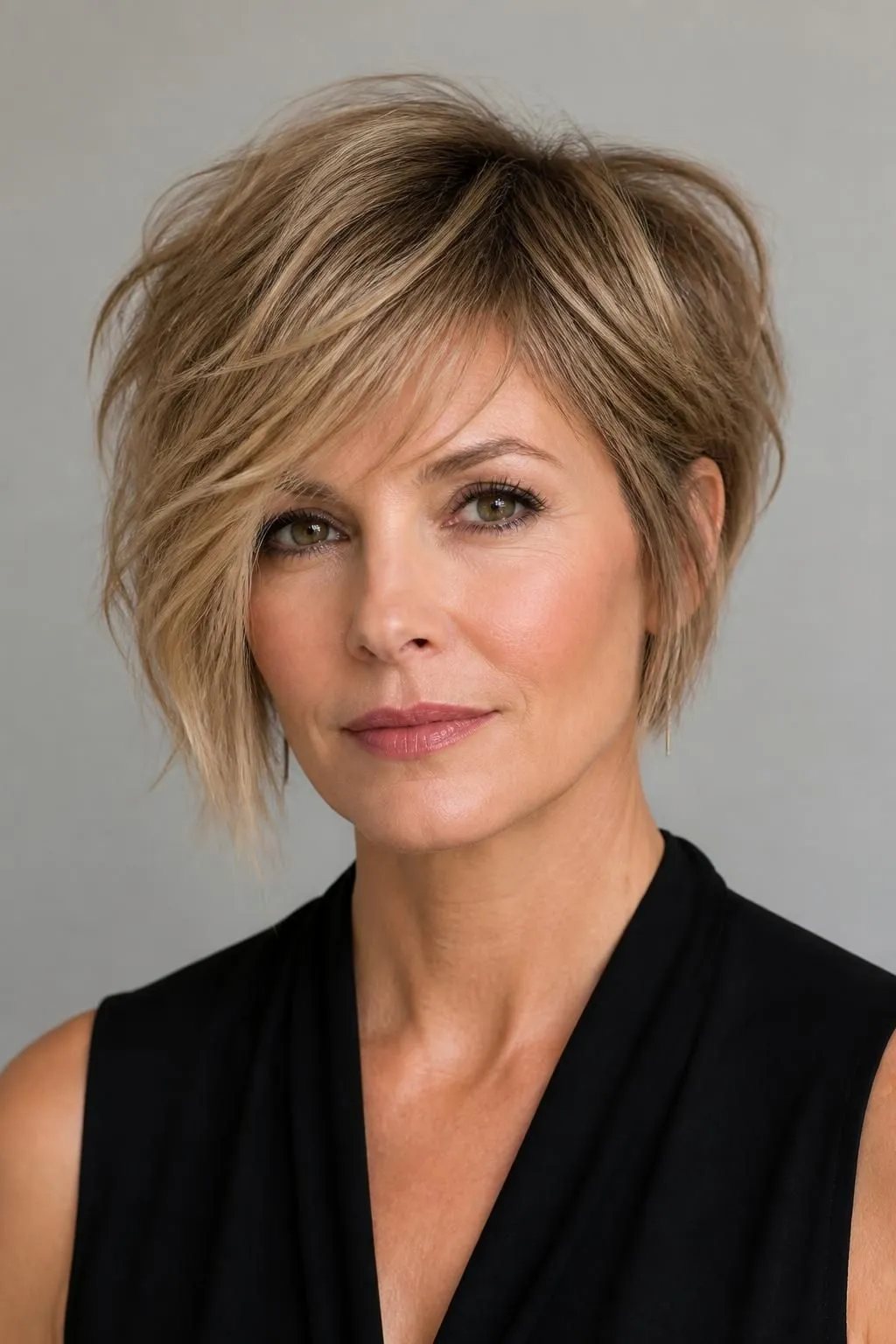
An asymmetrical shag breaks from the traditional symmetrical layering by cutting one side slightly shorter or longer than the other. This adds an unexpected edge to the classic shag silhouette while still delivering all the volume-boosting benefits of heavy texturing.
This cut works well for anyone who wants their hair to feel a little more editorial or fashion-forward without sacrificing the practical benefits fine hair needs from a good layered cut.
Tips for styling an asymmetrical shag:
- Style the shorter side with slightly more texture to keep both sides visually balanced.
- Use a flat iron on the longer side only if you want a sleeker contrast to the choppy shorter side.
- Ask your stylist to keep the asymmetry subtle if you’re trying it for the first time.
11. Side-Swept Shag
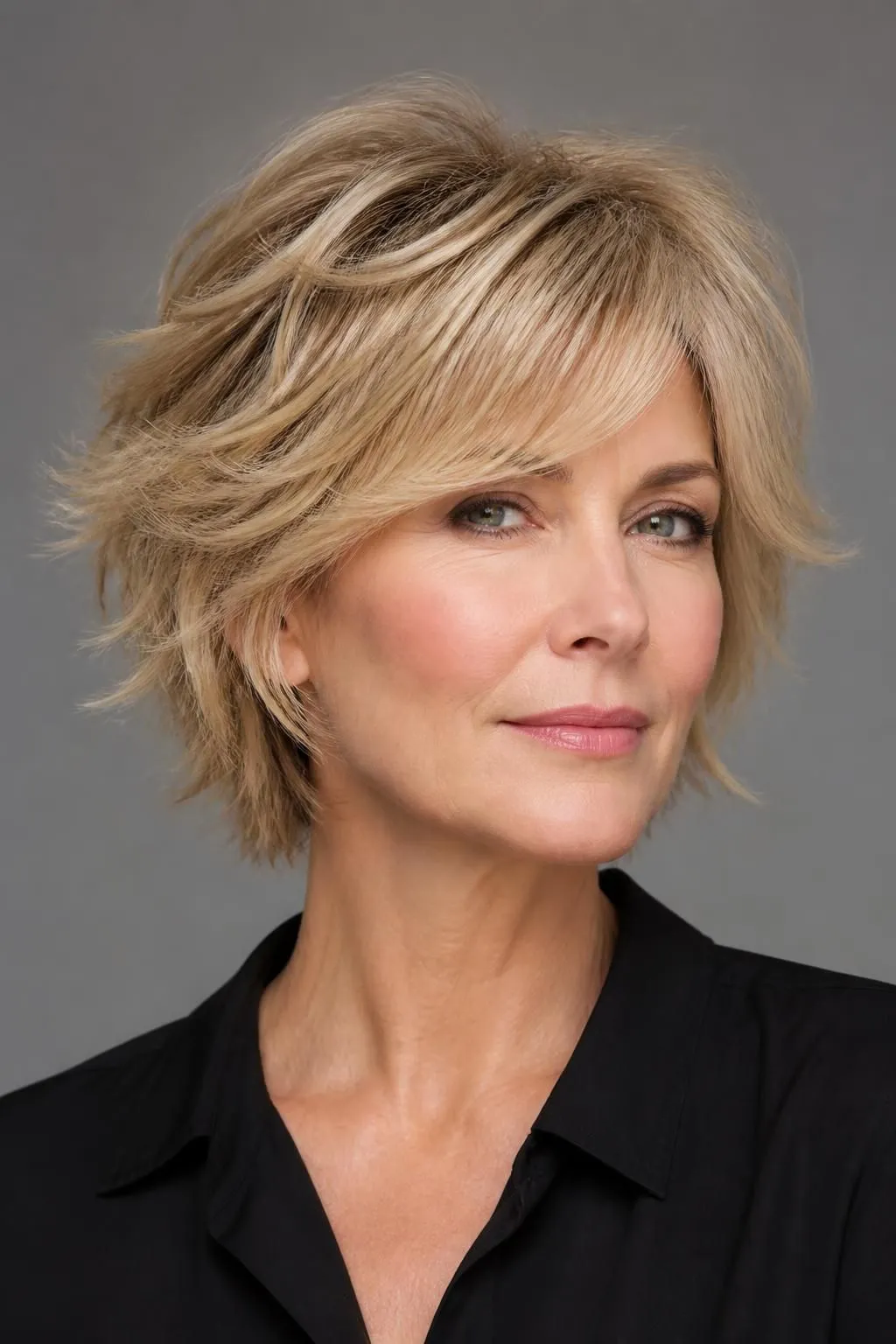
Rather than a full fringe, this version sweeps the front layers to one side, creating a softer, more elongated line along the face. It’s a great option if you’re not ready to commit to bangs but still want that face-framing volume a shag can provide.
The side-swept pieces also work beautifully with the natural direction fine hair tends to fall, meaning less daily styling effort to keep the shape looking intentional.
Tips for a side-swept shag:
- Blow-dry the front section in the direction you want it to fall for the most natural look.
- A flexible-hold hairspray keeps the swept pieces in place without stiffness.
- Deep side parts enhance the sweeping effect more than a center part.
12. ’70s-Inspired Shag
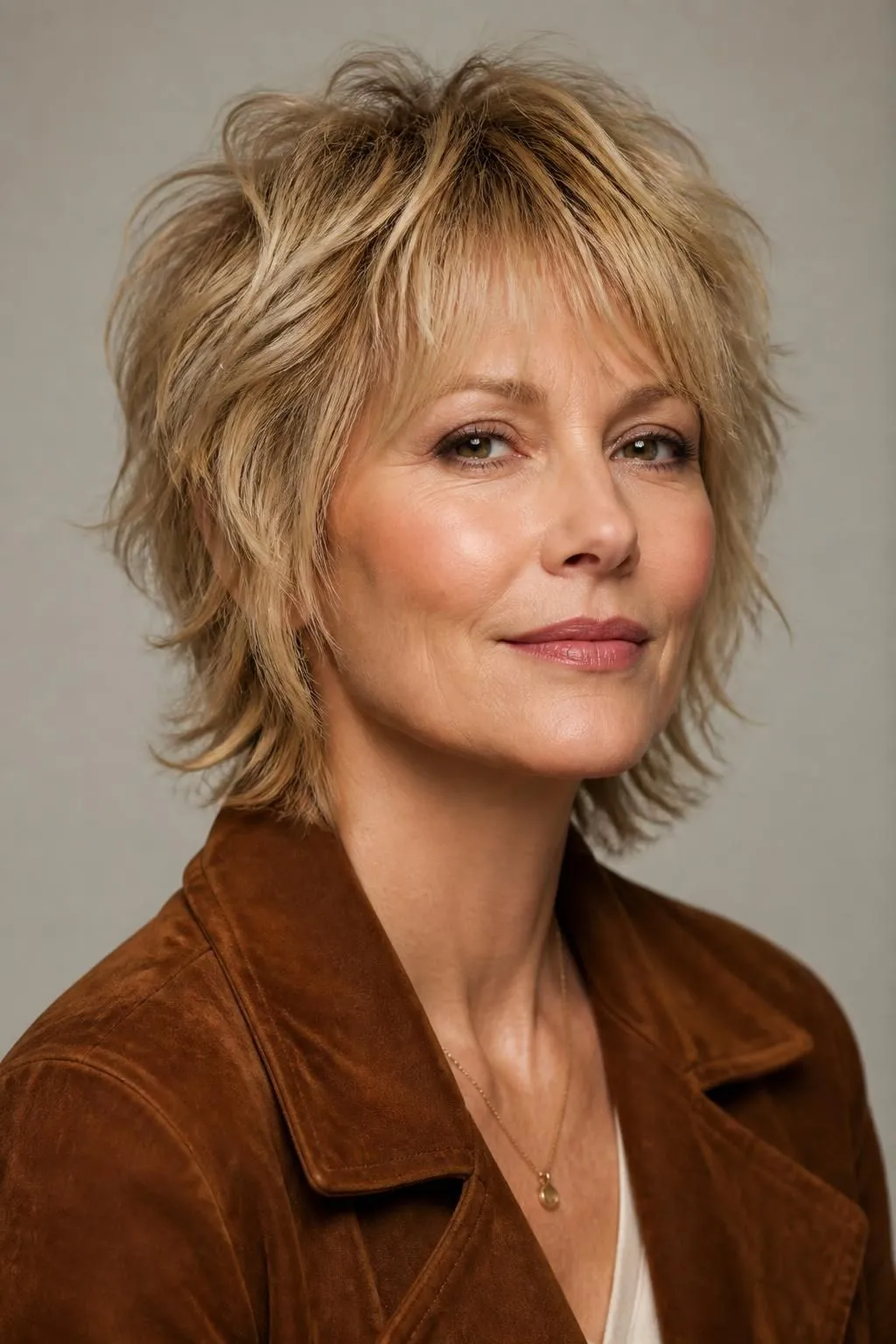
The original disco-era shag is back, and it leans into heavier, more dramatic layering than some of the softer modern versions. Think Jane Fonda in her prime — voluminous, feathered, and unapologetically textured from root to tip.
This version tends to require slightly more styling effort to achieve that authentic retro shape, but the payoff is a cut with serious personality and volume that’s hard to replicate with any other style.
Tips for a ’70s shag:
- Use hot rollers on the crown and ends for that authentic feathered volume.
- Finish with a firm-hold hairspray to lock in the retro shape.
- Keep the color warm and dimensional to complete the vintage feel.
13. Shag With Balayage For Dimension
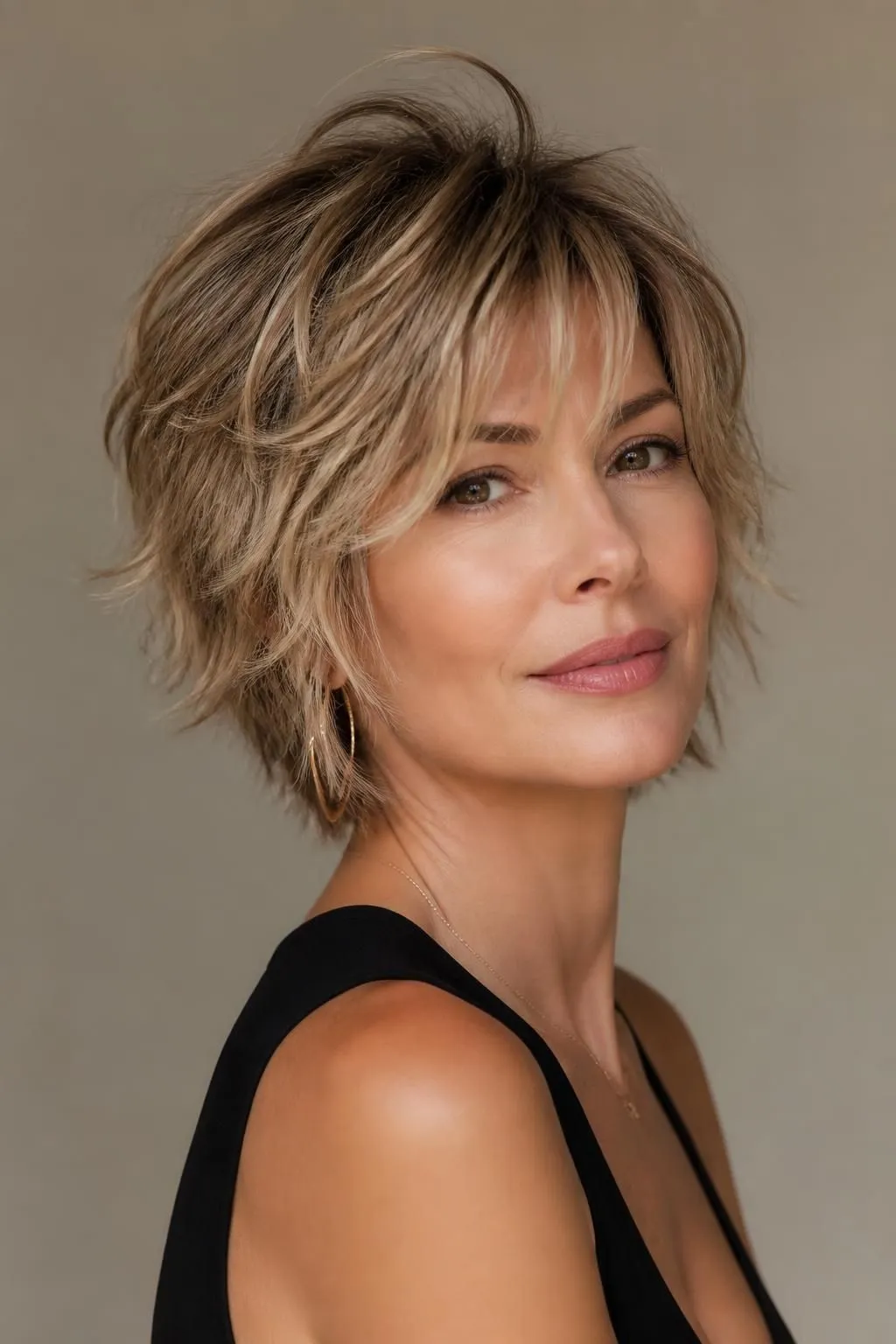
Adding balayage or subtle highlights to a shag enhances the illusion of texture even further, since the lighter pieces catch the eye differently than the darker base color. This creates depth and movement that a single flat color simply can’t replicate.
For fine hair specifically, dimensional color is an easy trick to make hair look thicker, since the contrast between shades tricks the eye into perceiving more layers and density than actually exist.
Tips for adding dimensional color to a shag:
- Ask for balayage placement concentrated around the face and ends for maximum impact.
- Choose tones close to your natural color for the most low-maintenance grow-out.
- Use a color-safe, lightweight shampoo to keep both the cut and color looking fresh.
14. Undone Beach-Wave Shag

This version of the shag leans into loose, tousled waves rather than a sleek blowout, giving the cut an effortless, lived-in feel. The waves add extra texture on top of the layering itself, doubling down on volume without requiring precise styling.
It’s a great low-effort option for fine hair, since the slightly undone finish actually hides styling imperfections better than a polished, sleek look would.
Tips for an undone beach-wave shag:
- Use a texturizing spray on damp hair before air-drying or diffusing.
- Scrunch waves gently with your hands rather than brushing them smooth.
- A light sea-salt spray enhances texture without weighing hair down.
15. Shag With A Voluminous Crown
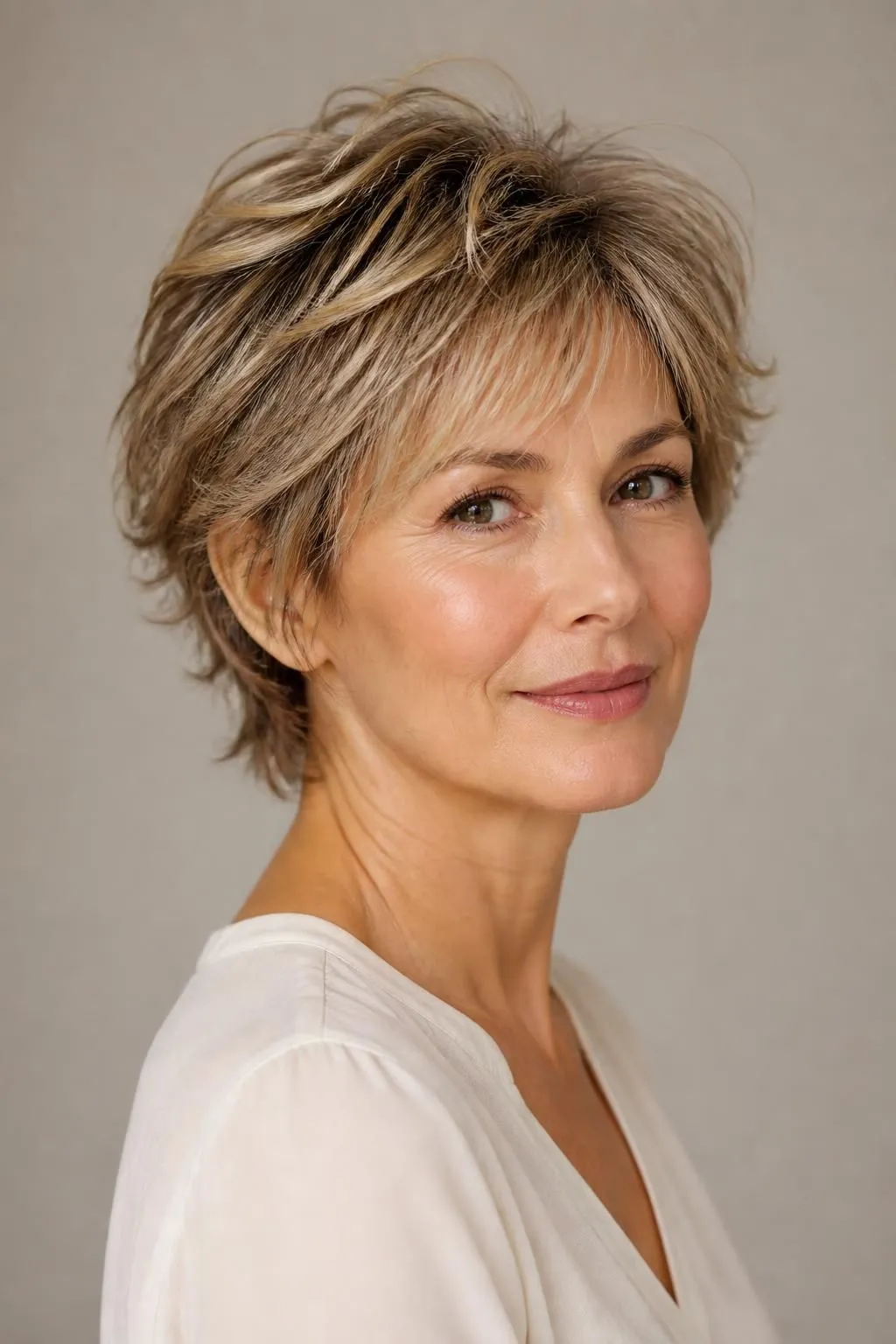
This variation focuses the heaviest layering right at the crown, creating a noticeable lift that carries through the rest of the cut. It’s especially useful if thinning at the part line or crown is a specific concern, since the layering there creates the most visual coverage.
Styled with the right technique, this cut can dramatically change how thick your hair appears from the top-down view, which tends to be the angle most people notice first.
Tips for styling crown volume:
- Apply a volumizing powder directly at the roots on the crown for instant lift.
- Blow-dry the crown section upward and away from the scalp before styling the rest.
- Avoid parting directly down the center, which can expose thinning more than a slightly off-center part.
16. Shaggy Lob (Long Bob Shag)
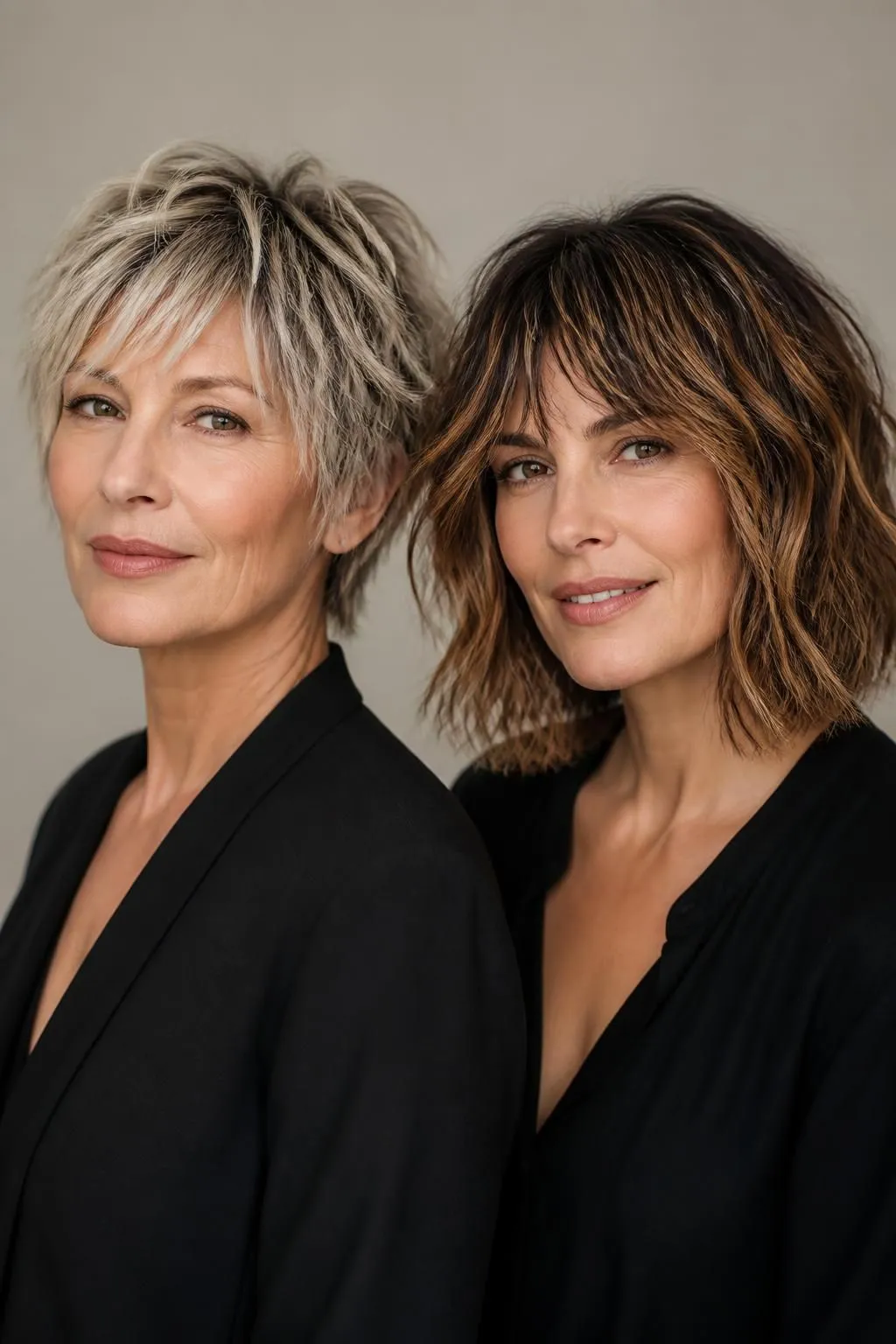
For anyone hesitant to go too short, the shaggy lob keeps length around the collarbone while still incorporating the heavy layering that defines a shag. It’s a great transitional cut if you’re moving from long hair to something shorter and want to test the waters first.
Because it retains more length than a true shag, this version does require slightly more product to maintain volume throughout the day, but the layering still does most of the heavy lifting.
Tips for styling a shaggy lob:
- Use a volumizing mousse throughout, focusing extra product at the roots.
- Blow-dry with a large round brush to keep ends textured rather than straight.
- A texturizing spray on the mid-lengths helps prevent the cut from looking too heavy.
17. Piecey Fringe Shag
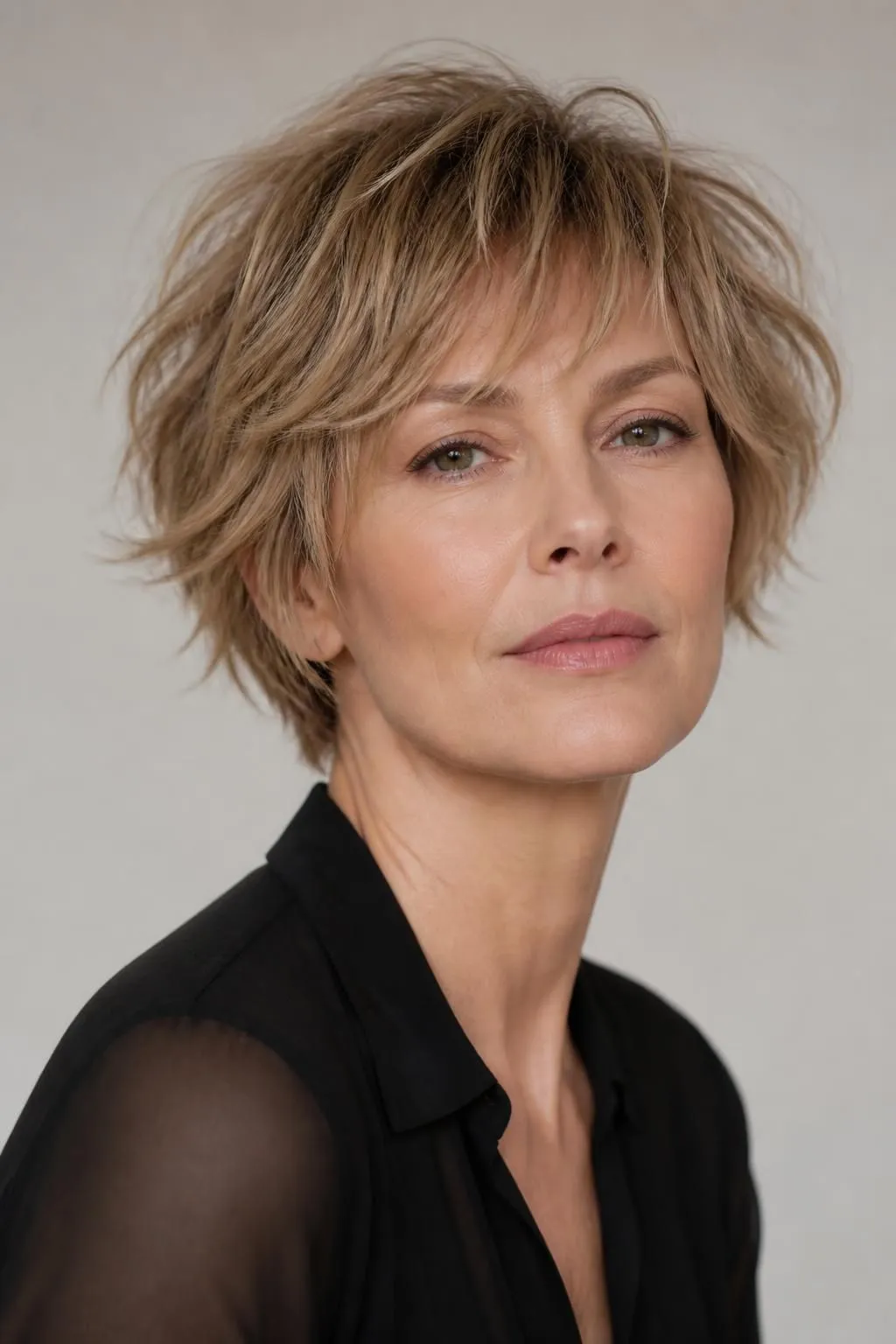
This variation pairs a shag with a soft, piecey fringe that’s cut with texture rather than a blunt line. The broken-up bangs blend seamlessly into the rest of the choppy layers, creating a cohesive, textured look from the very front of the hairline all the way through the ends.
It’s a great option if you want bangs but are worried about them looking too heavy or harsh on fine hair — the piecey cutting technique keeps everything feeling light and airy.
Tips for styling a piecey fringe shag:
- Use a fine-tooth comb to separate bang pieces after styling for extra definition.
- A small amount of texturizing paste on dry bangs enhances the piecey effect.
- Keep bang length just above the brow for the most flattering, lightweight look.
18. Soft Rounded Shag
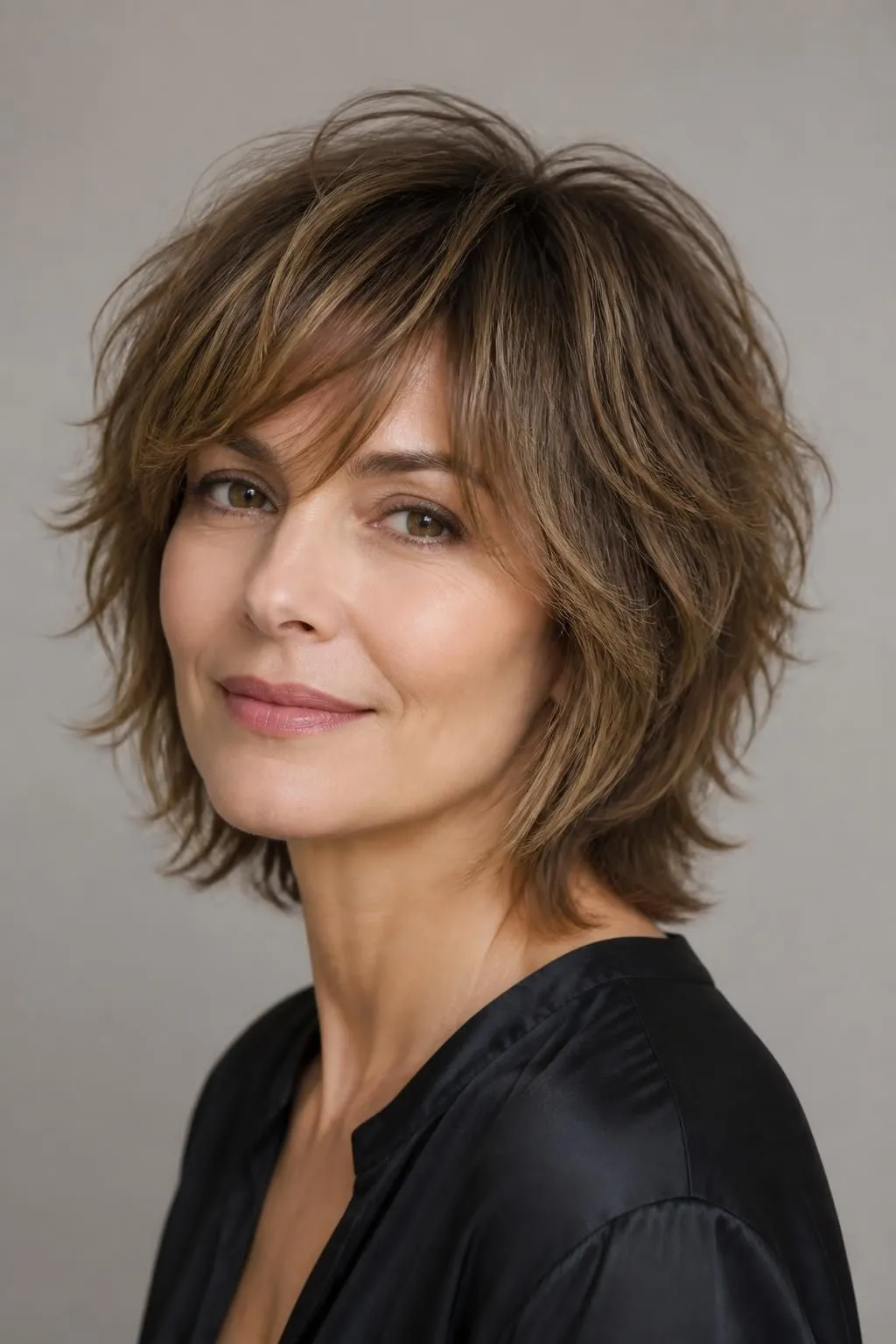
For a gentler take on the trend, a soft rounded shag uses blended, less choppy layering for a rounder, more polished silhouette. It still delivers plenty of movement and volume but reads as more refined than the edgier, choppier versions on this list.
This is a great option if you love the idea of a shag but want something that feels a little more classic and versatile — one that works just as well for the office as it does on the weekend.
Tips for styling a soft rounded shag:
- Blow-dry with a round brush, rolling ends slightly under for a polished shape.
- Use a smoothing serum on the mid-lengths to keep frizz down while retaining volume at the roots.
- Ask your stylist for blended, rather than choppy, layering for the softest finish.
FAQs
Do shag haircuts really work for fine hair? Yes — the heavy layering in a shag creates the illusion of thickness by breaking hair into pieces that catch movement and light, which is exactly what fine, flat hair benefits from most.
How often do I need to trim a short shag to keep its shape? Most short shags need a trim every 6–8 weeks to maintain the choppy layering and prevent the cut from growing out into a shapeless mess.
What products work best for styling a shag with fine hair? Lightweight volumizing mousse, texturizing spray, and dry shampoo are the most useful — heavier oils and creams tend to weigh fine hair down and flatten the layers.
Is a shag a good option for thinning hair over 40? Yes, especially versions with crown-focused layering or root volume, since the shorter top layers create natural lift that helps camouflage thinning at the part or crown.
How To Talk To Your Stylist About Cutting A Shag For Fine Hair
Bring reference photos, but also be specific about your hair’s texture and how it behaves day to day — whether it goes flat by noon, has natural wave, or thins around the part. A good stylist will adjust the layering technique based on your actual hair density rather than cutting a generic shag, since heavier layering works differently on fine hair than it does on thick hair. Ask specifically for point-cutting or texturizing shears rather than a blunt layering technique for the softest, most volume-boosting results.
Final Words
A short shag might be the single most effective haircut for fine hair over 40, thanks to its ability to fake volume through smart layering rather than relying on styling tricks alone. Whether you go for a dramatic wolf cut, a soft rounded version, or something in between, these eighteen shag variations prove there’s a version of this cut for every texture, face shape, and styling routine.