
Korean Beef Bulgogi Rice Bowls
These Korean beef bulgogi rice bowls deliver sweet-savory, garlicky beef over steaming rice in just 30 minutes—no takeout needed.
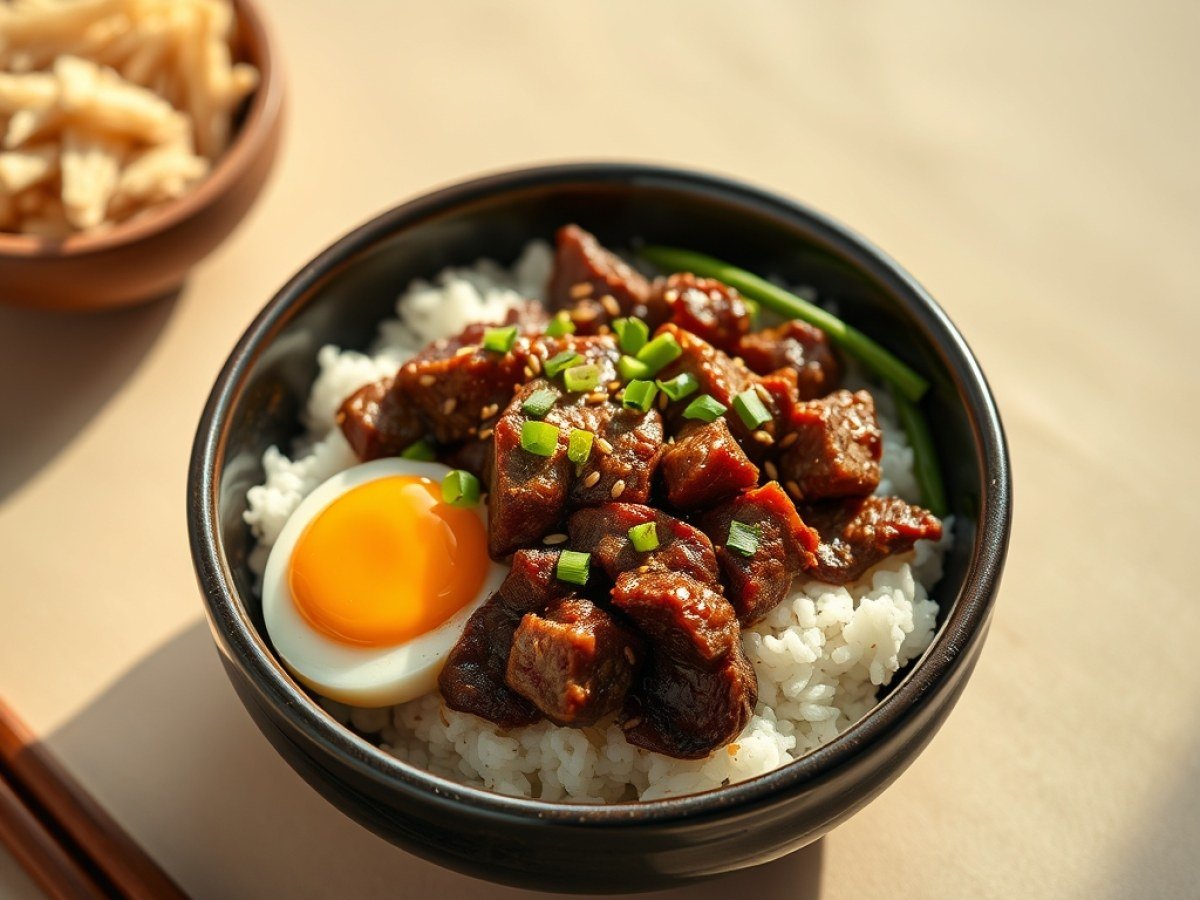
The marinade does the heavy lifting here: soy sauce and brown sugar build that glossy, sticky glaze, while grated pear quietly tenderizes the beef so it stays juicy after a hard, fast sear. You get the same deep caramelized edges and sesame-scented aroma that make bulgogi the most-ordered item at Korean barbecue, but in a single skillet on a Tuesday night. And because everything piles onto rice, it’s a build-your-own situation that pleases picky kids and heat-seekers at the same table.
Why You’ll Love This Bulgogi Rice Bowl
- Tender beef in 15 minutes. Thinly sliced ribeye plus grated pear and soy sauce means the meat marinates fast and never turns tough.
- Restaurant-style glaze at home. High heat caramelizes the sauce in about 2 minutes, so it clings to every grain of rice instead of pooling at the bottom of the bowl.
- Completely customizable. Quick-pickled carrots, cucumber ribbons, kimchi, and a fried egg let everyone build their own bowl.
Servings: 4 | Prep time: 15 minutes | Cook time: 15 minutes | Total time: 30 minutes
Ingredients
- 1 pound thinly sliced beef ribeye or sirloin (ask your butcher for bulgogi cut)
- 1/4 cup low-sodium soy sauce
- 2 tablespoons brown sugar
- 1 tablespoon toasted sesame oil
- 1 tablespoon rice vinegar
- 4 garlic cloves, grated or minced
- 1 teaspoon grated fresh ginger
- 1/2 medium Asian pear or Bosc pear, grated (about 1/4 cup)
- 2 green onions, thinly sliced (white and green parts separated)
- 1 tablespoon toasted sesame seeds
- 2 cups cooked short-grain white rice, for serving
- 1 tablespoon neutral oil, for cooking
- Optional toppings: kimchi, gochujang, fried eggs, shredded carrots, cucumber ribbons
Instructions
- Marinate the beef. In a medium bowl, whisk the soy sauce, brown sugar, sesame oil, rice vinegar, garlic, ginger, grated pear, and the white parts of the green onions. Add the beef slices and toss to coat. Let it sit at room temperature for 15 minutes while you prep the rice and toppings. Any longer than that and the pear starts to break the meat down too far, so don’t walk away and forget it.
- Cook the rice. If it isn’t already cooked, rinse 1 cup short-grain rice until the water runs clear, then cook with 1 1/4 cups water in a rice cooker or saucepan—bring to a boil, cover, simmer 15 minutes, then rest 10 minutes off the heat. Fluff with a fork.
- Sear the beef. Heat a large cast-iron skillet or wok over high heat until it’s smoking. Add the neutral oil and swirl to coat. Working in batches if needed, add the beef in a single layer—don’t crowd the pan—and cook without moving it for 1 to 2 minutes until browned. Flip and cook 1 minute more. The beef should be just cooked through with caramelized edges.
- Finish the sauce. Return all the beef to the skillet if you cooked in batches. Pour any remaining marinade over the beef and cook 1 to 2 minutes, stirring constantly, until the sauce thickens and glazes the meat. Stay right at the stove here—the sugar in the marinade can burn in seconds. Remove from heat.
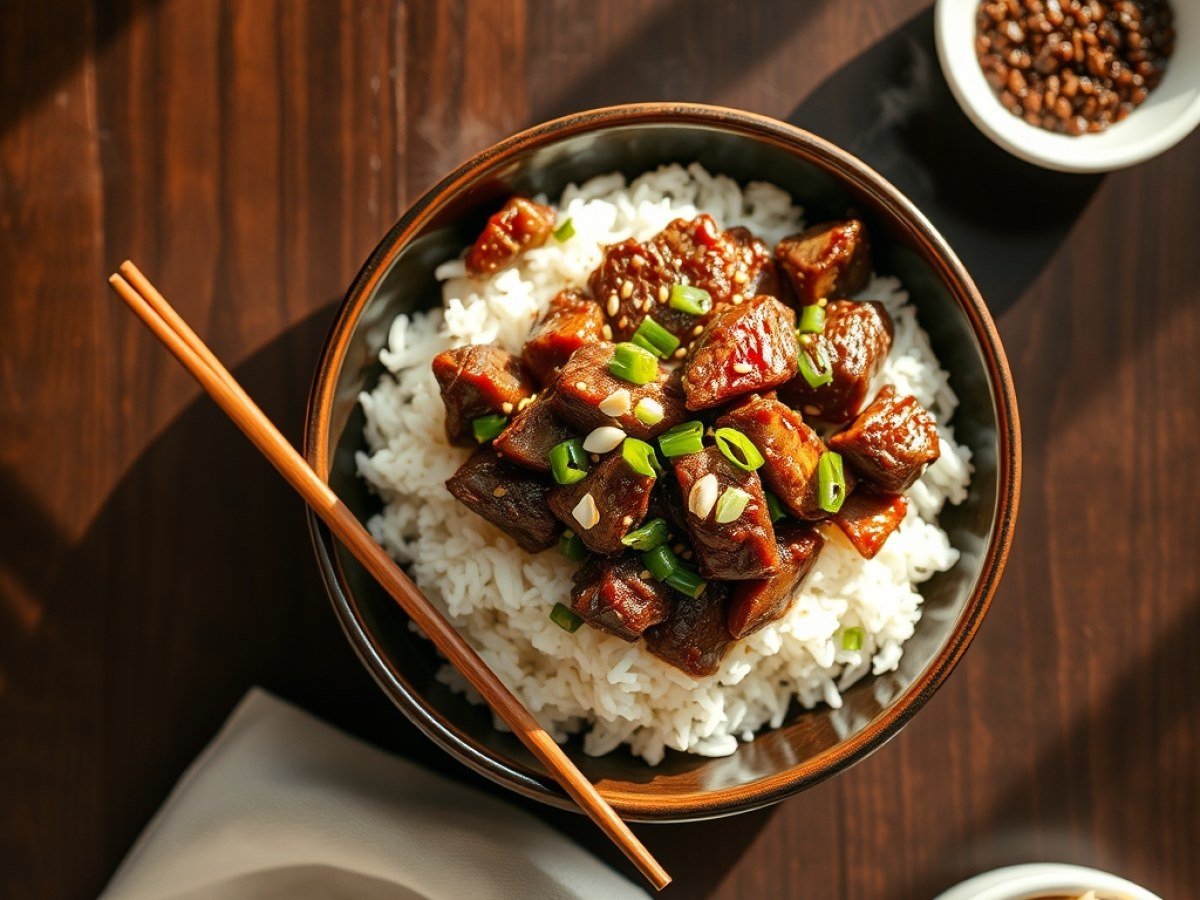
- Assemble the bowls. Divide the hot rice among 4 bowls. Pile the beef on top and spoon the pan juices over it. Sprinkle with the green onion tops and sesame seeds.
- Add optional toppings. Top with kimchi, a drizzle of gochujang, and/or a fried egg. Serve immediately.
Tips & Variations
Slice with ease. Freeze the ribeye for 15 minutes before slicing—the firm meat holds its shape and gives you paper-thin pieces.
No pear? No problem. Swap in 2 tablespoons pineapple juice, or 1 tablespoon brown sugar plus 1 tablespoon water. You’ll still get the sweetness and some tenderizing power.
Want heat? Add 1 to 2 teaspoons gochujang or sriracha straight into the marinade, or serve it on the side for anyone who wants to control their own spice level.
Make it vegetarian. The same marinade works beautifully on sliced mushrooms, bell peppers, or tofu—press and cube the tofu first so it sears instead of steams.
Double the sauce. If your family likes extra sauce over rice, whisk together 2 tablespoons soy sauce, 1 tablespoon brown sugar, 1 teaspoon sesame oil, and 1 teaspoon rice vinegar, then simmer it in the pan after the beef is done.
Stretch the meal. Add a fried egg per bowl and a bigger pile of rice to feed five or six instead of four without changing the recipe.
Storage & Make-Ahead
Store leftovers in an airtight container in the refrigerator for up to 3 days. Reheat gently in a skillet over medium heat with a splash of water to keep the beef from drying out, or microwave covered.
For make-ahead, you can marinate the beef up to 24 hours in advance—just keep it in the fridge rather than on the counter. Cooked beef freezes well for up to 2 months; thaw overnight in the fridge before reheating.
Nutrition Information
Per serving (estimate):
- Calories: 520
- Carbohydrates: 48 g
- Protein: 32 g
- Fat: 22 g
- Saturated Fat: 7 g
- Fiber: 4 g
- Sugar: 10 g
- Sodium: 820 mg
These values are an estimate and will vary with your exact ingredients and toppings.
Your Questions, Answered
Can I use a different cut of beef?
Yes. Ribeye and sirloin are traditional because they’re tender and well-marbled, but flank steak or skirt steak work too—just slice them very thinly against the grain. Avoid tough cuts like chuck unless you marinate them much longer.
Is bulgogi spicy?
Traditional bulgogi is not spicy; it’s sweet-savory. The heat comes from optional additions like gochujang or kimchi. If you want mild, omit those toppings; for medium, add a teaspoon of gochujang to the marinade.
What can I use instead of pear?
Asian pear is traditional for tenderizing, but you can substitute Bosc pear, pineapple juice, or a mix of brown sugar and water. The enzymes in pear and pineapple help break down the meat, but the sugar also aids caramelization.
How do I prevent the beef from steaming?
Use a very hot skillet and don’t overcrowd the pan. Cook in batches if necessary, and pat the beef dry before adding it to the pan. High heat sears the meat quickly, giving it that caramelized crust instead of steaming.