What to Wear to a Black Tie Wedding Over 50: Gowns and Chic Options
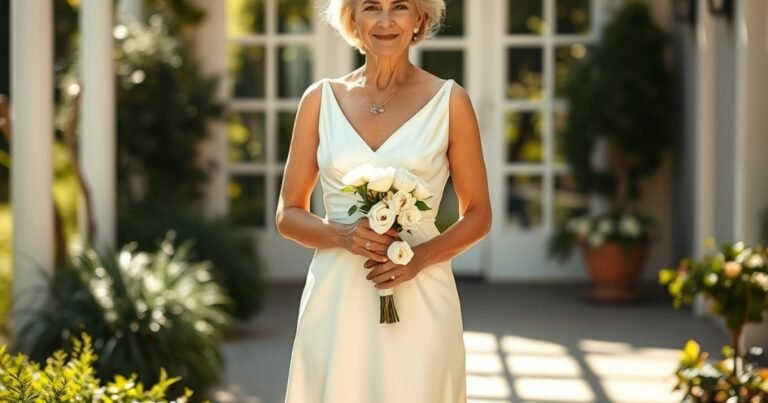
Black tie means floor-length and polished — not stiff, overdone or frumpy. Here are ten gown and chic option ideas that flatter women over 50, with real styling notes so you walk in feeling comfortable and completely at ease.
Whether you need arm coverage, a forgiving waistline or shoes you can dance in, there is a silhouette here for you. Every idea comes with fabric names, neckline advice and the small finishing details that make a gown look expensive — without the mother-of-the-bride cliché.
Read start to finish, then use the FAQ to settle the tricky questions: midi or floor-length, sleeveless or not, and what to throw over your shoulders in a cold church. You will leave knowing exactly what to shop for and when to book alterations.
Black Tie Wedding Guest Essentials
- Floor-length gown or formal jumpsuit
- Smooth, well-fitted bra (no lace ridges)
- 2–2.5 inch block heel or satin flat
- Satin or beaded clutch
- Tonal pashmina or capelet
- One real jewelry piece
1. Column Gown in Heavy Crepe — Best for Slim or Straight Frames
A column gown gives you one clean, unbroken line from shoulder to hem. Heavy crepe or ponte holds its shape, so nothing clings to the middle and bra or shapewear lines stay hidden. Choose a boat neck or cap sleeve rather than a deep plunge.
The fabric’s drape is your statement, so skip busy prints and let the fit do the talking.
How to Style It
- Pick crepe or ponte over thin jersey so it skims, never sticks.
- Add a wide satin sash at your natural waist to define the line.
- Finish with low heels or satin flats in a matching tone.
- Keep jewelry to studs and a slim bracelet.
2. A-Line Mikado Gown — The Most Forgiving Black Tie Silhouette
The structured A-line is the safest black tie choice after 50 — it skims the waist and hips and suits almost every body shape. Mikado and duchess satin feel luxurious without high shine, and a slight sleeve or shrug covers upper arms if you want it.
Go mid-calf to floor, never above the knee, for true black tie formality.
How to Recreate It
- Choose a natural-waist bodice with a defined but easy fit.
- Let the skirt flare gently from the hip, not the ribs.
- Add a subtle cap sleeve or sheer shrug for arm coverage.
- Hem it to the floor with your actual event shoes on.
3. Soft Empire-Waist Gown in Chiffon or Georgette
Empire seams sit just under the bust and let everything else float, so you can eat dinner and sit through speeches in comfort. Flowy chiffon and georgette read romantic rather than costumey, and they travel well without creasing.
Add a beaded or lace overlay on the bodice for interest, and choose a dark or jewel-tone lining so it never looks sheer in photos.
How to Style It
- Check the seam sits under the bust, not across it.
- Layer the bodice with lace or light beading for definition.
- Match lining to the overlay so no light shows through.
- Pair with a fine wrap and small drop earrings.
4. Stretch Velvet Gown for Fall and Winter Weddings
Velvet is the plushest way to do black tie in cold months, and stretch velvet is both forgiving and warm. Choose a boat neck or V-neck, elbow or long sleeves, and a deep color — navy, burgundy, forest, midnight — rather than bright red.
Keep jewelry minimal; velvet does not need help to look rich.
How to Style It
- Pick stretch velvet so it moves and resists crushing.
- Sit through a dinner test — velvet shows every crease.
- Choose deep tones over brights for evening formality.
- Skip necklaces; wear pearl studs and a slim bracelet.
5. Jumpsuit with a Floor-Length Overlay — Modern Black Tie Alternative
A wide-leg crepe jumpsuit with a sheer long skirt or chiffon overlay is elegant, easy to walk in and genuinely black tie appropriate. Choose a high neck or draped bodice and clean tailoring — no cargo pockets, no denim, no casual details.
Add a clutch, small earrings and a low metallic sandal; it reads far more modern than the average gown.
How to Wear It
- Choose wide-leg crepe with a defined waist seam.
- Layer a sheer floor-length overlay for gown-level drama.
- Hem the overlay just above the ground — no pooling.
- Finish with a slim clutch and metallic low sandal.
6. Column Gown with an Illusion Sleeve for Upper-Arm Coverage
Illusion netting gives you the look of sleeves without bulk or heat, so you stay cool through a long ceremony. Match the netting to your skin tone, and check in daylight that it does not ghost against the dress.
It works beautifully on a crepe column or an A-line — keep the sleeve sheer so it does not add weight on the shoulders.
How to Choose It
- Hold the netting against your arm in natural light.
- Check it doesn’t turn chalky against a white dress.
- Ask for a fit that hugs without pinching the arm.
- Match the sleeve tone to the gown’s lining.
7. Cape or Capelet Over a Simple Gown
A structured cape or short capelet over a plain column is the chicest way to cover arms and shoulders for a formal ceremony. Choose crepe or velvet in the same tone as the gown for one long line, or go tonal contrast — ivory over navy.
Leave the hands free so you can hold a clutch and a glass of champagne at once.
How to Wear It
- Pick a length that ends at the waist or hip, not mid-thigh.
- Match the fabric weight to your gown for a clean line.
- Test it over the dress with your clutch in hand.
- Slip it off for dinner and dancing if you like.
8. Full-Skirt Ball Gown — Best for the Bride’s Mother or a Very Formal Venue
If the invitation says black tie at a ballroom or cathedral, a soft full skirt is entirely right. Choose a natural-waist bodice with a defined but comfortable fit and a skirt that falls from the waist without stiff crinoline.
Keep the bodice plain if the skirt has volume, and vice versa — one focal point only.
How to Style It
- Skip crinoline; ask for a soft tulle or organza layer.
- Keep the bodice clean if the skirt carries the volume.
- Check the skirt clears steps and car doors.
- Add a short capelet rather than a long coat.
9. Shoes That Get You Through the Night: Block Heels and Satin Flats
Skip stilettos you cannot walk in. A 2–2.5 inch block heel in satin or metallic is stable on carpet and dance floors, and a pointed satin flat in a matching tone reads just as formal and far more comfortable.
Break shoes in at home for an hour before the event, and pack gel insoles and a spare heel if the ceremony runs long.
How to Get Them Right
- Buy your event shoes before gown alterations.
- Wear them indoors one hour a day for a week.
- Add gel insoles at the ball of the foot.
- Pack a foldable spare pair in the car.
10. Finishing Touches: Clutch, Wrap and One Real Jewelry Piece
Black tie does not need much: a small satin or beaded clutch, a pashmina or fine wool wrap for the ceremony, and one genuine piece of jewelry — pearl studs, a tennis bracelet or a single pendant.
Skip chunky statement necklaces with a busy bodice, and choose a lip color that still looks good in photographs.
How to Finish the Look
- Choose a clutch that fits phone, lipstick and a tissue.
- Carry a tonal pashmina for the ceremony and dinner.
- Wear one real piece of jewelry, not three.
- Test your lip color in a flash photo before the day.
Frequently Asked Questions
Can I wear a midi dress to a black tie wedding?
Strictly, no — traditional black tie calls for floor-length. If the invitation says black tie optional or creative black tie, a formal midi in silk or velvet can work if it is very polished and paired with evening shoes and a clutch. When in doubt, floor-length is always correct.
Is it okay for a woman over 50 to wear a sleeveless black tie gown?
Absolutely. Sleeveless is about the gown’s cut, not your age. If you prefer coverage, add an illusion sleeve, a capelet, a beaded shrug or a pashmina for the ceremony, then remove it for dinner and dancing. Choose a gown with a substantial strap or structured bodice so it stays put.
What colors are appropriate for a black tie wedding guest over 50?
Navy, charcoal, burgundy, forest green, plum, midnight blue and deep jewel tones are all safe and flattering. Avoid white, ivory and champagne — those belong to the bride — and skip anything so bright it competes with her. Black is always correct for black tie.
Do I need shapewear under a black tie gown?
Only if it makes you feel more comfortable, never because you think you must. Choose a light, breathable smoothing slip, and make sure your bra is a smooth T-shirt or well-fitted balconette that will not peek at the neckline. Modern gowns in crepe and Mikado often need no shapewear at all.
What should I wear over a gown in winter or in a cold church?
A fine wool or cashmere pashmina in a tonal color is the easiest option, and it doubles as a wrap for your shoulders at dinner. A short velvet capelet, a satin bolero or a tailored fur-free stole also works and photographs beautifully. Avoid a bulky coat — leave that in the car or coat check.
How much should I spend on a black tie wedding guest dress over 50?
You can look wonderful between $150 and $400. Rental services offer designer gowns for a fraction of retail if you will wear it once, and stores like Nordstrom, Talbots, Eileen Fisher and Saks Off 5th carry elegant floor-length options. Spend more on tailoring — a well-fitted $200 gown beats an ill-fitting $800 one every time.
Choosing Your Gown and Getting It Event-Ready
Start with your silhouette — column, A-line, empire or jumpsuit — then pick the fabric for the season and let color be the last decision. Buy or rent at least three weeks ahead, book alterations for two weeks out, and bring your event shoes and clutch to the fitting so hems and strap lines are set exactly right.
Do a full dress rehearsal at home: gown, shoes, wrap, jewelry, lipstick and clutch, and sit, stand and walk a few steps in all of it. If anything pulls, slips or pinches, fix it now rather than on the day. You will arrive comfortable, polished and completely yourself.