Bobbi Althoff Breaks Down Over Hate Comments: “I’m Human” — What Really Happened
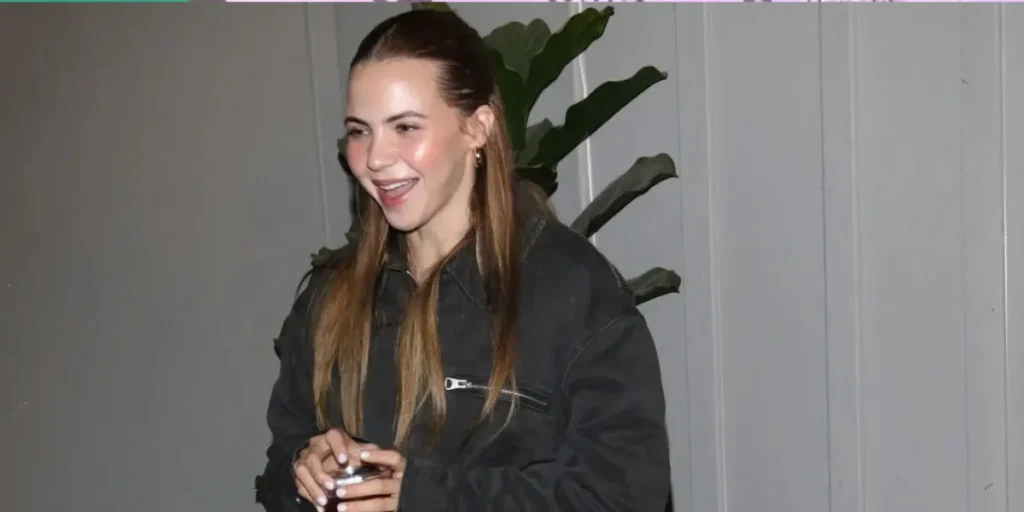
Bobbi Althoff has built one of the most recognizable personal brands in the creator economy — a deadpan TikTok personality turned celebrity podcast host whose candid, awkward-on-purpose interview style turned her into one of the platform’s most talked-about names. She has interviewed Drake, Lil Yachty, and Mark Cuban. She has landed on the Forbes 30 Under 30 list. She has millions of followers across TikTok and YouTube.
And on a Sunday night in November 2025, she sat in front of her camera and cried.
Not because of a career setback. Not because of a scandal she had created. But because the comments never stop — and on that particular day, after posting a video with her boyfriend of one year, they were especially brutal.
This is the full story of what Bobbi Althoff said, why she said it, what the response revealed about the way female creators are treated online, and why her raw, unguarded moment resonated with millions of people who know exactly what it feels like to be a real person in an unreal amount of public scrutiny.
Who Is Bobbi Althoff? A Quick Background
Bobbi Althoff first appeared on TikTok in 2021, posting content centered around young motherhood — a niche she occupied with self-deprecating humor and a distinctively flat, expressionless delivery that felt unlike anything else in the crowded parenting content space. She was in her early twenties, newly married to Cory Althoff, and building an audience one deadpan video at a time.
Her trajectory changed dramatically in 2023 when she launched The Really Good Podcast — a show defined by a deliberately uncomfortable interview format in which Althoff asks celebrity guests bizarre questions with a straight face and an almost aggressive lack of enthusiasm. The conceit worked. Clips from her interview with Drake, conducted in what appeared to be his bedroom, went massively viral, catapulting her from niche TikTok personality to a creator with genuine mainstream cultural reach.
By the time her emotional video dropped in November 2025, Althoff had accumulated over five million TikTok followers, hundreds of thousands of YouTube subscribers, and had long since graduated to hosting a new show called Not This Again. She had also, in February 2024, gone through a public divorce — her then-husband Cory filed for divorce, with their separation date listed as the previous July.
She was 28 years old, raising two daughters named Luca and Isla, running a successful media career largely on her own, and dating someone new. By almost any metric, she was thriving.
And the comment sections of her videos told a very different story.
The Video That Triggered the Response
On November 23, 2025, Bobbi Althoff posted a TikTok featuring her boyfriend, Ty Hawkins — something she had done periodically throughout their relationship, which by that point had been going strong for a year.
The response in the comments was immediate and vicious. The language used targeted her character, her sexual history, and her worth as a partner — the kind of coordinated, gendered pile-on that female creators with large male audiences have described experiencing for years. Slurs, insinuations, and cruelty flooded in, and they did what they always do: they accumulated into something too heavy to ignore.
The next day, Althoff posted her response. She opened by acknowledging she hated making a video like this and might regret it. Then she kept talking anyway.
“I’m Human”: What Bobbi Althoff Actually Said
In her own words, Althoff walked through exactly what she was experiencing — not in an abstract, carefully managed PR statement, but in real time, visibly fighting tears.
She described what happens every single time she posts about her boyfriend: the comments about being “ran through,” the sneering “oh look, another one,” the insinuations directed at Ty that he doesn’t know the truth about who she is. A year into a relationship. Every single time.
“And if I post any video truly in general, the amount of hate comments I get are just unreal,” she said.
She acknowledged the obvious strategic argument against making the video at all — that some people are deliberately trying to provoke a reaction and she was giving them exactly that. She said she understood it. And then she explained why she was making it anyway.
“I’m human, and if you got this many negative things said about you every day it would get to you, too. I don’t want sympathy from people. I’m saying this because I hope if you’re one of the people who hate me, maybe you’ll watch this and reconsider it.”
She talked about being a people pleaser — a personality trait that makes relentless public cruelty especially draining to absorb. She talked about how she had started posting less because the comment sections had become so hostile. She talked about how it feels on Sundays when her kids are with their dad and she is alone in a quiet house reading things people say about her that she cannot unknow.
And then she said the part that hit the hardest: her daughters will grow up. They will eventually be old enough to search her name online. They will read these comments.
“I wish people weren’t so mean,” she said, tears in her voice.
The Double Standard at the Heart of the Hate
One of the most pointed moments in Althoff’s video was her response to the framing that portrays her — and not her ex-husband — as the villain of their divorce.
She laid out the timeline plainly. She was 21 when she met Cory on Bumble. Ten months after meeting him, she was pregnant with their daughter. He was 30. They married in January 2020, separated in July 2023, and he filed for divorce in February 2024.
“He gave me the two best things in my life, and I will forever be grateful for that,” she said, speaking of her daughters. She harbors no visible bitterness toward her ex. She noted that he has moved on and is in a happy relationship. Her question was simple and direct: why can’t she?
The answer, while unspoken, was not difficult to read. Cory Althoff moving on from a marriage attracts no meaningful commentary. Bobbi Althoff moving on — a woman with a large and vocal male-skewing audience, a woman who became famous partly through proximity to famous men, a woman who built her brand on a kind of weaponized intimacy with celebrity guests — becomes a narrative. A character to be judged. A reputation to be managed by strangers in comment sections who have never met her and never will.
The gendered asymmetry of this treatment is not subtle, and it is not unique to Althoff. It is a pattern that plays out across the creator economy, on every platform, directed at women who are visible, successful, and single.
Why This Moment Went Viral: 2.3 Million Views and Counting
Althoff’s emotional video accumulated more than 2.3 million views — a number that tells you something important about how the moment landed.
The comment section that accumulated under the video was, notably, almost entirely supportive. The people who show up to leave cruelty in comment sections are rarely the same people who show up when someone responds to that cruelty with genuine vulnerability. The supporters came in numbers, and what they said was worth noting.
People told her that the hate felt forced and unearned. They told her she shines and that people target shine. One viewer shared a line from their therapist: “It’s not my business what other people think of me.” Another said, “You shine and people love to try to take that shine away. Thank you for posting this because it’s so real.”
The overwhelming warmth of the response did not undo the harm of the original comments. It rarely does. But it illustrated something important: the people who love what Bobbi Althoff does outnumber the people who spend their time trying to make her feel worthless. They are simply, by nature, quieter. Until a moment like this one makes them speak up.
The Botox Story: Another Window Into Being Bobbi Althoff Online
The hate comment video was not the first time in recent months that Althoff had gone viral for a deeply personal and unfiltered look at the reality of her life online and offline.
Just weeks earlier, she had posted a video about a botched Botox experience that drew more than 1.7 million views. Althoff had been dealing with chronic jaw pain — TMJ problems she had struggled with for years — and after searching for a specialist, visited a dentist who convinced her to receive Botox injections as a treatment.
The result: 100 units of Botox at a cost of $1,500, administered in her jaw, which left her face essentially frozen and unable to smile naturally. When she complained, the dentist told her she would need to wait for the Botox to wear off on its own — a process that could take up to three months.
Viewers in the comments ranged from sympathetic to outraged. Multiple people with cosmetic procedure experience noted that 100 units was an extraordinary amount — far more than the 15 to 20 units per side that most practitioners use — and that for cosmetic injections specifically, the guidance is to seek injectors who perform the procedure daily rather than dentists or surgeons for whom it is ancillary to their primary practice.
The video is, in its own way, another piece of the same larger portrait: a young woman navigating a complicated public life in real time, making imperfect decisions, sharing the consequences with millions of people, and receiving a mixture of genuine care and casual cruelty in return.
What Bobbi Althoff’s Experience Reveals About Female Creators Online
To understand what Althoff is describing, it helps to understand the specific ecosystem she operates in.
She rose to fame in a space — deadpan humor, celebrity proximity content, parasocial intimacy — that is heavily consumed by young male audiences. Her podcast format, which places her in close physical proximity to famous men while maintaining an ironic emotional distance, generated enormous attention partly because of the gender dynamic at its center. The Drake interview did not go as viral as it did purely because of the interview format.
That audience brought her extraordinary reach. It also brought her a constituency that, when it turns hostile, turns in a very specific direction: toward her sexual history, her relationship choices, her body, her worth. The comments she described are not random cruelty. They are a recognizable genre of targeted misogyny that female creators with male-skewing audiences have documented consistently for years.
The “ran through” language used in her comments — a phrase with a specific misogynist meaning about a woman’s sexual history — is not the vocabulary of general-purpose internet rudeness. It is the vocabulary of a particular kind of male entitlement toward women who are perceived as having been intimate with men the commenter idolizes or identifies with. It is, in other words, personal in a way that goes beyond trolling for sport.
Althoff’s platform, her divorce, her new relationship, and her candid content style have made her a canvas onto which a certain portion of her audience projects its ideas about how women should behave — and what they deserve when they don’t.
The Mental Health Reality of Being a Content Creator
Althoff’s video is also a window into something the creator economy rarely discusses with this kind of honesty: the mental health cost of maintaining a public presence at scale.
The business model of being Bobbi Althoff requires her to post herself on the internet regularly. Her face, her voice, her relationships, her experiences — these are the product. The comments section is not a peripheral feature of that business. It is, in a very real sense, the feedback loop of her entire professional existence.
Unlike a traditional media personality who might interface with audience reaction through a managed layer of publicists and platforms, an influencer at Althoff’s level is typically reading her own comments, absorbing the response to her own content, and making creative and personal decisions in direct response to public reaction. There is no buffer. There is no editorial distance. When someone in the comment section of a TikTok says something cruel about her as a mother, as a partner, as a woman — she reads it.
She said as much herself: she has pulled back from posting because the comment sections have become too hostile to bear. Which means the hate has already accomplished something. It has made her smaller, quieter, and less present than she wants to be.
That is not a peripheral consequence of online cruelty. It is precisely its intended effect.
The Broader Conversation: When Does Online Hate Cross a Line?
Bobbi Althoff’s video arrived at a moment when the conversation about creator mental health and platform responsibility is becoming impossible to ignore. Major platforms including TikTok, Instagram, and YouTube have introduced various tools nominally designed to reduce harassment — comment filters, block features, moderation options — while simultaneously optimizing their algorithms for the engagement that heated conflict generates.
The result is a structural environment in which the same platforms that give creators reach also create the conditions for the cruelty that reach invites. A creator with five million followers is not protected from harassment by having five million followers. In many cases, the larger the audience, the more exposed the creator becomes to its worst members.
Althoff’s honest accounting of what this feels like — not as an abstract policy discussion but as a lived experience of sitting alone in a house on a Sunday afternoon reading things people say about her while her children are away — is a more compelling indictment of this environment than any industry report could be.
What Happened After: The Response That Surprised Her
What made the aftermath of Althoff’s video particularly notable was the character of the response. The video did not go viral because people piled on further. It went viral because people rallied.
The same platform that had been the source of the cruelty became, at least for a moment, the source of its antidote. Millions of people — many of them presumably the quiet majority of Althoff’s audience who watch and appreciate without commenting — showed up to say the obvious thing: that what she was describing was not right, that she had not deserved it, and that her willingness to be honest about how much it hurt was something they respected.
None of that changes the structural problem. The hateful comments will return the next time she posts about her boyfriend, or makes a decision someone disapproves of, or simply exists in public while being a woman with opinions and a history and a face.
But the response confirmed what Althoff seemed to be reaching toward when she posted the video despite knowing she might regret it: that somewhere in the algorithm, beneath the cruelty and the snark, there are people paying attention who actually see her. Not the projection they have built in the comments. Her.
And she needed them to show up. On that particular Sunday, they did.
Final Thoughts: Why “I’m Human” Is the Point
There is something deceptively simple about the phrase Bobbi Althoff chose to anchor her video. She did not say “I’m a victim.” She did not say “you’re wrong about me.” She did not issue a rebuttal to the specific claims being made in her comment sections.
She said: I’m human.
It is, in a strange way, the most radical thing a person with five million followers can say. The entire machinery of influencer fame works by transforming human beings into content — into brands, into aesthetics, into parasocial companions whose purpose is to generate engagement on behalf of a platform’s advertising model. The comment section is one of the places where audiences most clearly forget they are watching a person.
Althoff’s video was a refusal of that forgetting. A reminder, directed both outward and inward, that there is a real person behind the deadpan delivery and the viral clips and the carefully posted glimpses of a life she is trying to build after everything it has been through.
She is 28. She has two daughters she would do anything for. She is in a relationship she is proud of. She is doing work she finds meaningful. And she is tired of people who have never met her deciding what kind of person she is in the comment section of a TikTok.
That is not a controversial position. It should not require tears to make it land.
But sometimes it does. And sometimes the tears are the only thing that cuts through.