French Crepes Recipe
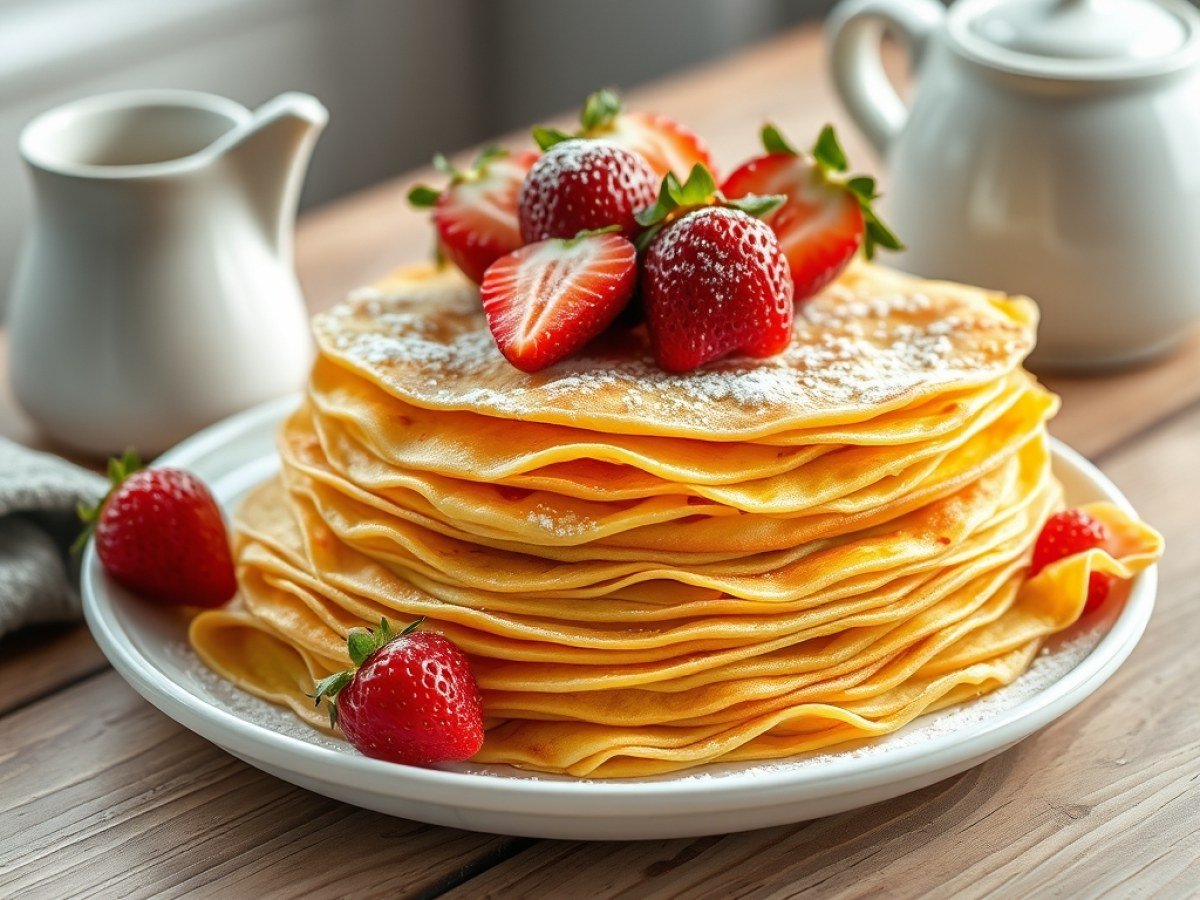
Paper-thin, lacy-edged French crepes are just flour, eggs, milk, and butter — the trick is a runny batter and letting it rest, so every swirl in the pan turns out tender instead of rubbery. If your last attempt came out thick, chewy, or glued to the pan, it wasn’t your fault: crepes live or die by two things, the ratio of liquid to flour and how long you let the batter sit. Get those right and a stack of delicate, golden crepes is genuinely a 30-minute project, most of it hands-off. This recipe is built to be forgiving — it tells you exactly what the batter should look like at every stage, how the pan should sound when it’s ready, and what to do when the first crepe inevitably fails.
Why This Recipe Works
- The batter is deliberately thin (about 1 part flour to 2 parts liquid), so it spreads across the pan in seconds instead of setting into a thick pancake.
- Resting the batter 30 minutes lets the flour hydrate and the gluten relax, which is what stops crepes from tearing when you flip them.
- Clarified-style melted butter in both the batter and the pan gives the signature golden lace edges and keeps the crepes from sticking.
Servings: 4 (makes 12–14 crepes) · Prep time: 10 minutes · Cook time: 20 minutes · Total time: 30 minutes, plus 30 minutes resting
Ingredients
- 3/4 cup (95 g) all-purpose flour
- 1 tablespoon granulated sugar
- 1/4 teaspoon fine salt
- 3 large eggs, at room temperature
- 1 1/4 cups (300 ml) whole milk, plus 1–2 tablespoons if needed to thin
- 3 tablespoons unsalted butter, melted and slightly cooled, plus more for the pan
- 1 teaspoon vanilla extract (optional, for sweet fillings)
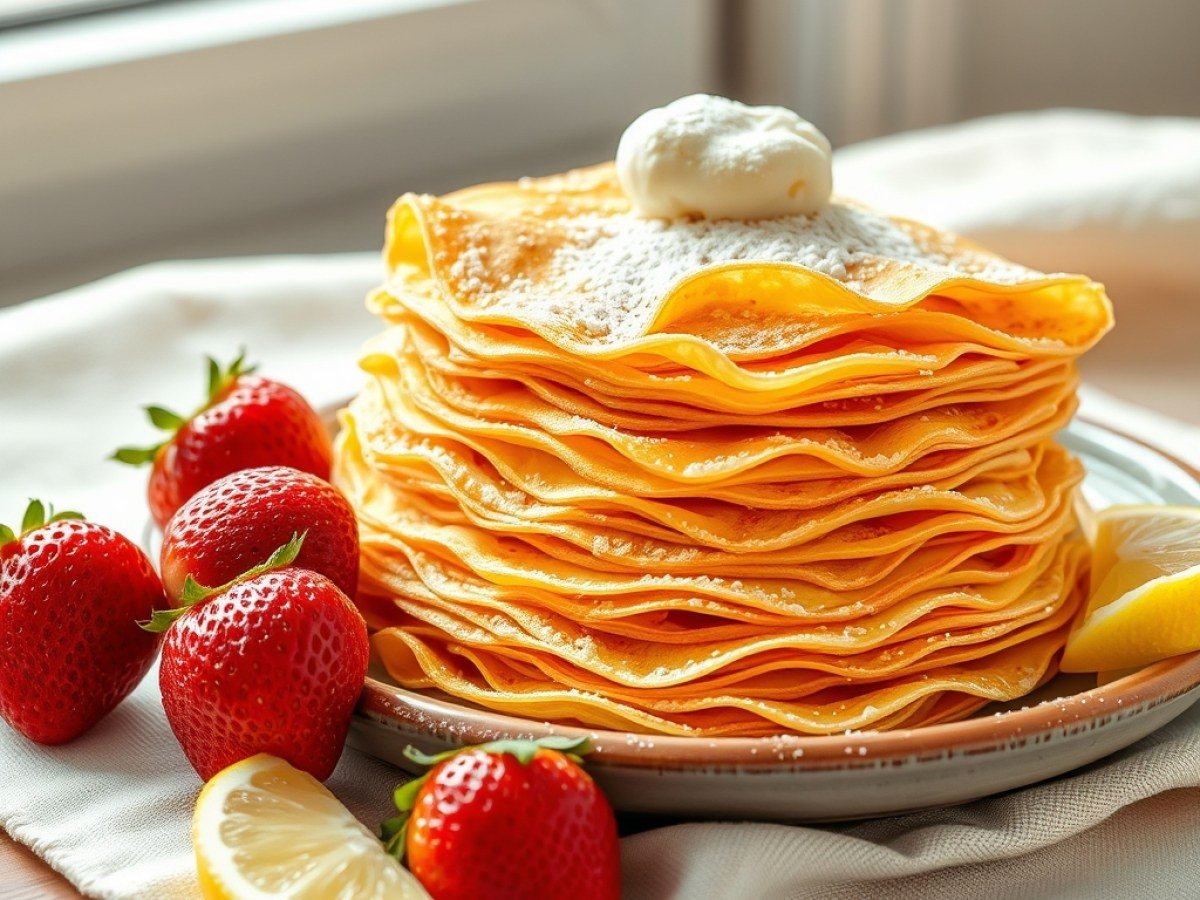
- Fillings: lemon juice and sugar, Nutella and sliced banana, strawberries and whipped cream, or ham and Gruyère
Instructions
- Whisk the dry ingredients. In a medium bowl, whisk 3/4 cup flour, 1 tablespoon sugar, and 1/4 teaspoon salt until evenly combined. This takes about 20 seconds and prevents salty pockets in the batter.
- Build the batter. Make a well in the center and crack in the 3 eggs, then pour in about 1/4 cup of the milk. Whisk from the middle outward, gradually pulling in flour, until you have a thick, lump-free paste — this is the secret to no lumps (about 1 minute).
- Thin it out. Stream in the remaining 1 cup milk while whisking, then whisk in 3 tablespoons melted butter and the vanilla if using. The batter should look like heavy cream and coat the back of a spoon thinly; if it’s thicker than that, add milk 1 tablespoon at a time.
- Rest the batter. Cover and rest at room temperature for at least 30 minutes, or up to 24 hours in the fridge. Resting hydrates the flour and relaxes the gluten, which is the difference between a tender crepe and a chewy, tear-prone one. If chilled, stir well and let it sit 10 minutes before cooking.
- Heat the pan properly. Set a 9- to 10-inch nonstick or well-seasoned carbon steel crepe pan over medium heat for 2–3 minutes. Brush lightly with melted butter. Test with a drop of batter: it should sizzle gently and set in about 5 seconds — if it browns instantly, the pan is too hot; if nothing happens, wait another minute.
- Swirl and cook the first side. Lift the pan off the heat, pour in a scant 1/4 cup (about 60 ml) batter for a 9-inch pan, and immediately tilt and rotate the pan so the batter coats the base in a thin, even layer. Return to the heat and cook 60–90 seconds, until the edges look dry and lacy and the underside is golden in spots.
- Flip and finish. Loosen the edge with a thin spatula or your fingers, then flip with the spatula or by hand. Cook the second side just 15–30 seconds — crepes are done when they’re pale gold with a few brown speckles, not uniformly browned. Slide onto a plate.
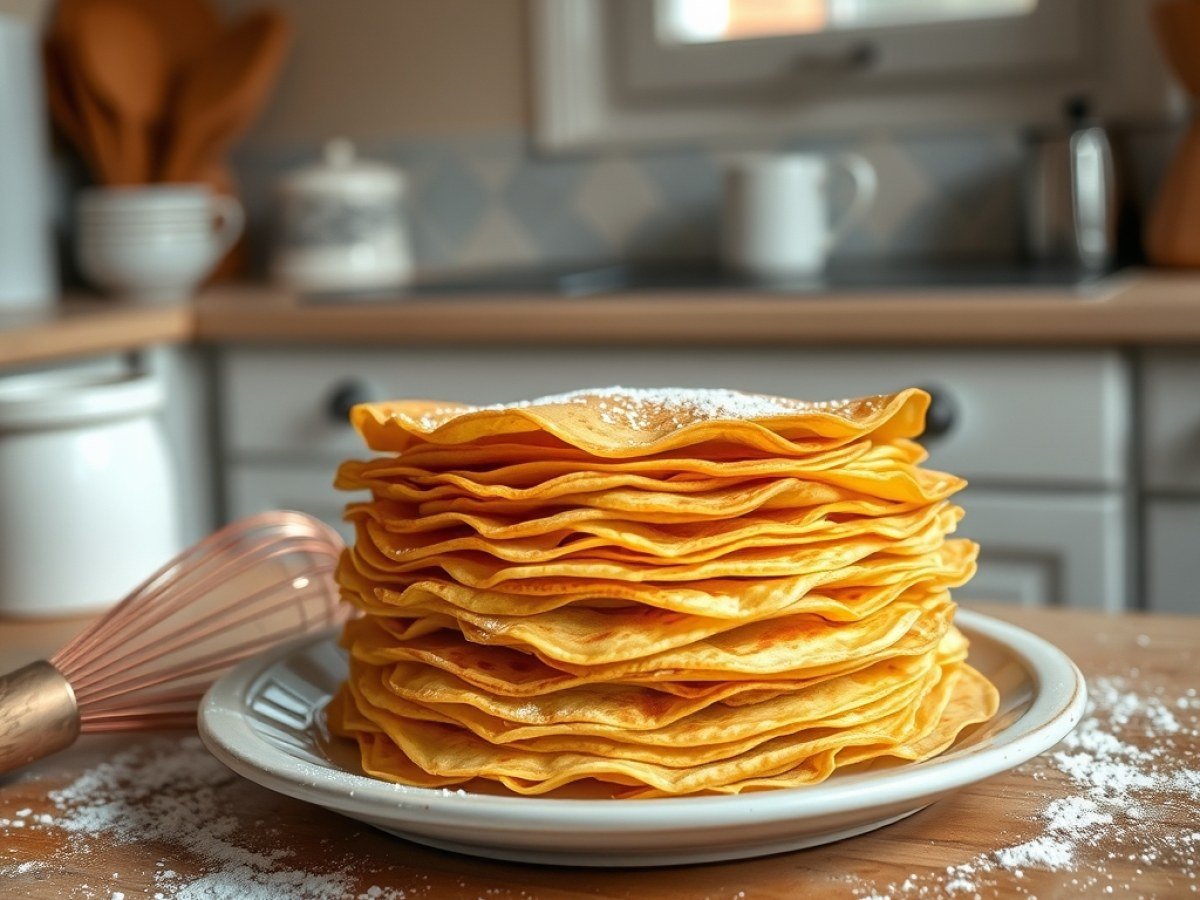
- Stack and repeat. Keep finished crepes stacked on a plate under a clean kitchen towel so they stay soft and steamy. Stir the batter every few crepes (it settles), re-butter the pan lightly every 3–4 crepes, and adjust the heat down if crepes start browning before they spread. You should get 12–14 crepes.
- Fill and serve. For sweet crepes: sprinkle with sugar and a squeeze of lemon, or spread with Nutella and add banana slices, then fold into quarters. For savory: fill with ham and grated Gruyère, fold, and warm in the pan 1 minute until the cheese melts. Serve immediately — crepes are best hot from the pan.
Tips & Variations
- Don’t skip the rest. Even 30 minutes changes the texture noticeably; overnight in the fridge is even better for a tender, pliable crepe.
- Pan temperature is everything. Medium heat, not high — if the batter sets before it reaches the edges, the pan is too hot and you’ll get thick, uneven crepes.
- Use a ladle or measuring cup you can pour fast. The swirl has to happen in the first 3–4 seconds before the batter sets.
- No crepe pan? A 9- to 10-inch nonstick skillet works fine. A cast iron skillet works too, but give it a full 5 minutes to heat evenly.
- Make it savory: drop the sugar and vanilla, add 1/4 teaspoon salt more, and use the crepes for ham and cheese, sautéed mushrooms, or a fried egg.
- Gluten-free version: swap the flour for 3/4 cup (90 g) gluten-free all-purpose blend with xanthan gum and rest the batter a full hour.
- If your first crepe is a disaster, that’s normal — it’s the pan-seasoning test crepe. Adjust the heat and keep going.
Storage & Make-Ahead
Stack cooled crepes with a sheet of parchment between each, wrap tightly in foil or a zip-top bag, and refrigerate up to 3 days or freeze up to 2 months. Reheat in a dry pan over medium-low heat for 20–30 seconds per side, or microwave a stack wrapped in a damp paper towel for 30 seconds. The batter itself can be made up to 24 hours ahead and refrigerated; stir and thin with a splash of milk before cooking.
Nutrition Information
- Calories: 230
- Carbohydrates: 22 g
- Protein: 8 g
- Fat: 12 g
- Saturated Fat: 6 g
- Fiber: 1 g
- Sugar: 5 g
- Sodium: 190 mg
Values are an estimate per serving and will vary with your exact ingredients and fillings.
FAQs
Why did my crepes turn out thick and rubbery?
Almost always too much flour or too little milk — the batter should be as thin as heavy cream. Whisk in milk 1 tablespoon at a time until it coats a spoon thinly, and make sure your pan is only at medium heat so the batter has time to spread.
Do I really have to rest the batter?
Yes, for the best texture. Resting 30 minutes hydrates the flour and relaxes the gluten, so the crepes cook up tender and don’t tear when you flip them. In a rush, 15 minutes is the bare minimum.
Why do my crepes stick to the pan?
Either the pan isn’t hot enough yet, or it needs more butter. Heat the pan for a full 2–3 minutes, brush with melted butter, and re-butter lightly every 3–4 crepes. If the batter sizzles and sets immediately, the pan is too hot — lower the heat.
Can I make French crepes without a crepe pan?
Absolutely. A 9- to 10-inch nonstick skillet is the most common home substitute and gives the same thin, lacy result. Just preheat it fully and use a scant 1/4 cup batter per crepe.
What’s the difference between French crepes and American pancakes?
Crepes have a much thinner, pourable batter with no leavening, so they cook flat and delicate in under 2 minutes. Pancakes use baking powder for a thick, fluffy rise — same idea, completely different ratio and texture.