George Foreman Net Worth 2026: Boxing Legend Turned Business Giant
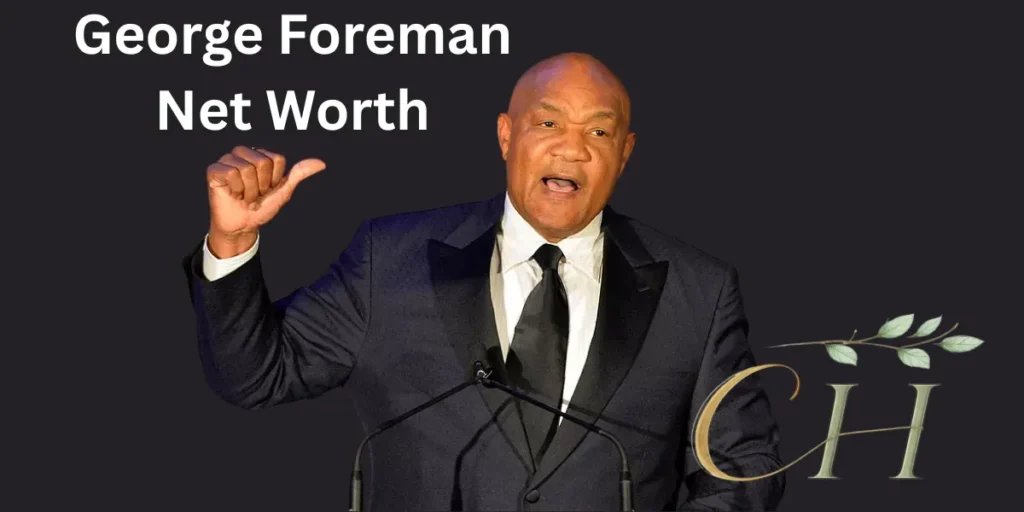
George Foreman net worth stands at an estimated $300 million in 2026, making him one of the wealthiest former athletes in American sports history. What’s remarkable is that the bulk of George Foreman’s wealth didn’t come from the boxing ring — it came from a countertop kitchen appliance. If you’ve ever wondered how a two-time heavyweight champion transformed a grilling machine into a financial dynasty, this is the story you need to read. George Foreman’s journey — from a poverty-stricken childhood in Houston, Texas, to Olympic gold, world championship belts, a stunning comeback at age 45, and finally a product endorsement deal worth over $200 million — is one of the most compelling rags-to-riches stories in sports and business history. George Foreman’s net worth today is a direct result of his reinvention, resilience, and brilliant entrepreneurship long after his boxing career ended.
Who Is George Foreman? A Quick Biography
George Edward Foreman was born on January 10, 1949, in Marshall, Texas, and grew up in the Fifth Ward of Houston — one of the city’s most economically disadvantaged neighborhoods. As a teenager, he was involved in street crime and dropped out of school before finding direction through boxing via the Job Corps program.
His transformation under trainer Dick Saddler was swift and powerful. By 1968, Foreman was representing the United States at the Mexico City Olympics, where he won the heavyweight gold medal — famously waving a small American flag in the ring after his victory.
Quick Facts
| Detail | Info |
|---|---|
| Full Name | George Edward Foreman |
| Date of Birth | January 10, 1949 |
| Birthplace | Marshall, Texas, USA |
| Nationality | American |
| Height | 6 ft 3 in (190 cm) |
| Profession | Boxer, Entrepreneur, Ordained Minister |
| Net Worth (2026) | ~$300 million |
George Foreman Net Worth Over the Years
George Foreman’s wealth didn’t accumulate in a straight line. His financial story has peaks, valleys, and one extraordinary late-career windfall.
| Period | Estimated Net Worth | Primary Source |
|---|---|---|
| Early 1970s | ~$5 million | Boxing purses |
| Post-Rumble in the Jungle (1975) | ~$3 million | Reduced activity |
| Mid-1980s (comeback start) | Near broke | Financial mismanagement |
| 1994 (Moorer fight) | ~$10 million | Boxing comeback earnings |
| 1999 (Grill deal completed) | ~$150 million | Salton Inc. royalties buyout |
| 2010s | ~$250 million | Continued royalties + investments |
| 2026 | ~$300 million | Diversified portfolio |
Boxing Career: The Foundation of the Foreman Legacy
Olympic Gold Medal (1968)
George Foreman’s boxing career launched on the world stage at the 1968 Mexico City Olympics. His dominant performance — and the patriotic flag wave after his gold medal bout — made him a household name at just 19 years old.
First World Heavyweight Championship (1973)
In January 1973, Foreman destroyed Joe Frazier in Kingston, Jamaica, knocking him down six times in two rounds to claim the WBC and WBA heavyweight titles. The performance shocked the boxing world. Frazier was considered nearly unbeatable at the time.
Rumble in the Jungle (1974)
The most famous fight of Foreman’s career was also his most devastating loss. In Kinshasa, Zaire (now the Democratic Republic of Congo), Muhammad Ali used his now-legendary “rope-a-dope” strategy to tire out Foreman before knocking him out in the eighth round. The bout, promoted by Don King and documented in the Academy Award-winning film When We Were Kings, remains one of the most watched sporting events in history.
Career Decline and Retirement (1977)
Following losses to Ali and Jimmy Young, Foreman retired from boxing in 1977. He underwent a profound personal transformation, becoming an ordained Christian minister and devoting a decade to community work in Houston.
The Comeback — Oldest Heavyweight Champion in History
In 1987, at age 38, Foreman launched one of the most improbable comebacks in sports history. His stated motivation was to raise funds for his youth center in Houston. Over the next seven years, Foreman slowly rebuilt his record, fought for millions in pay-per-view purses, and became a beloved fan favorite due to his good-natured personality and self-deprecating humor.
On November 5, 1994, George Foreman knocked out Michael Moorer in the 10th round to become the WBA and IBF heavyweight champion — at age 45, he was the oldest heavyweight champion in boxing history. The victory is widely considered one of sport’s greatest comeback stories.
Professional Boxing Record Summary
- Total Fights: 81
- Wins: 76 (68 by KO)
- Losses: 5
- KO Percentage: ~84%
Foreman was inducted into the International Boxing Hall of Fame in 2003.
The George Foreman Grill: The $200 Million Machine
Here’s where the real money came from.
How the Grill Deal Happened
In the early 1990s, Salton Inc. — a kitchen appliance company — was looking for a celebrity face for a new low-fat contact grill. Fitness advocate and salesman Mike Fischman approached Foreman, who agreed to front the product for a combination of upfront fees and royalty payments.
The product launched in 1994 as the “George Foreman Lean Mean Fat Reducing Grilling Machine.” Initial sales were modest. Then infomercials hit television in 1995, and the grill became a cultural phenomenon.
The Numbers
- By 2000, over 10 million units had been sold
- By 2010, total sales exceeded 100 million units worldwide
- Foreman was earning royalties of roughly $4.5 million per month at peak sales
- In 1999, Salton Inc. bought out Foreman’s royalty rights for a lump sum of approximately $138–$200 million (reports vary slightly by source)
That single deal is believed to have exceeded all of his boxing earnings combined — and it came from a grill.
Why the Grill Was a Branding Masterstroke
The product tapped perfectly into 1990s health consciousness. The “fat reducing” positioning was timely, the price point was accessible, and Foreman’s warm, trustworthy public image translated perfectly to infomercial format. His name on the product was the difference between a forgotten appliance and a global bestseller.
George Foreman’s Income Sources: A Full Breakdown
George Foreman’s wealth is multi-layered. Here’s how the money breaks down:
1. Boxing Purses
Over his career — including his comeback years in the late 1980s and early 1990s — Foreman earned an estimated $30–$50 million in fight purses. Notable paydays included the Evander Holyfield fight (1991) and the Michael Moorer championship bout (1994).
2. George Foreman Grill Royalties and Buyout
The Salton Inc. deal remains the cornerstone of his fortune. The royalty buyout alone is estimated between $138 million and $200 million. Prior to the buyout, he was reportedly earning over $4 million per month in passive income royalties.
3. Endorsements and Sponsorships
Beyond the grill, Foreman has done endorsement work with brands including Meineke Car Care Centers and various food and lifestyle products. His likeable, authentic persona made him a natural commercial personality.
4. Television and Media
Foreman worked as a boxing commentator for HBO, appeared in films and TV shows, and hosted his own content. These ventures added millions over the years in fees and licensing.
5. Real Estate
Foreman owns property in Houston, Texas, and has invested in real estate over the decades. The value of his real estate holdings contributes meaningfully to his overall net worth.
6. Books and Memoir Sales
He authored several books including God in My Corner and Knockout Entrepreneur, which generated additional income and reinforced his personal brand.
George Foreman Grill vs. Other Celebrity Endorsement Deals
| Celebrity | Product/Deal | Estimated Earnings |
|---|---|---|
| George Foreman | George Foreman Grill (Salton Inc.) | $200M+ |
| Michael Jordan | Nike Air Jordan | $1.5B+ (lifetime) |
| Oprah Winfrey | Weight Watchers equity stake | $400M+ |
| 50 Cent | Vitaminwater (Glacéau equity) | ~$100M |
| Arnold Palmer | Arnold Palmer Iced Tea (licensing) | ~$50M |
Foreman’s grill deal stands out as one of the most financially efficient endorsements in history — especially for a retired athlete with no corporate infrastructure.
George Foreman’s Personal Life and Family
George Foreman has been married five times and has twelve children — five sons, all named George (George Jr., George III, George IV, George V, and George VI), and seven daughters. The naming tradition became one of his most-discussed personal quirks and a frequent subject of his humor in interviews.
He has spoken openly about his Christian faith, his years as a minister in Houston, and how spirituality guided his comeback and business decisions. His religious transformation after his 1977 retirement is considered central to understanding his later success.
Financial Struggles Before the Comeback
It’s important to tell the full story. After his initial retirement in 1977, Foreman’s finances deteriorated significantly. He had earned millions from boxing but spent lavishly and had little guidance on wealth management. By the mid-1980s, he was reportedly nearly broke and struggling to fund his community youth program in Houston.
This financial pressure was a genuine motivator for his boxing comeback — not just athletic vanity. The comeback, combined with the grill deal, allowed Foreman to transform a near-bankruptcy situation into a $300 million fortune. His story is often cited in financial literacy discussions as both a cautionary tale and an extraordinary redemption arc.
George Foreman’s Legacy: Boxing, Business, and Beyond
George Foreman’s legacy is genuinely dual-sided. As a boxer, he is one of the most powerful punchers in heavyweight history, a two-time world champion, and the oldest man ever to hold the heavyweight title. As a businessman, he demonstrated that an athlete’s personal brand — deployed at the right moment with the right product — can generate wealth that dwarfs an entire athletic career.
His story has influenced a generation of athletes seeking financial literacy and business diversification. He’s cited alongside figures like Magic Johnson and Earvin Johnson’s business empire as proof that athlete-led business ventures can produce lasting wealth.
Pros and Cons of George Foreman’s Wealth Strategy
Pros
- Diversified income beyond boxing early enough in his comeback era
- Chose an endorsement deal with royalty-based upside rather than a flat fee
- Built a personal brand rooted in authenticity and relatability
- Reinvested in real estate and long-term assets
- Leveraged faith and community work as genuine reputation builders
Cons
- Lost significant wealth in the 1970s and 1980s due to poor financial planning
- Sold royalty rights outright in 1999 — ongoing royalties could have been worth significantly more long-term
- Multiple marriages created financial exposure
- Limited early financial mentorship led to avoidable losses
FAQ: George Foreman Net Worth and Career
What is George Foreman’s net worth in 2026? George Foreman’s net worth is estimated at approximately $300 million in 2026, built primarily through the George Foreman Grill royalty deal and his boxing career earnings.
How much did George Foreman make from the grill? Foreman earned an estimated $138 million to $200 million from the Salton Inc. buyout of his grill royalties in 1999, plus significant royalty payments in the years leading up to that deal.
Did George Foreman make more money from boxing or the grill? The grill. His total boxing purses are estimated at $30–$50 million over his career, while the grill deal alone returned an estimated $200 million.
How old was George Foreman when he became heavyweight champion the second time? He was 45 years old when he knocked out Michael Moorer on November 5, 1994, becoming the oldest heavyweight champion in history.
Is George Foreman in the Boxing Hall of Fame? Yes. George Foreman was inducted into the International Boxing Hall of Fame in 2003.
What is the George Foreman Grill official name? The product was originally branded the “George Foreman Lean Mean Fat Reducing Grilling Machine,” manufactured and marketed by Salton Inc.
Where does George Foreman live? George Foreman has been based in Houston, Texas, for most of his adult life. He maintains property in the Houston area.
Did George Foreman fight Muhammad Ali? Yes. Their 1974 bout in Kinshasa, Zaire — known as the “Rumble in the Jungle” — is one of the most famous fights in boxing history. Ali won by knockout in the eighth round.
How many children does George Foreman have? George Foreman has twelve children. Five of his sons are all named George — George Jr., George III, George IV, George V, and George VI.
What did George Foreman do after boxing? After his final retirement, Foreman worked as a boxing commentator for HBO, continued his role as an ordained minister, wrote books, and managed his business interests including the ongoing Foreman Grill brand.
Key Takeaways
- George Foreman’s net worth in 2026 is approximately $300 million.
- The George Foreman Grill deal earned him more than his entire boxing career.
- Foreman became the oldest heavyweight champion in history at age 45.
- He turned near-bankruptcy in the 1980s into a $300M fortune through reinvention.
- His story is a blueprint for athlete entrepreneurship and brand monetization.
Conclusion
George Foreman net worth of $300 million in 2026 is the product of two remarkable careers separated by a decade of personal transformation. He was one of the most feared heavyweight boxers in history — a gold medalist, a two-time world champion, and a man who knocked out opponents with surgical brutality. But it was a countertop grill and a royalty deal that made him truly wealthy.
What makes Foreman’s story unique isn’t just the money — it’s the arc. He lost wealth, found faith, came back to boxing when most people his age are thinking about retirement, and then used the goodwill and visibility that comeback generated to power one of the most profitable celebrity endorsements in consumer product history.
For athletes, entrepreneurs, and anyone interested in wealth-building, George Foreman’s financial story remains one of the most instructive and genuinely inspiring in modern American history.