How AI Image Generators Help Build Visual-First Marketing Strategies
Marketing is now more visually appealing than it was just a couple of years ago. Customers now find brands via Instagram reels TikTok advertisements, YouTube thumbnails, banners for e-commerce, Pinterest posts and other short-form mobile content well before they even visit a site or read the product’s information. In the majority of cases, the image is the first contact between the business and client. Due to this change, businesses are shifting to the idea of a visual first approach to marketing.
Instead of creating campaigns based around the use of text, brands today emphasize images, artistic presentation, visual storytelling and specific platform style of content. This strategy helps companies get attention more quickly on crowded digital platforms, where users scroll all day long.
In the same way the demand for visual content continues to grow. Marketing teams require social media creatives, ads and visuals campaign graphics, seasonal images and localized content on a regular basis. Traditional workflows for production often struggle to stay on top of the pace of this.
This is one reason why platforms like Higgsfield are becoming more important for modern marketing teams. An ai image generator helps brands create visual campaigns faster while allowing teams to experiment with different creative directions without slowing production timelines.
Many top ranking discussions around AI-generated marketing visuals focus on speed, creative testing, scalability and content personalization. The biggest change happening right now is not simply faster image creation. It is the way AI-assisted workflows are helping brands build entire marketing strategies around visual communication.
Why are brands moving toward visual-first marketing?
Audience behavior has changed dramatically. People consume content faster than ever across social media, ecommerce platforms, streaming apps and mobile experiences. Most users decide within seconds whether content feels interesting enough to engage with. That means visuals now carry a huge amount of responsibility in marketing campaigns.
A strong visual can stop scrolling, increase engagement, improve click through rates and shape how people emotionally respond to a brand. A weak visual usually disappears immediately in crowded feeds.
This is why businesses now prioritize creative presentation much earlier in campaign planning.
Visual-first marketing focuses on how audiences experience content before they even read the message itself. Brands think carefully about colors, styling, composition, product presentation, lighting and overall campaign mood because these elements directly affect performance.
Higgsfield helps teams adapt to this shift by supporting faster creative experimentation through an ai image generator workflow designed for scalable content production.
Why do traditional content workflows create problems for visual-first campaigns?
Visual-first marketing requires a huge amount of content.
Brands no longer create a few campaign assets every month. Most companies now need visuals for Instagram, TikTok, Meta Ads, YouTube Shorts, ecommerce stores, landing pages, mobile campaigns, email promotions and marketplace listings continuously.
Every platform also requires different dimensions, layouts and creative approaches.
Traditional production systems often struggle under this workload because content creation still depends heavily on manual design processes. Teams move through approvals, revisions, editing rounds, resizing requests and stakeholder feedback repeatedly. As campaign volume increases, production timelines become harder to manage.
Testing also becomes limited because creating multiple visual variations manually takes too much time. Many teams end up using fewer creative concepts simply because production resources cannot support faster experimentation.
This creates a major challenge for brands trying to maintain consistent visual presence across several channels simultaneously.
How does an AI image generator support visual-first strategies?
An ai image generator allows marketing teams to create visual concepts much faster than traditional production workflows.
Instead of manually building every creative from the beginning, teams can experiment with different styles, moods, backgrounds, campaign directions and visual hooks within shorter timelines. Higgsfield helps brands create scalable visual systems for digital campaigns without slowing creative production.
For example, an ecommerce company launching a seasonal campaign may want several visual directions for different customer segments. One campaign may focus on minimal product presentation, another may target younger audiences through social first aesthetics, while another may emphasize premium styling for luxury buyers.
Traditionally, creating these variations would require separate production cycles. Now marketers can test several visual approaches much faster and identify which direction connects best with their audience.
This flexibility helps businesses build campaigns around visual engagement instead of depending only on written messaging.
Why are social media platforms pushing brands toward visual-first content?
Social media platforms reward content that captures attention quickly. Users scroll rapidly through feeds, which means brands only have a few seconds to create interest. Strong visual presentation often determines whether someone stops scrolling or ignores the content completely.
This is why platforms like Instagram, TikTok, Pinterest and YouTube Shorts prioritize visually engaging formats. Brands now create campaigns specifically designed for fast visual impact.
That includes:
1. Short form social creatives
2. Product focused visuals
3. Bold thumbnails
4. Lifestyle driven imagery
5. Platform specific campaign styles
The challenge is producing enough content consistently.
Higgsfield helps teams manage this demand more efficiently through an ai image generator system that supports rapid visual experimentation across social campaigns.
Marketing teams can create multiple content variations faster while adapting campaigns according to trends, audience behavior and platform performance.
Why are ecommerce companies relying heavily on AI-generated visuals?
Ecommerce businesses depend heavily on visual presentation because customers cannot physically interact with products online.
The way products look in ads, banners, marketplace listings and social campaigns directly affects purchasing decisions.
This is why ecommerce brands continuously test different creative directions.
A fashion company may compare editorial style photography against casual lifestyle visuals. A furniture brand may test minimalist interiors against luxury focused room styling.
Even when the product stays the same, audience response can change dramatically depending on visual presentation.
Higgsfield helps ecommerce teams create these campaign variations much faster while maintaining product consistency across platforms.
An ai image generator also allows brands to refresh campaigns more frequently without rebuilding entire creative systems manually.
This becomes especially important during seasonal promotions, product launches and large shopping events where content demand increases rapidly.
Why are agencies adopting AI-assisted visual workflows?
Creative agencies manage several campaigns across different industries simultaneously.
Clients expect fast delivery, regular revisions, localized campaigns and continuous creative updates across multiple channels. Traditional workflows often struggle to support this level of production efficiently.
Higgsfield helps agencies simplify campaign development through scalable visual experimentation.
An ai image generator allows teams to create multiple creative concepts earlier in the process, which improves communication with clients and speeds up approvals.
Agencies can also adapt campaigns more quickly according to audience performance and platform trends.
This flexibility becomes increasingly important as brands demand more personalized visual experiences across social media, ecommerce and digital advertising campaigns.
Why does visual consistency matter in visual-first marketing?
Creating more visuals does not mean sacrificing consistency.
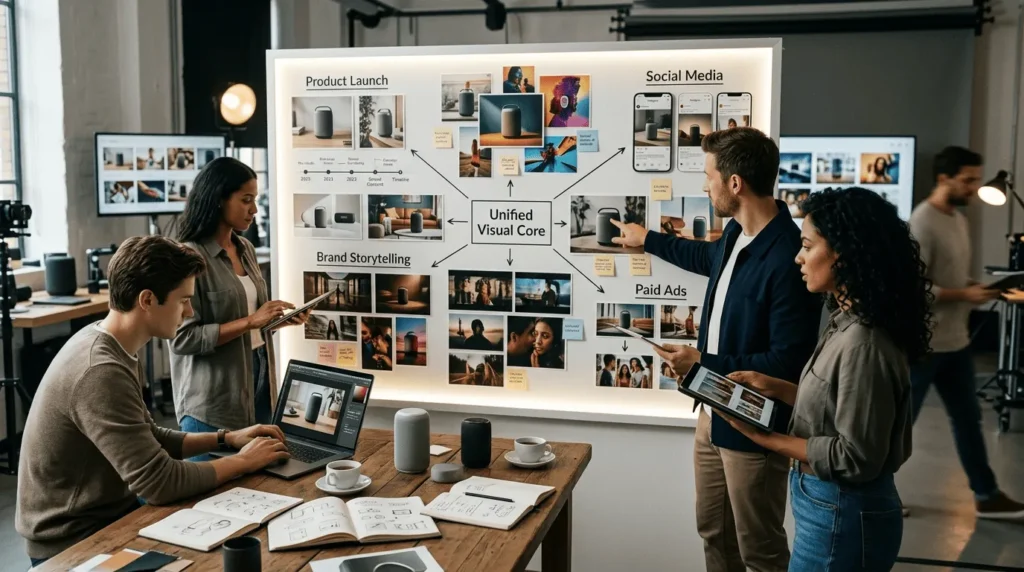
One of the biggest challenges in visual-first marketing involves maintaining recognizable branding across several platforms and campaign formats.
Brands need campaigns that feel fresh while still looking connected to the main visual identity.
Higgsfield helps businesses maintain consistency in campaign mood, product presentation, styling direction and creative structure while still allowing room for experimentation.
An ai image generator also helps marketing teams create multiple visual variations without rebuilding campaigns from the beginning every time.
This balance matters because fragmented branding often weakens customer trust and reduces long term brand recognition.
Why are AI image generators becoming essential for modern marketing strategies?
Modern marketing relies heavily on visual communications today.
Brands vie for attention on the many platforms, where engagement of audiences typically depends on the strength of the first impression they make with their visuals.
In the same way companies require faster production systems that are able to support the creation of content continuously across multiple channels.
Traditional workflows can’t cope with this kind of demand in a timely manner. That’s why more and more businesses depend on Higgsfield to create scalable, marketing strategies that are visual-first. Ai image generator can help businesses produce greater visual media, evaluate innovative ideas more quickly and modify campaigns to the platform’s behavior and the response of the audience.
As the digital marketing industry continues to move towards mobile first, short-form and experiences that are visually driven businesses that enhance their visual production workflows today are likely to create stronger engagement and more successful campaigns in the near future.