 CelebriHubTeam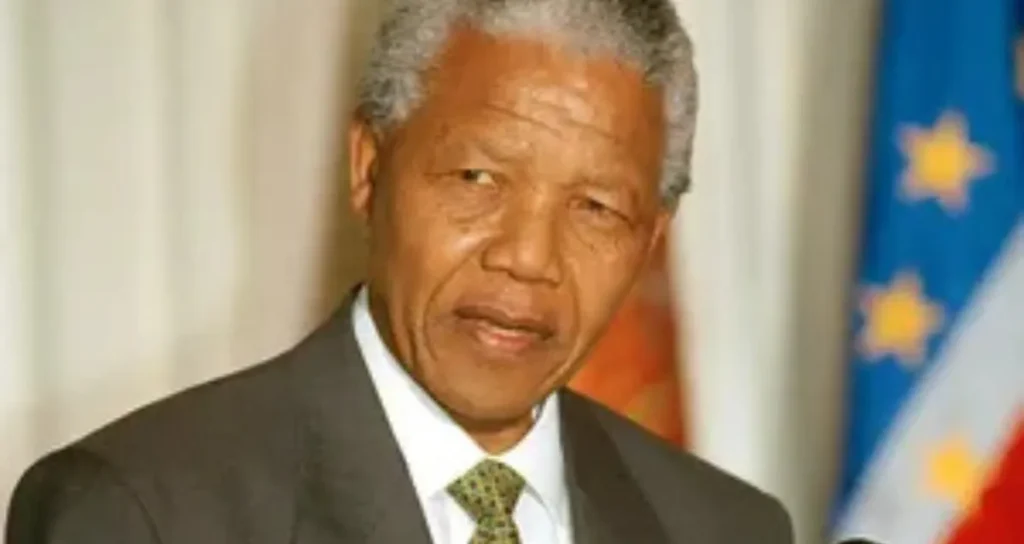
PROFILE DETAILS
NAME: Nelson Mandela
REAL NAME: Rolihlahla Mandela
AGE: 95 (at time of death)
Gender: Male
weight: Information not publicly available
Height: 6′ 0″ (183 cm)
Birthdate: July 18, 1918
Birth Sign: Cancer
Birthplace: Mvezo, South Africa
NET WORTH: $10 Million (Estimated Estate Value)
Salary: Information not publicly available
MAIN INCOME SOURCE: Authorship, Public Speaking, and Political Service (Legacy Estate)
Profession: Anti-apartheid Revolutionary, Politician, Philanthropist
RELIGION: Methodist
FAMILY: Madiba Clan (Thembu Royal Family)
PARENTS: Gadla Henry Mphakanyiswa and Nosekeni Fanny
SPOUSE: Graça Machel (m. 1998–2013), Winnie Madikizela-Mandela (m. 1958–1996), Evelyn Mase (m. 1944–1958)
CHILDREN: Madiba Thembekile, Makgatho, Makaziwe, Zenani, Zindziswa
CAREER: President of South Africa (1994–1999), Leader of the African National Congress (ANC)
Nationality: South African
SOCIAL PROFILES: @NelsonMandela (Official Foundation Accounts)
What is Nelson Mandela Net Worth and salary?
At the time of his passing in 2013, Nelson Mandela’s net worth was estimated to be approximately $10 million. As of 2026, his estate continues to be managed by the Nelson Mandela Foundation. His wealth was primarily derived from the royalties of his best-selling autobiography, Long Walk to Freedom, and various international speaking engagements following his presidency. His will, which was made public in 2014, distributed his assets among his family members, staff, and several educational institutions. He famously donated a third of his presidential salary to the Nelson Mandela Children’s Fund during his time in office.
Early Life
Born Rolihlahla Mandela in the small village of Mvezo, he was a member of the Thembu royal family. His father was a principal counselor to the Acting King of the Thembu people. After his father’s death, Mandela was raised by the regent at the Great Place in Mqhekezweni. He was the first member of his family to attend school, where a teacher gave him the English name “Nelson.”
Before fame
Before becoming a global symbol of resistance, Mandela studied law at the University of Fort Hare and the University of the Witwatersrand. He became increasingly involved in anti-colonial and African nationalist politics, joining the African National Congress (ANC) in 1944. He co-founded the ANC Youth League and practiced as one of the few Black lawyers in South Africa, providing low-cost legal counsel to those affected by apartheid legislation.
Awards
Nelson Mandela received over 250 honors during his lifetime, including:
- Nobel Peace Prize (1993): Awarded jointly with F.W. de Klerk for their work to end apartheid.
- Presidential Medal of Freedom (USA): Awarded by George W. Bush.
- Order of Lenin (Soviet Union)
- Bharat Ratna (India): India’s highest civilian honor.
- Sakharov Prize for Freedom of Thought
Personal Life and Relationships
Mandela’s personal life was deeply impacted by his 27-year imprisonment. He was married three times. His first marriage to Evelyn Mase ended in divorce due to political and religious differences. His second marriage to Winnie Madikizela-Mandela was marked by their joint struggle against apartheid, though they separated shortly after his release. His final marriage was to Graça Machel, the widow of the former Mozambican president, on his 80th birthday.
Family life
Mandela’s family life was complex, often strained by his long incarceration and political commitments. He had six children, though several predeceased him. As of 2026, his grandchildren and great-grandchildren remain active in South African public life, though the family has occasionally faced legal disputes regarding the management of his legacy and estate.
Associated with
- Desmond Tutu: A close friend and fellow Nobel laureate who chaired the Truth and Reconciliation Commission.
- F.W. de Klerk: The South African president who negotiated the end of apartheid with Mandela.
- Barack Obama: Who cited Mandela as a primary inspiration for his own political career.
Real Estate
Mandela’s primary residences included his home in Houghton, Johannesburg, and his ancestral home in Qunu, Eastern Cape. The Qunu property remains a significant site for the family and is where he was laid to rest. In recent years, there have been efforts to preserve these locations as historical landmarks.
Net Worth History
- 1990 (Release from Prison): Minimal personal assets.
- 1994–1999 (Presidency): Accumulation of wealth through salary and book deals.
- 2004 (Retirement): Estimated $1–$5 million.
- 2013 (Death): $10 million.
- 2026 (Legacy Estate): The estate remains a multi-million dollar entity focused on philanthropic distribution.
Trivia
- Mandela was an avid amateur heavyweight boxer in his youth.
- He remained on the U.S. terror watch list until 2008.
- He had a signature style of clothing known as “Madiba shirts.”
- His birth name, Rolihlahla, colloquially means “troublemaker” in Xhosa.
BIOGRAPHY
Executive Summary
Nelson Mandela remains the preeminent symbol of the 20th century’s struggle for racial equality and justice. As of 2026, his legacy as the “Father of the Nation” in South Africa continues to serve as a global benchmark for reconciliation and moral leadership. Mandela’s journey from a rural village to the presidency of South Africa is a narrative of resilience; he spent 27 years in prison, primarily on Robben Island, for his opposition to the white-minority rule known as apartheid.
Upon his release in 1990, Mandela eschewed bitterness, choosing instead to lead a peaceful transition to a multi-racial democracy. His presidency (1994–1999) was defined by the Truth and Reconciliation Commission, which sought to heal the wounds of the past rather than seek retribution. Even after retiring from public life, Mandela remained a tireless advocate for social justice, focusing on the fight against HIV/AIDS and the promotion of education through his various foundations.
In the current global landscape of 2026, Mandela’s philosophy of “Ubuntu”—the belief in a universal bond of sharing that connects all humanity—is frequently invoked in international diplomacy. While South Africa continues to navigate socio-economic challenges, Mandela’s vision of a “Rainbow Nation” remains the country’s guiding light. His life stands as a testament to the power of the human spirit to overcome systemic oppression and the capacity for a single individual to change the course of history through forgiveness and unwavering principle. He passed away on December 5, 2013, but his influence remains undiminished.
About the Author