How to Organize Your Kitchen After Downsizing: Smart, Simple Ideas
Moving into a smaller kitchen can feel like losing a room you loved. The counters shrink, the cabinets shrink, and every mug and mixing bowl suddenly competes for space. The good news is that a smaller kitchen can actually cook better — once everything left in it earns its place, and every inch is put to work.
The trick is not buying more organizers first. It is deciding what stays, giving every item a sensible home, and building small habits that keep it that way. Work through these eight ideas in order, and by the weekend your kitchen will feel bigger than it looks — no renovation needed, just a clear plan.
1. Start With a Ruthless Edit
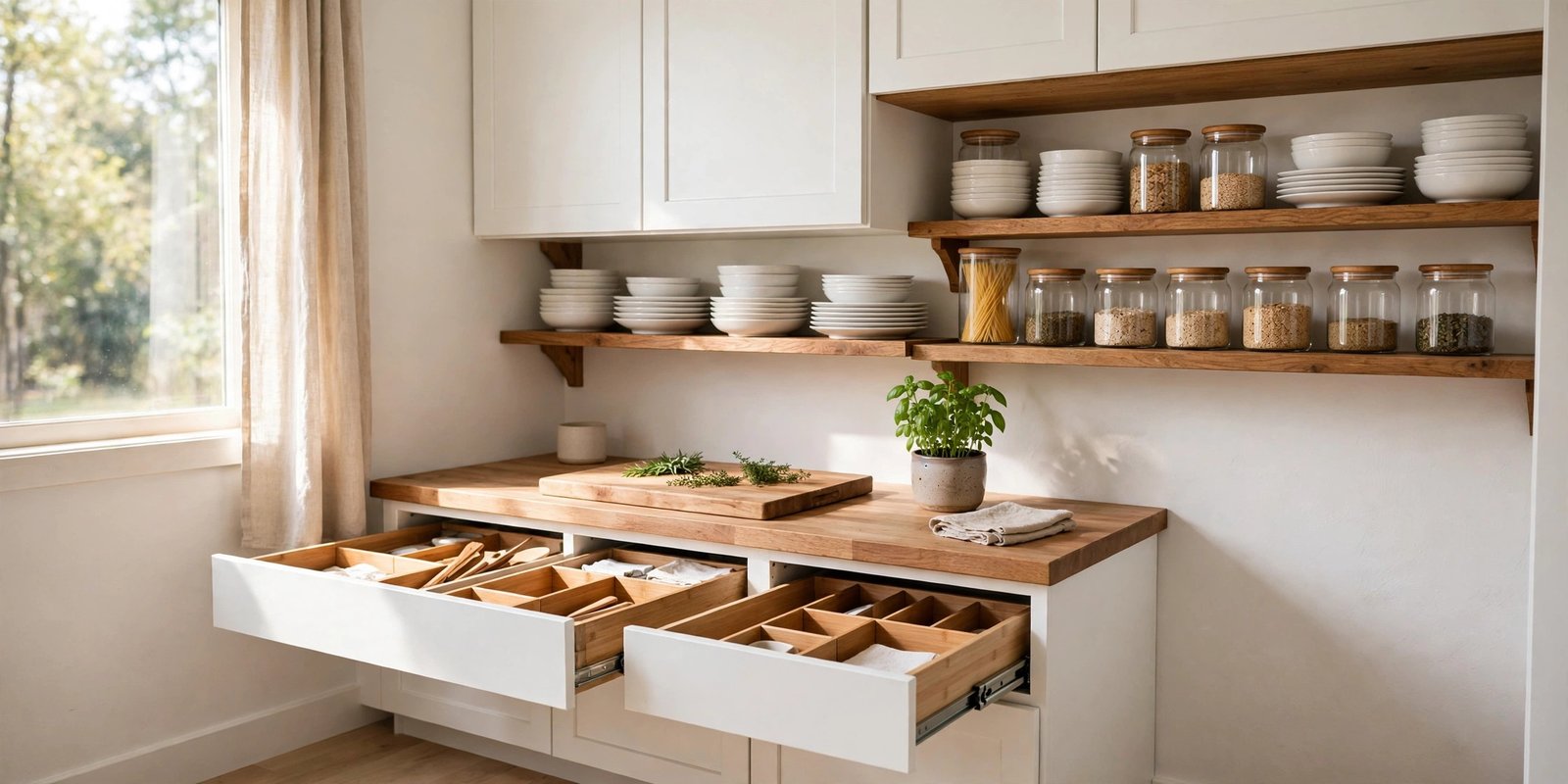
Before you organize anything, take everything out — every cabinet, every drawer. Sort items into three piles: use weekly, use rarely, and haven’t touched in a year. Keep the first pile, box the second for a 30-day test (if you reach for it, it stays), and donate the third. Duplicates go first: one good chef’s knife beats three dull ones, and one large pot can replace a stack of saucepans.
2. Zone Your Kitchen Like a Pro
Divide the kitchen into three zones and store things where you use them. Prep zone: knives, cutting boards and mixing bowls near the sink and the biggest stretch of counter. Cooking zone: pots, pans, spatulas and oils within arm’s reach of the stove. Cleaning zone: dish soap, sponges and towels under the sink. When everything lives where the work happens, you stop crisscrossing a small room.
3. Keep Everyday Items Between Waist and Shoulder Height
The easiest shelf to reach is the one between your waist and your shoulders, so that is where daily dishes, glasses and your favourite pan belong. Move the waffle maker, the holiday platters and the fondue set up high or down low. This one change does more than any organizer: it cuts bending and stretching, and it makes the kitchen feel calmer every single day.

4. Add Pull-Out Shelves and Lazy Susans to Deep Cabinets
Deep lower cabinets are where things go to disappear. A pull-out shelf turns a dark cave into a drawer you can see at a glance — measure your cabinet first, then choose a slide-out basket or shelf that fits; many install with adhesive strips and no tools. In corner cabinets, a lazy Susan spins pots, oils and sauces into reach. For upper cabinets, a small tiered riser doubles the usable shelf space.
5. Go Vertical: Walls, Doors and Cabinet Sides
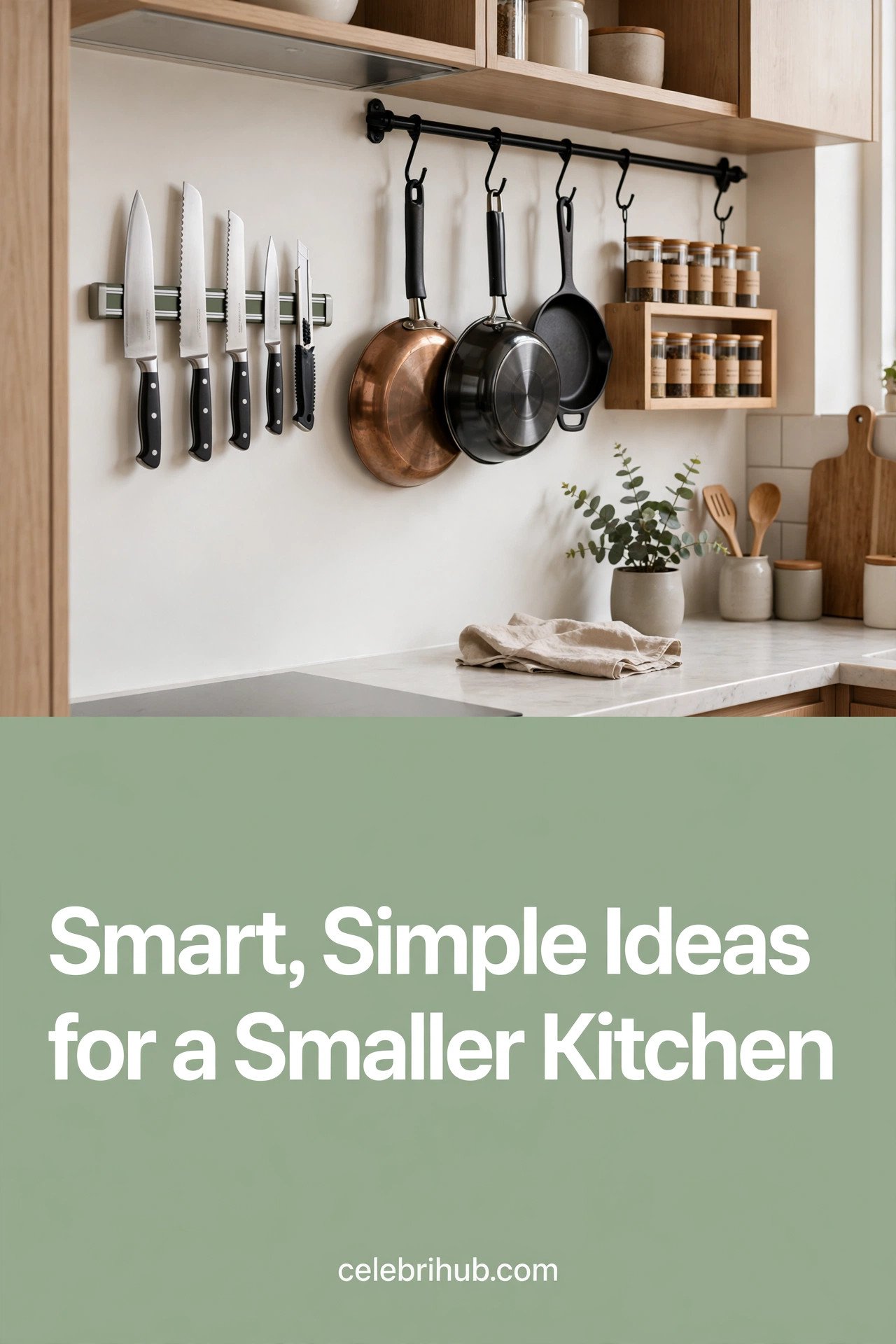
When counter space is short, the walls do the work. A magnetic knife strip frees an entire drawer and keeps blades safer than a block. Hang a rail with hooks for measuring cups and utensils, and mount a paper-towel holder inside a cabinet door. A narrow shelf above the sink holds dish soap and a plant, and the side of a tall cabinet can carry a spice rack or a small cutting-board hook.
6. Decant Into Clear, Labelled Containers
Half-empty boxes and crinkly bags waste space and hide what you own. Pour flour, sugar, rice, oats and pasta into clear, square containers — square stacks better than round — and label each one with its name and expiry date. Group baking supplies on one shelf and breakfast foods on another. You will see at a glance what is running low, and your pantry will look twice as neat without buying a single extra shelf.
7. Store Pots, Pans and Lids Vertically
Pans stacked in a pile scratch each other and hide the one you want at the bottom. Stand them upright instead: a vertical pan rack or a simple file organizer holds each pan on its edge, and a lid rack mounted inside a cabinet door keeps lids from sliding around. Keep just two pans you use every week within reach — a 12-inch skillet and a medium saucepan cover most meals — and store the rest.
8. Build a 10-Minute Weekly Reset
Organization only lasts if it has a routine. Pick one evening a week — Sunday works for most people — and spend ten minutes on a reset: clear the counters, wipe the surfaces, return stray items to their zones, and toss anything expired from the fridge and pantry. That is it. Ten minutes a week stops clutter from quietly creeping back and keeps every idea above working for you.

Frequently Asked Questions
What kitchen items should I keep after downsizing?
Keep the items you use at least once a week: everyday dishes and glasses, one good knife, a cutting board, a 12-inch skillet, a medium saucepan and your most-used small appliances. Donate duplicates, single-use gadgets and anything you have not touched in a year.
How do I organize a very small kitchen with no pantry?
Treat one cabinet or a rolling cart as your pantry, decant dry goods into clear containers, and use the inside of cabinet doors for spices and wraps. A narrow shelf above the sink or stove adds storage without taking counter space.
What is the best way to store pots and pans in a small kitchen?
Stand them vertically in a pan rack or file organizer so each one slides out without lifting a stack. Hang lids on a rack inside a cabinet door, and keep only your two most-used pans at arm’s reach.
How do I keep a downsized kitchen organized long term?
Follow the one-in, one-out rule — every new item means an old one leaves — and run a ten-minute weekly reset. Small, regular habits beat a big annual clean-out every time.
A downsized kitchen is not a downgrade. With fewer, better things and a clear place for each one, cooking gets simpler, cleaning gets faster, and the room you thought you had lost starts to feel like exactly enough.