
How to Build a Summer Wardrobe Over 50 on a Budget (Without Regret)
A summer wardrobe that works does not start at the mall. It starts with a clear plan, a real budget, and the pieces you already own. Most women over 50 already have the bones of a great warm-weather closet — they just need a system that pulls it all together into outfits they actually love wearing.
The trick is building around those pieces instead of buying a whole new wardrobe every June. A small, mix-and-match capsule of about 15 pieces can carry you through the whole season, and it costs far less than a closet full of one-off buys that never quite match anything you own.
This guide shows you how to build it step by step: what to keep, what to buy, where to spend and where to save, and how to walk out of every store without a single regret purchase — plus the two simple rules that keep your budget intact all summer long.
1. Start With the Closet You Already Have
Before you spend a dollar, pull out every summer piece you own and lay it on the bed. Try each one on. Keep only what fits well right now, feels comfortable in heat, and still makes you feel good when you catch your reflection.
Most women discover they already own 8 to 10 usable pieces — a white shirt, a pair of jeans, a dress or two. Write down exactly what is missing. That list, not a sale rack, becomes your shopping plan.
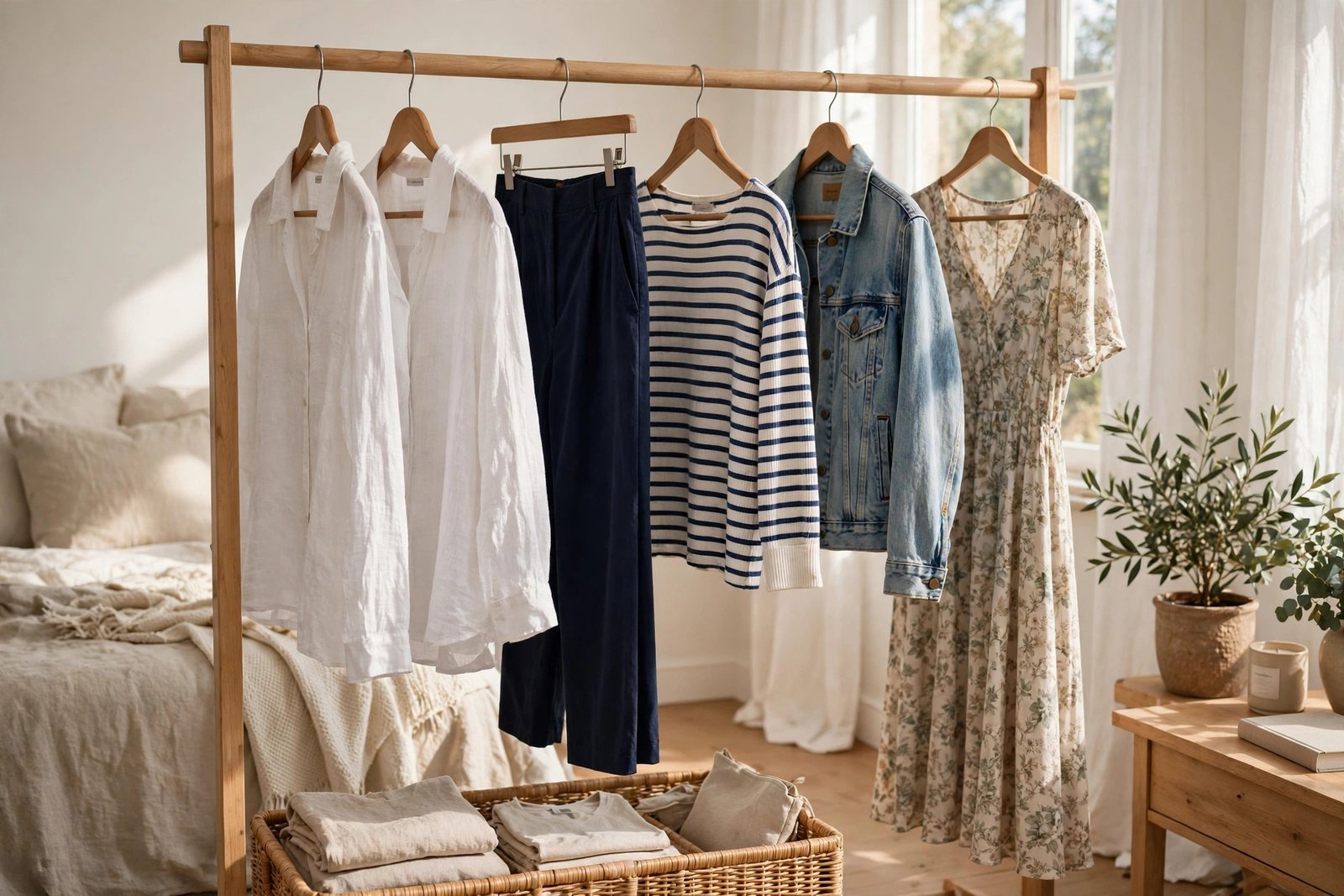
2. Set Your Number: 15 Pieces, One Budget
A 15-piece capsule is the sweet spot: 5 tops, 4 bottoms, 2 dresses, 2 layers, and 2 pairs of shoes. When every piece pairs with at least four others, those 15 items create more than 50 outfits.
Set a total budget before you shop — many women build a full summer capsule for $250 to $400 by mixing affordable basics with one or two better pieces. Then use the cost-per-wear test: divide the price by how many times you will realistically wear it. A $40 linen shirt worn 30 times costs about $1.33 per wear. A $25 trendy top worn twice costs $12.50 per wear — and that is the expensive one.
3. Pick Two Neutrals and One Accent
Choose two neutrals you love — white and navy, or stone and black — plus one accent color that flatters your skin, like coral, sage, or soft teal. Every new piece must work with both neutrals, or it does not come home.
This one rule is what makes a small wardrobe feel big. It also stops the most common budget mistake: buying a pretty color that matches nothing you own.
4. The 15 Pieces Worth Your Money
Build your capsule around these proven staples, adjusting for your own life and climate:
- Tops: white linen shirt, striped Breton top, soft white tee, sleeveless shell in your accent color, lightweight chambray shirt
- Bottoms: white wide-leg linen trousers, dark-wash straight-leg jeans, navy cropped pants, a knee-length A-line skirt
- Dresses: a simple shirt dress, an easy midi dress in your accent color
- Layers: an unlined linen blazer, a light denim jacket or open cardigan
- Shoes: white leather sneakers, comfortable flat sandals
Buy the high-frequency pieces first — the tops and trousers you will reach for three times a week — and add the rest over a few weeks.
5. Where to Shop So the Budget Holds
You do not need designer labels; you need good fabric and a good fit. Uniqlo’s LifeWear line covers linen shirts and trousers for well under $100 a piece, and Target’s A New Day line is strong for dresses, cardigans, and midi skirts.
For classic cuts, watch J.Crew Factory and Lands’ End for 40 to 50 percent off sales. Off-price stores like TJ Maxx and Marshalls are excellent for linen and quality basics at a fraction of retail. And do not skip resale: ThredUp and Poshmark often carry brands you already know fit you, like Eileen Fisher or Chico’s, for a quarter of the original price.

6. Two Rules That Stop Regret Buys
The three-ways rule: only buy a piece if you can name three outfits for it using clothes already in your closet. If you cannot, leave it on the rack.
The 24-hour rule: for anything over $50, or anything you did not plan to buy, wait a day. If you are still thinking about it tomorrow — and you know exactly what you will wear it with — go back for it. Most impulse buys fail this test, and that is the point.
7. Choose Fabrics That Keep You Cool
Summer comfort is a fabric decision. Linen, cotton, and cotton gauze breathe and drape beautifully; a linen-viscose blend wrinkles less and washes more easily than pure linen. Look for these on the label before you look at the price tag.
Avoid heavy polyester in summer — it traps heat and clings. And check the care label: if a piece needs dry cleaning and you know you will not take it, it will sit unworn, and unworn is the most expensive thing a wardrobe can hold.
8. Make Budget Pieces Look Expensive
Fit beats price every time. A $20 top that fits your shoulders perfectly looks better than a $200 blouse that pulls. A $15 hem at a local tailor can make affordable trousers look custom-made.
Finish with one good accessory: a straw tote, a simple gold pendant, or quality sunglasses. One polished detail lifts the whole outfit, and it costs far less than upgrading every piece.
Frequently Asked Questions
How many pieces do I really need for a summer wardrobe over 50?
Fifteen well-chosen pieces are enough for a full season. Five tops, four bottoms, two dresses, two layers, and two pairs of shoes mix into more than 50 outfits when they share a color palette.
What is a realistic budget for a summer capsule wardrobe?
Most women build one for $250 to $400, especially by starting with pieces they own and shopping sales at stores like Uniqlo, Target, and J.Crew Factory. Resale sites can cut that further.
Which fabrics are best for summer after 50?
Linen, cotton, and cotton gauze are the best choices — they breathe, drape well, and feel comfortable in heat. Linen-viscose blends are a practical alternative that wrinkle less.
How do I stop buying clothes I never wear?
Use the three-ways rule: only buy a piece if you can name three outfits for it from your current closet. Add the 24-hour rule for unplanned purchases over $50, and most regret buys disappear.
