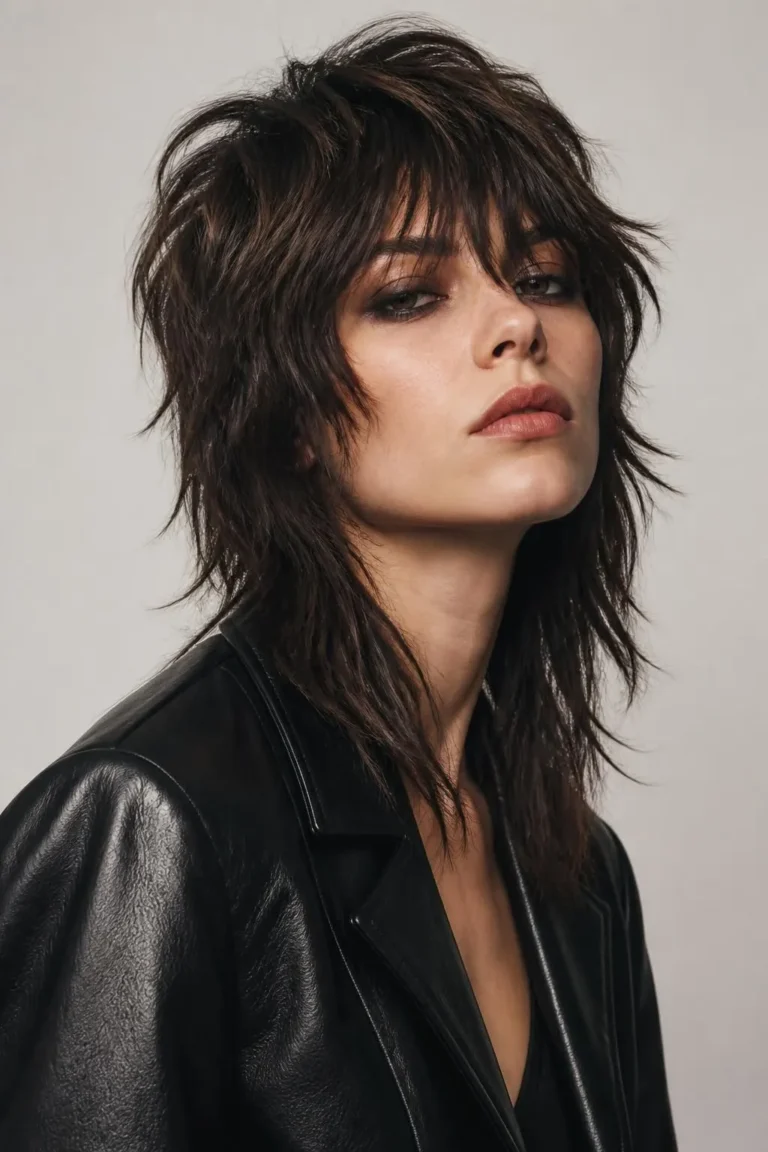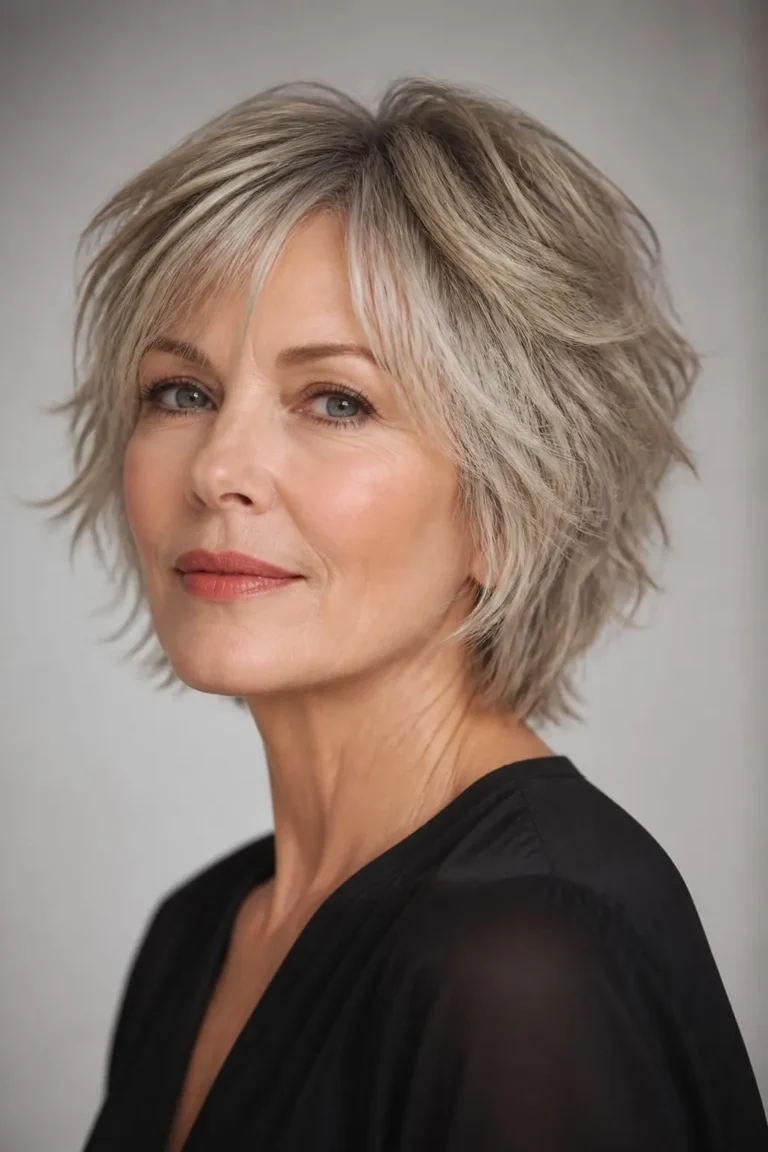
22 Short Shag Haircuts for Women Over 60 Wanting a Youthful, Low Maintenance Look
A short shag is one of the easiest ways to look years younger while spending less time on hair every morning. The layered, textured shape naturally adds volume at the crown, softens the face, and works beautifully with the finer, thinner hair that often comes with age.
Best of all, this cut is forgiving. It hides thinning areas, grows out gracefully, and pairs with almost any hair color or texture. These 22 short shag ideas show just how versatile and effortlessly stylish this haircut can be for women over 60.
Here are 22 short shag haircuts that bring texture, volume, and youthful energy to every hair type.
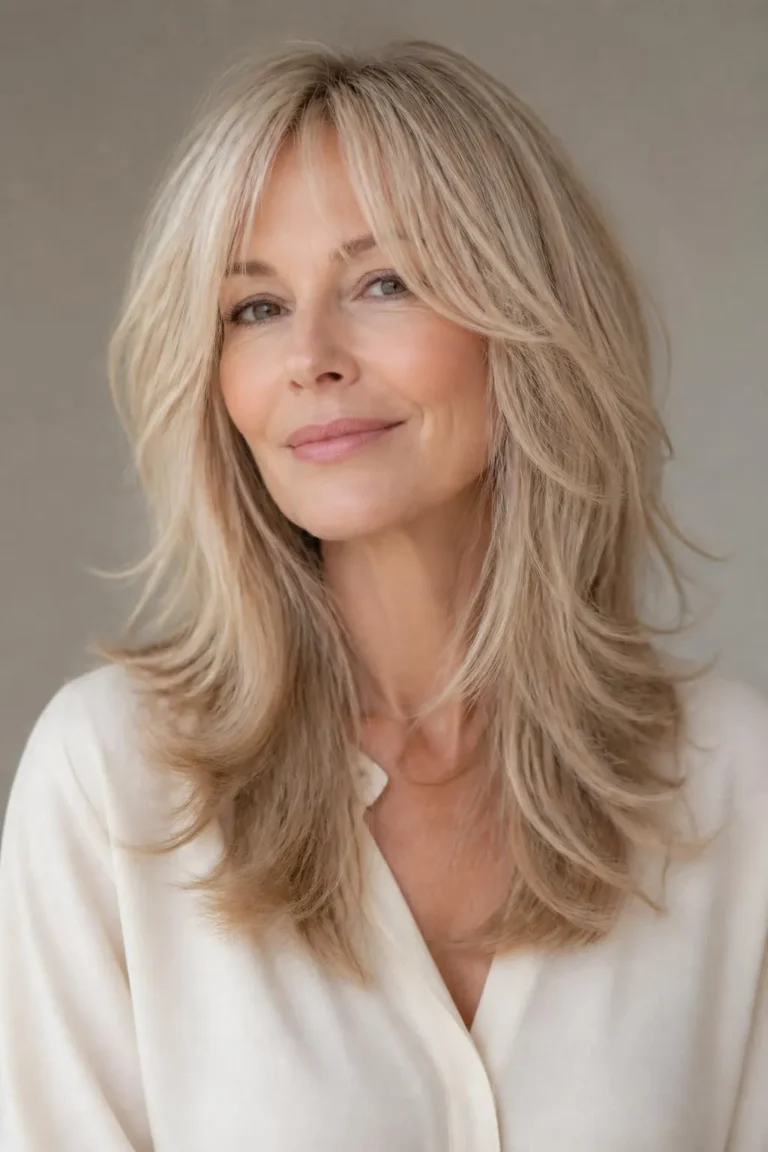
1. Classic Short Shag with Feathered Layers
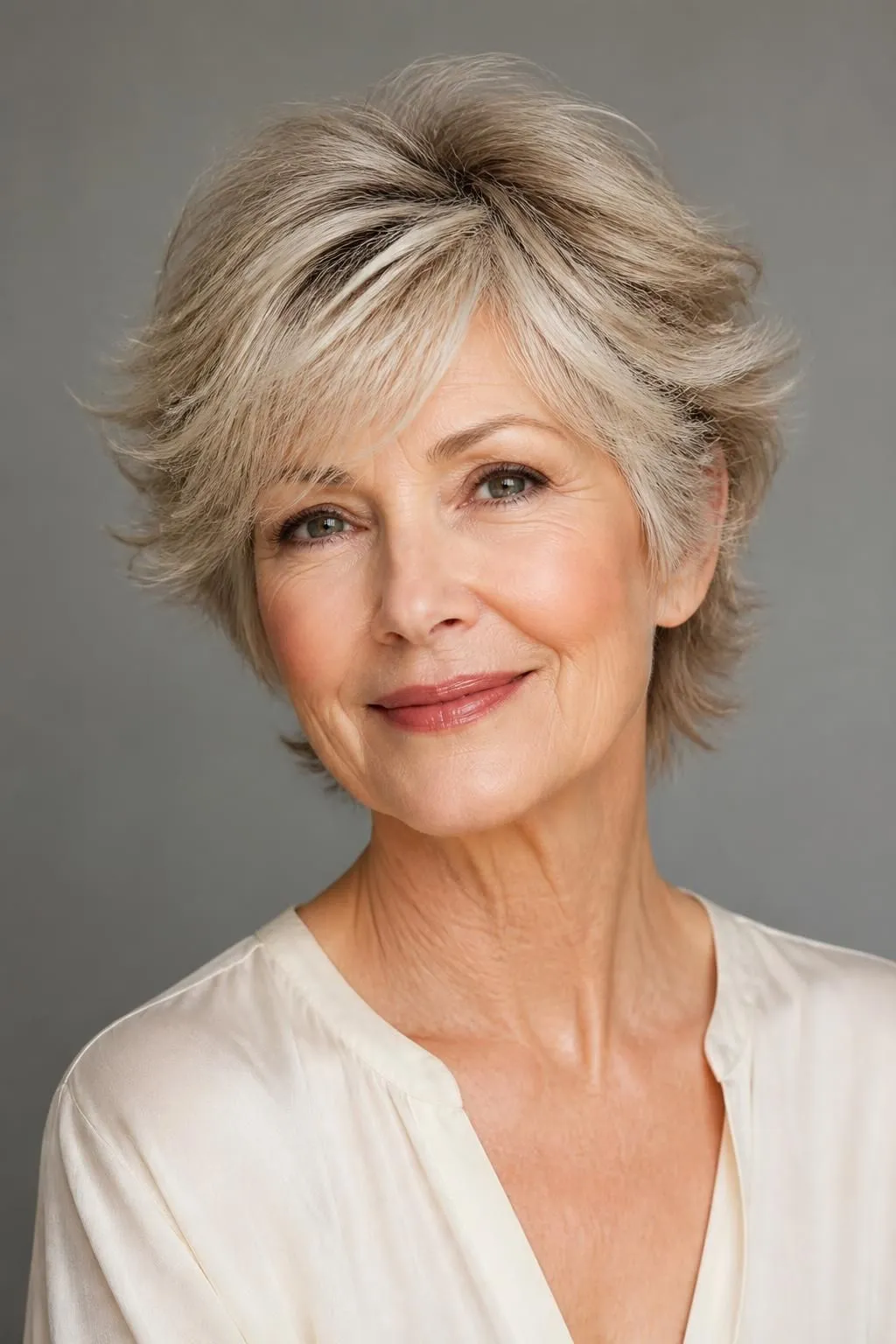
The classic short shag is built on feathered layers that fan out from the crown, creating movement and softness all around the face. This version keeps length above the shoulders, which prevents hair from looking flat or heavy, a common concern as hair naturally thins with age.
Feathered layers also catch the light differently at every angle, giving the illusion of thicker, fuller hair even on finer strands. Because the layers are cut to blend rather than stack, the style stays soft and touchable instead of looking overly structured.
This cut works well on nearly every face shape, making it a safe and flattering starting point for anyone new to the shag look.
Tips for Styling a Feathered Shag
Blow dry with a round brush. Lifting the roots while drying adds lasting volume through the day. Use a lightweight mousse. A small amount at the roots builds body without weighing down fine layers.
2. Pixie Shag with Choppy Bangs
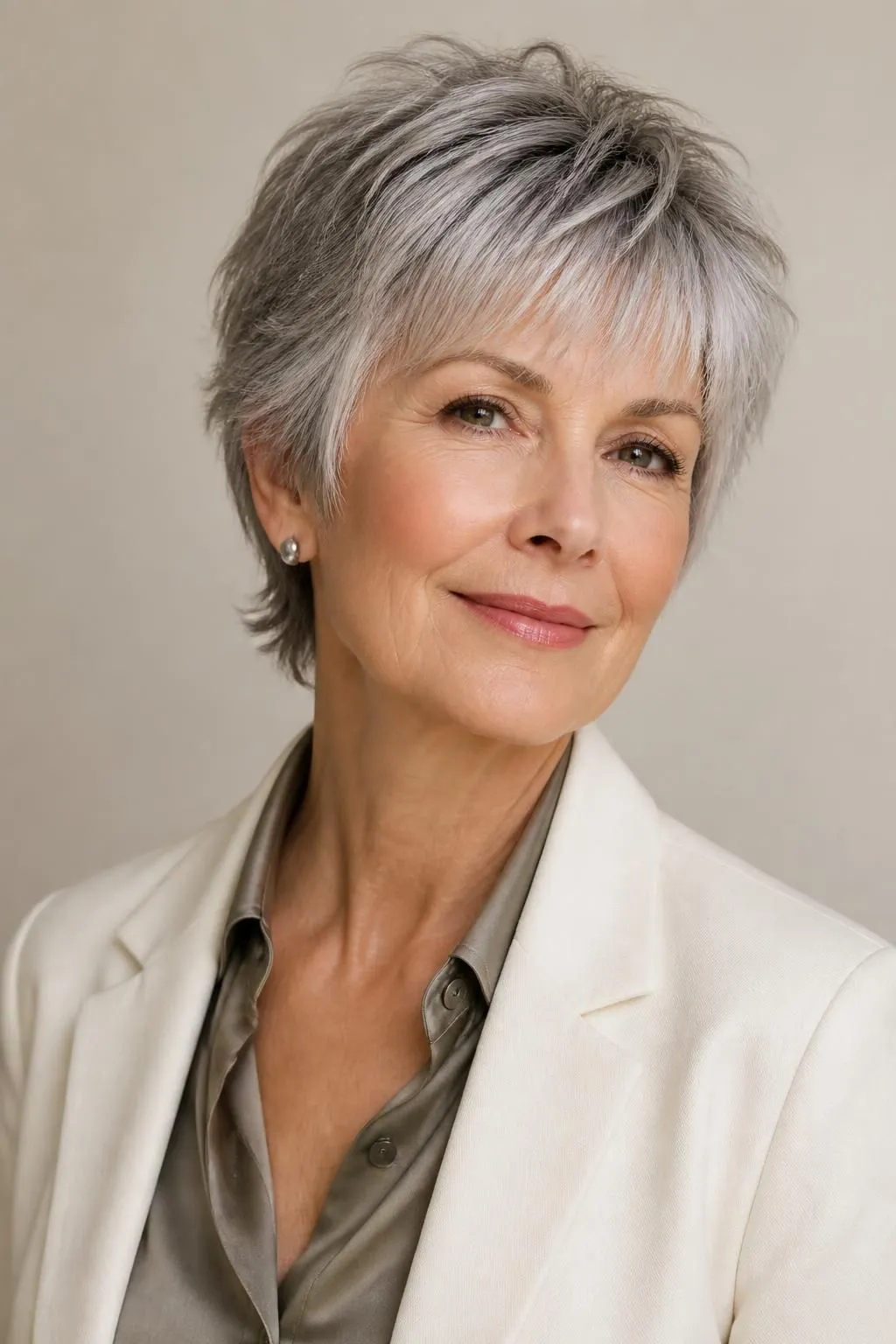
Combining a pixie’s short length with a shag’s textured layers creates a bold, spunky look that reads youthful and confident. Choppy bangs are cut unevenly on purpose, adding an edgy contrast to the softness of the layered sides and back.
This cut is especially flattering for women who want something low maintenance, since the short length dries quickly and rarely needs more than fingers to style. The choppy bangs also help draw attention upward toward the eyes, softening any concerns about a rounder or fuller face.
Because it’s short all over, this style is a great choice for warmer climates or an active lifestyle where quick styling matters most.
Tips for a Textured Pixie Shag
Ask for point-cutting. This technique creates the choppy, piece-y texture that defines this style. Apply a matte paste to bangs. A small amount separates the strands for a deliberately messy finish.
3. Shag with Curtain Bangs
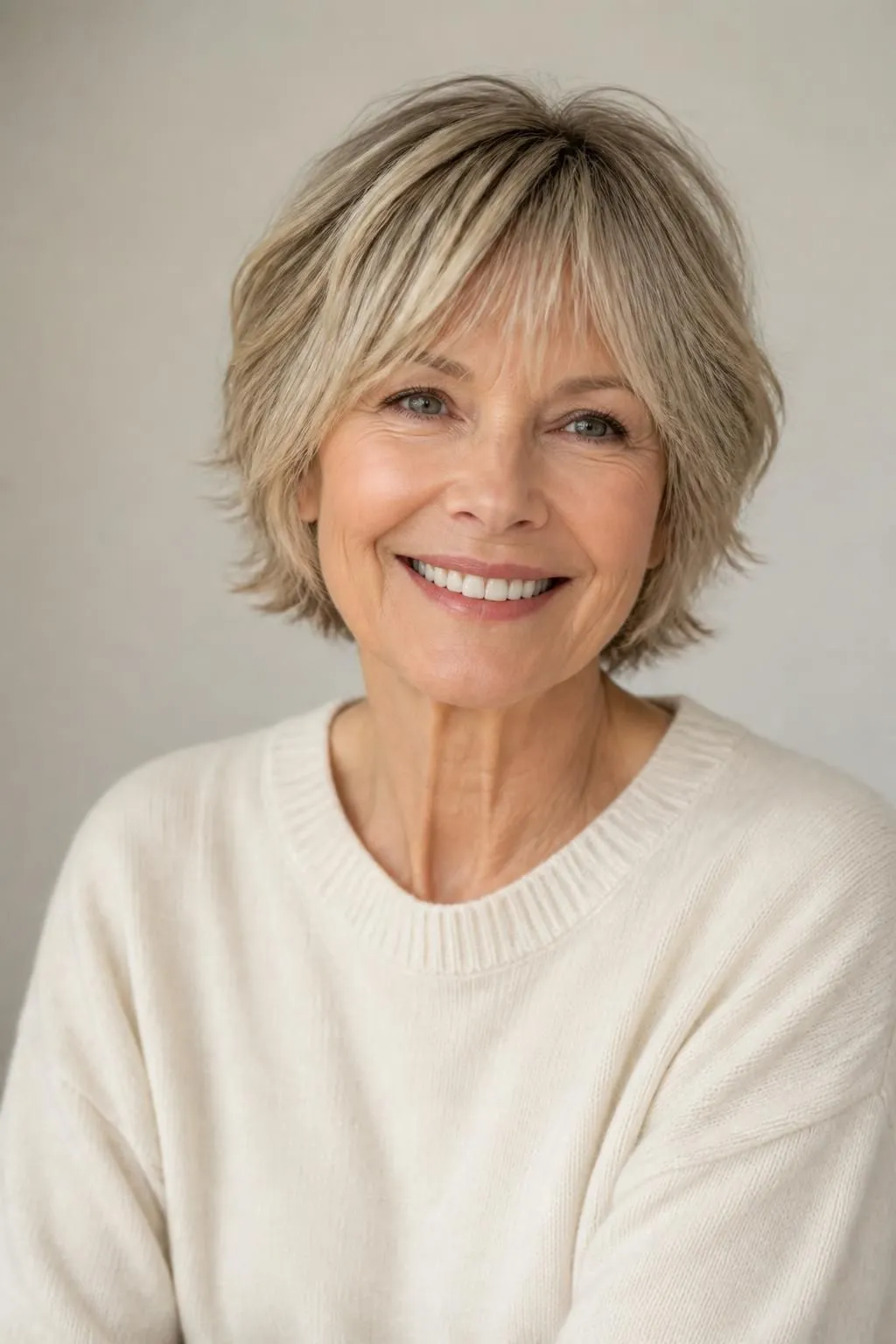
Curtain bangs part naturally down the middle and sweep to each side, framing the face like soft drapes. Paired with a short shag, they add a face-lifting effect that many women find more flattering than a full, blunt fringe.
This combination softens strong facial features and works especially well for women with square or angular face shapes. Because curtain bangs blend into the layers around them, there’s very little upkeep required to keep them looking intentional rather than grown-out.
The overall effect is soft, romantic, and effortlessly youthful, without requiring precise daily styling.
Tips for Growing Out Curtain Bangs Gracefully
Trim every six to eight weeks. Regular small trims keep the curtain shape from disappearing into the layers. Use a diffuser attachment. This helps waves and curls fall naturally to the sides instead of puffing up.
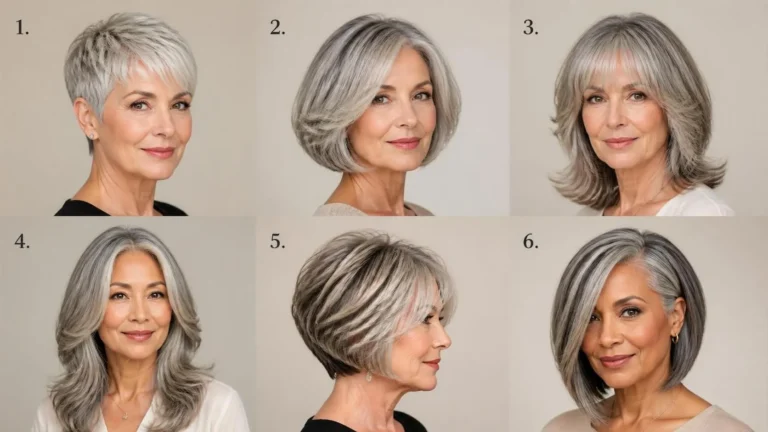
4. Silver Gray Shag
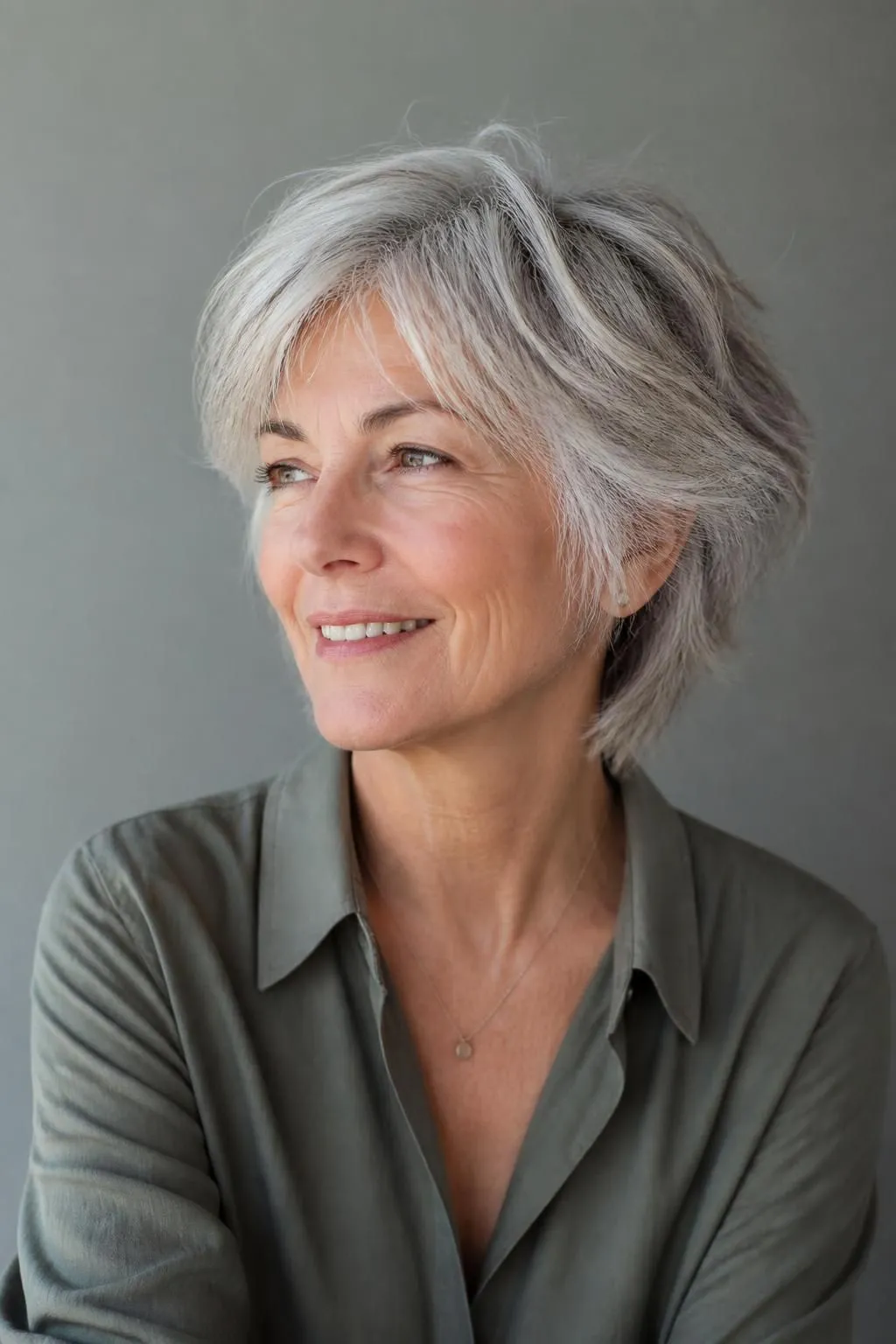
Embracing natural silver or gray hair within a short shag creates one of the most striking, modern looks on this list. The layered texture prevents gray hair from looking flat or dull, instead giving it dimension and shine that catches the eye.
Many women find that a shag actually enhances gray hair’s natural texture, since the choppy layers add movement that solid gray blocks of color can sometimes lack. This combination also eliminates the need for regular root touch-ups, making it one of the lowest maintenance color and cut pairings available.
The result is a confident, low-fuss look that celebrates natural hair color rather than fighting against it.
Tips for Healthy, Shiny Gray Hair
Use a purple-toning shampoo. This helps keep gray hair from developing a yellow or brassy tint over time. Add a glossing treatment. A clear gloss boosts shine and smooths the hair cuticle for a healthier look.
5. Layered Shag with Side Bangs
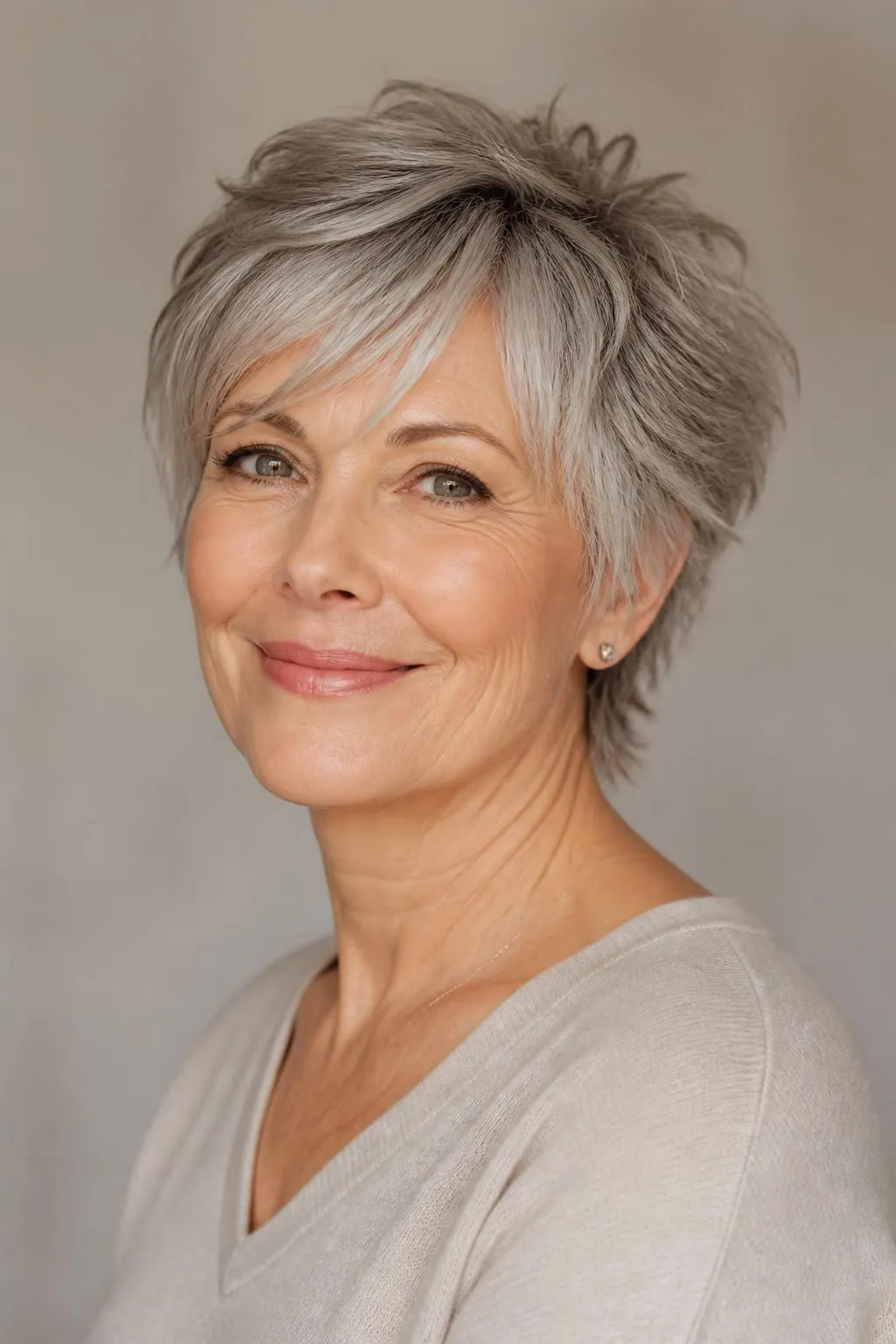
Side-swept bangs add a soft asymmetry to the short shag, creating a slightly more polished, versatile look than blunt or curtain bangs. The layers throughout the rest of the cut keep the style light and full of movement, while the bangs sweep gently across the forehead.
This version is particularly flattering for oval and heart-shaped faces, as the angled bangs highlight the cheekbones without covering too much of the face. Because the bangs are cut at an angle rather than straight across, they also require less frequent trims to maintain their shape.
Many women choose this style because it transitions easily from casual daytime wear to a slightly dressier evening look with minimal extra styling.
Tips for Styling Side Bangs
Set with a small round brush. Curving the bangs while drying keeps them swept to the side all day. Use a light-hold hairspray. This holds the shape without leaving bangs stiff or crunchy.
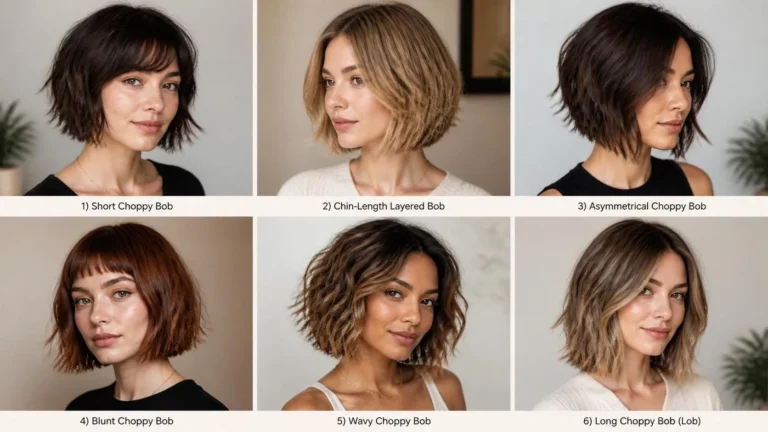
6. Wavy Shag Bob
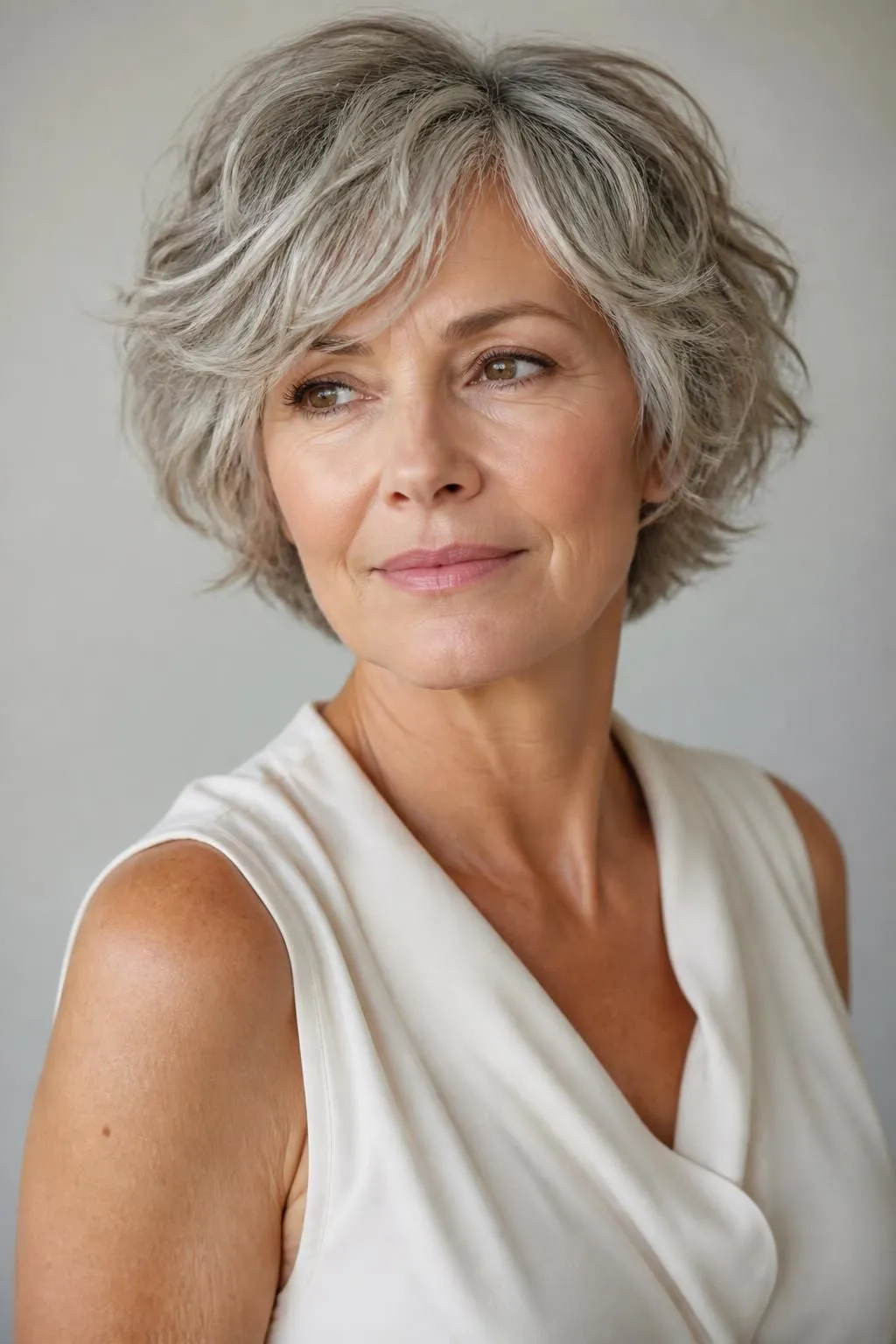
The wavy shag bob blends bob-length hair with shag layering, giving natural waves a reason to shine. The layers break up the weight of a traditional bob, allowing waves to move freely instead of clumping into one heavy shape.
This cut is ideal for women with naturally wavy or textured hair, since the style is designed to work with the hair’s natural pattern rather than against it. Because waves already add volume on their own, this cut often requires very little additional product or heat styling to look finished.
The overall effect is relaxed, beachy, and youthful, while still remaining polished enough for everyday wear.
Tips for Enhancing Natural Waves
Scrunch in a curl cream while damp. This defines waves without adding unwanted frizz. Air dry when possible. Letting waves dry naturally preserves their shape and reduces heat damage over time.
7. Textured Shag with Undercut Nape
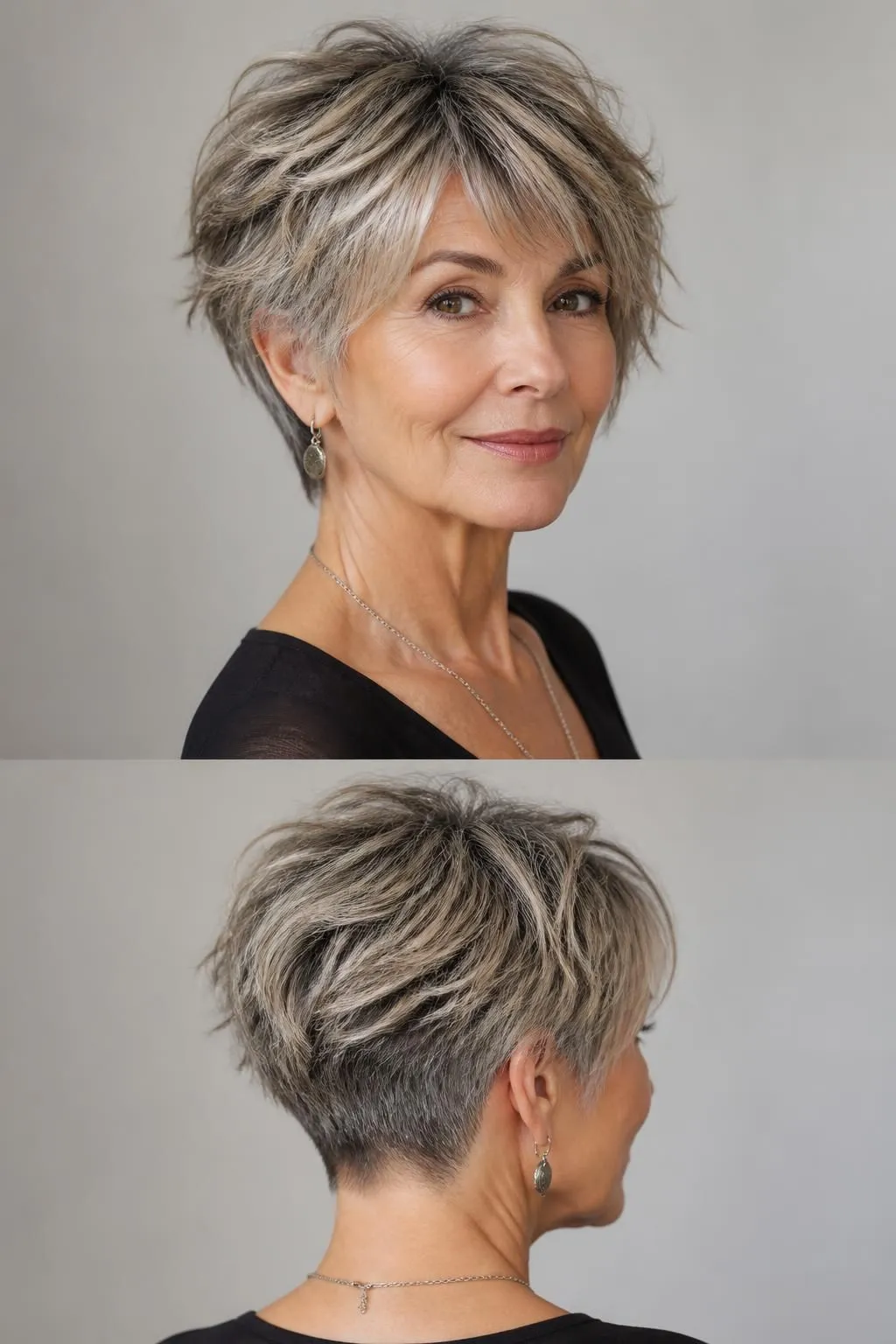
For a more daring take on the shag, an undercut at the nape adds an unexpected, edgy detail beneath the longer layers on top. When hair is worn down, the cut looks like a classic textured shag, but pulling hair up reveals the shaved or closely cropped nape underneath.
This hidden detail gives women the freedom to switch between a soft, traditional look and a bolder, more modern style depending on the occasion. Because the top layers remain long enough to cover the undercut when needed, this style offers versatility without permanently committing to an ultra-short cut.
It’s a popular choice for women who want a youthful style with a bit of unexpected personality.
Tips for Maintaining an Undercut Nape
Schedule nape trims separately. The undercut grows out faster than the top layers and needs more frequent shaping. Use a texturizing spray on top. This keeps the longer layers looking tousled rather than flat against the undercut.
8. Shag with Face-Framing Layers
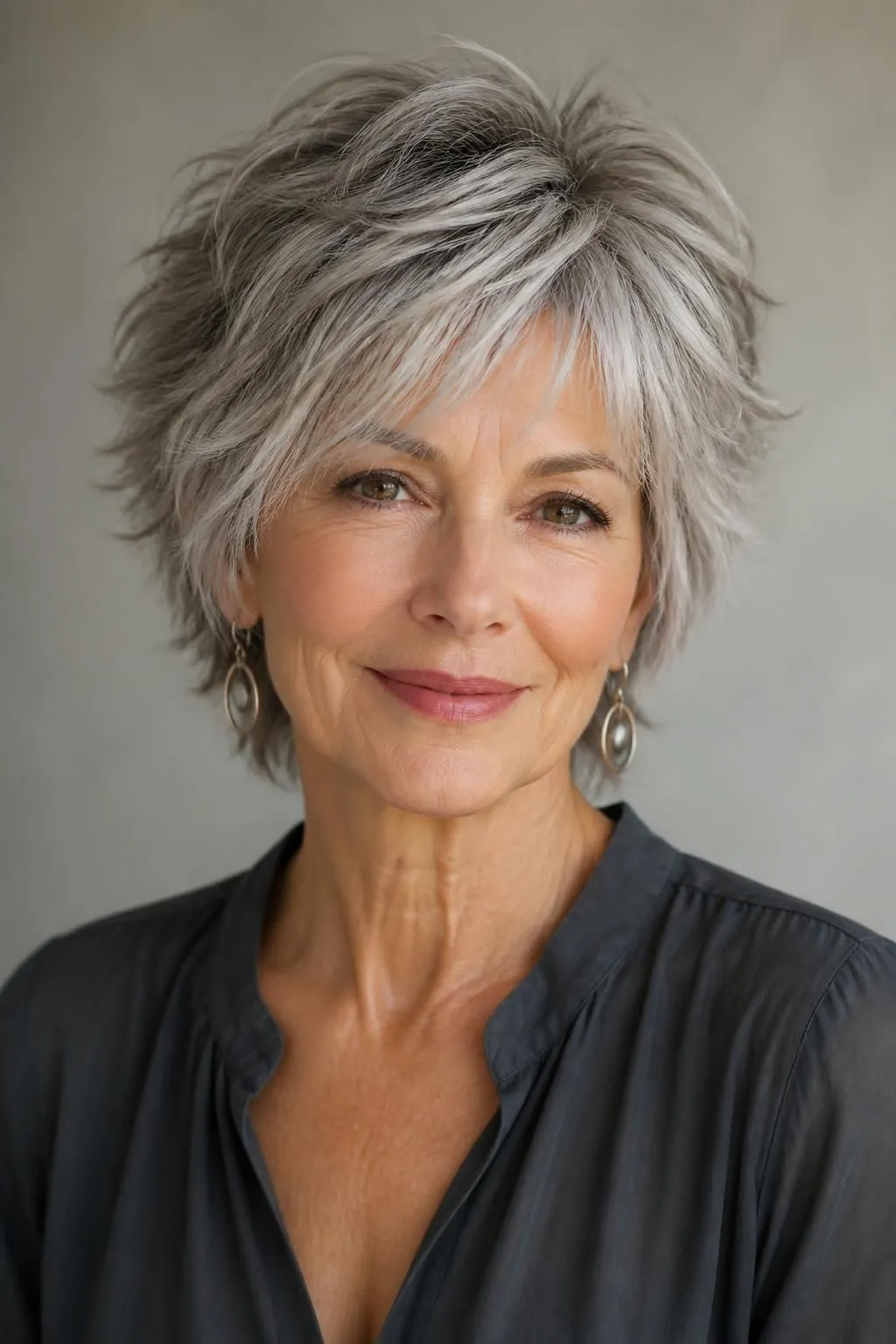
Face-framing layers are cut shorter around the cheeks and jaw, drawing attention to the eyes and cheekbones while softening the overall silhouette. Combined with a short shag base, this creates a cut that flatters nearly every face shape by highlighting the most youthful features.
This style works particularly well for women looking to soften a more angular jawline or add subtle lift around the face. Because the face-framing pieces are shorter than the rest of the layers, they also fall naturally into place with minimal styling effort each morning.
Many stylists recommend this variation as a go-to option for anyone wanting a flattering, universally appealing shag.
Tips for Framing the Face Well
Ask for layers cut at chin length. This length tends to be the most universally flattering for framing the face. Blow dry away from the face first. Directing airflow outward, then curving pieces inward, creates a soft frame effect.
9. Rounded Shag Bob
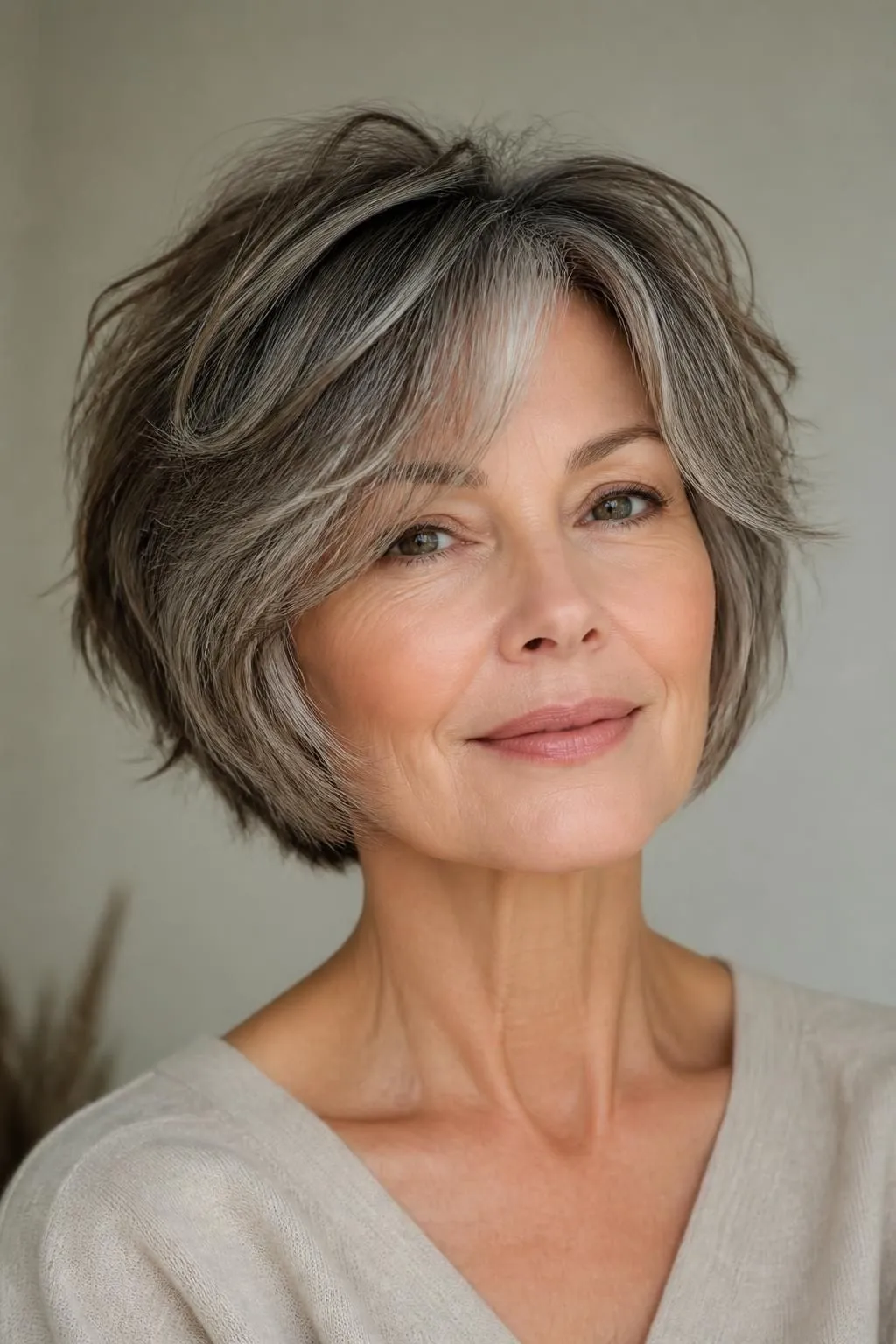
The rounded shag bob keeps a soft, curved silhouette while still incorporating the shag’s signature choppy layers throughout. Unlike sharper, angular bobs, this rounded shape is especially forgiving and tends to flatter softer or fuller face shapes.
The internal layering keeps the cut from looking heavy or bulky despite its rounded outline, giving it a lighter, more youthful appearance overall. This style also tends to hold its shape well between salon visits, making it a practical option for women who want a polished look without frequent upkeep.
It’s an especially popular choice for women transitioning from longer hair who still want a soft, familiar silhouette.
Tips for Keeping the Round Shape
Round-brush the ends under slightly. This reinforces the rounded silhouette during everyday styling. Trim every eight to ten weeks. Regular trims prevent the rounded shape from growing out into a less defined form.
10. Shag with Wispy Bangs
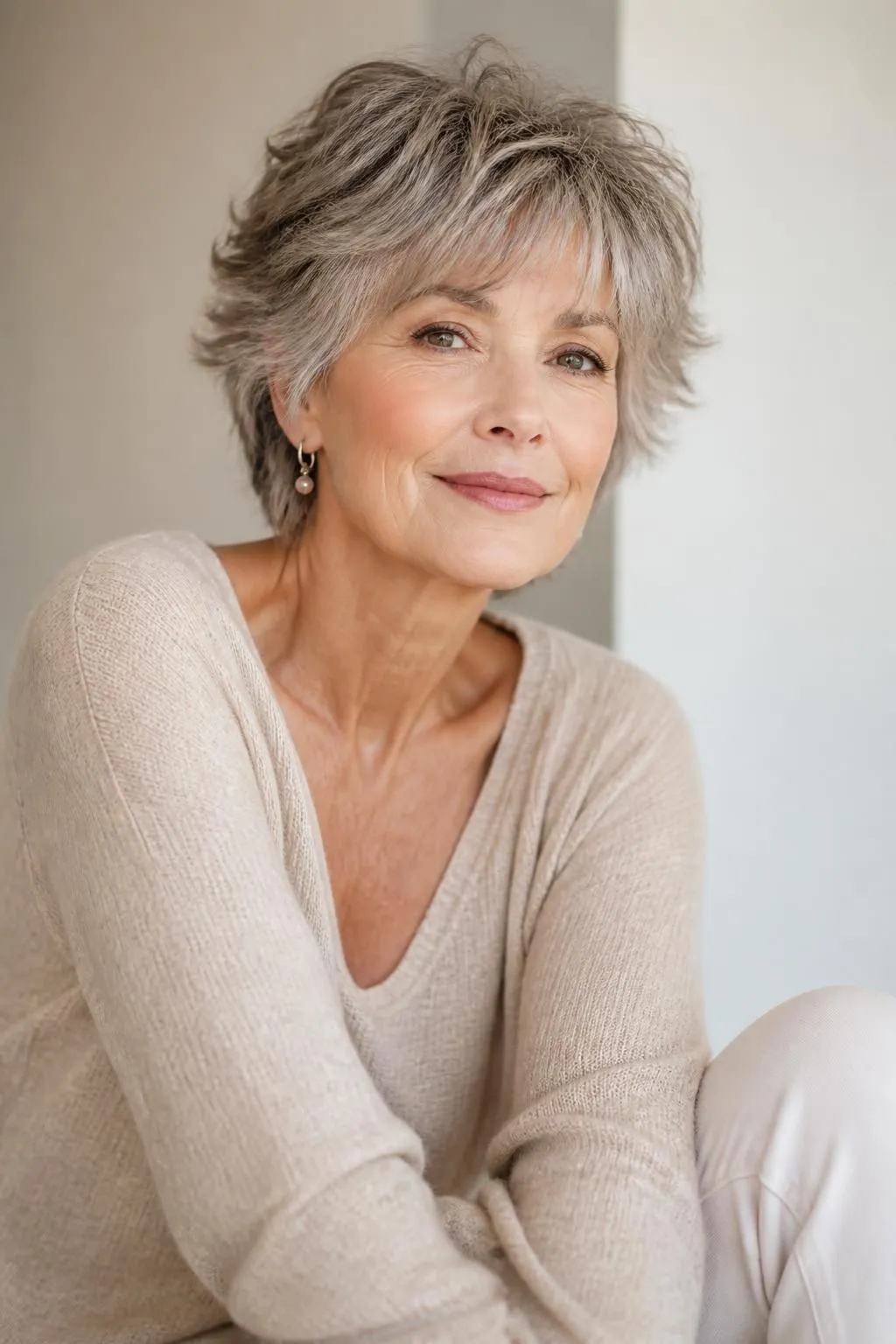
Wispy bangs are thin, feathered, and irregular, offering a much softer alternative to a full, blunt fringe. Paired with a short shag, they blend seamlessly into the surrounding layers, creating a cohesive, effortless look rather than a distinct, separate section of hair.
This style is particularly popular among women with fine hair, since wispy bangs don’t require the density that a thicker, blunt fringe demands to look full. Because the bangs are cut with texture rather than a hard line, they also grow out more gracefully, extending the time between necessary trims.
The overall look is soft, light, and easy to maintain from day to day.
Tips for Fine Hair with Wispy Bangs
Avoid heavy products near the roots. This keeps fine bangs from looking flat or greasy too quickly. Use a fine-tooth comb to separate. Light separation enhances the wispy, textured effect throughout the day.
11. Choppy Layered Shag
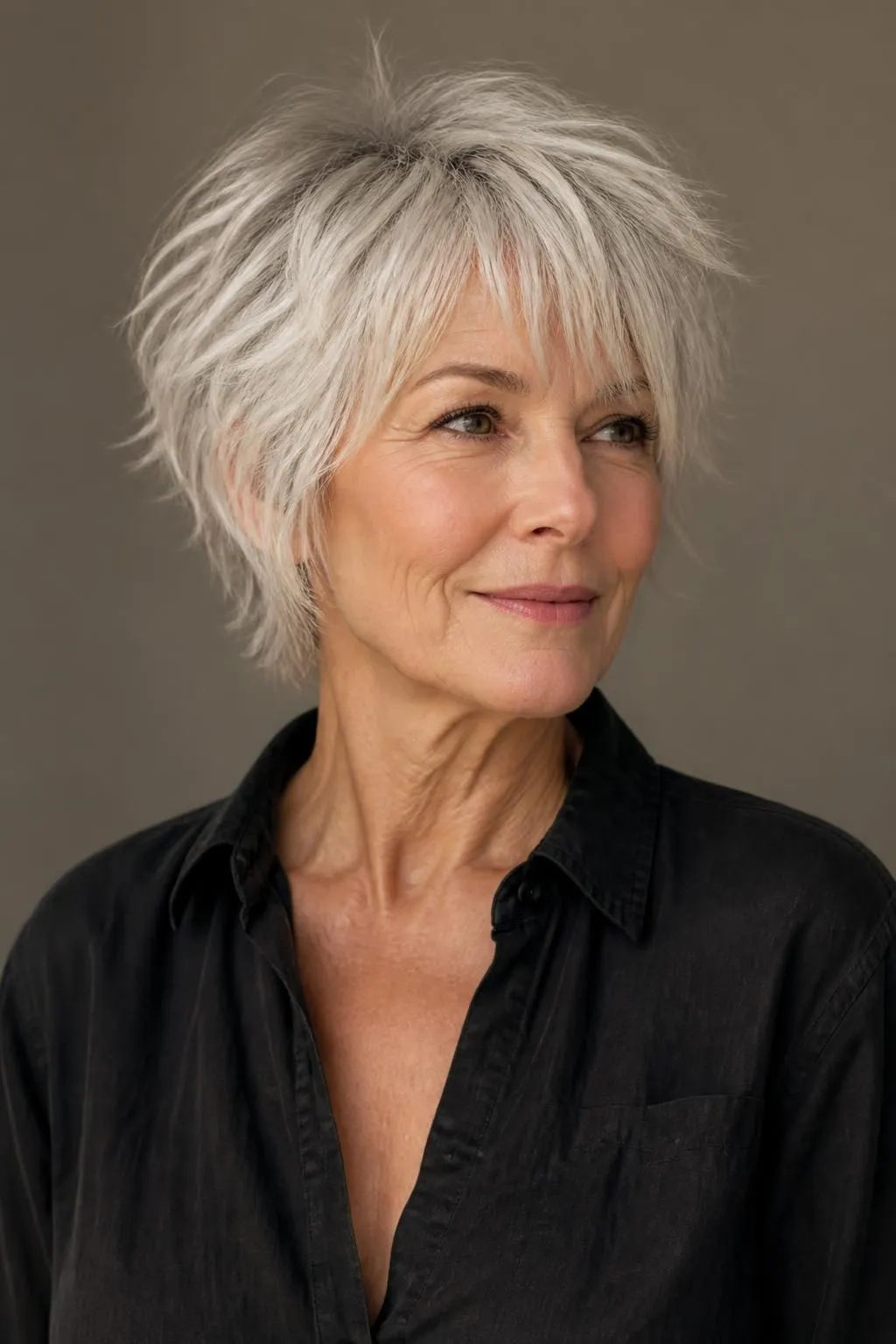
This version leans fully into texture, with heavily choppy layers cut throughout the entire style for maximum movement and volume. The uneven layering creates the illusion of thicker hair, which is especially valuable for women noticing gradual thinning with age.
Because the layers are cut at varying lengths and angles, this shag tends to look intentionally tousled even without much styling effort. It’s a popular choice for women who want a noticeably modern, editorial look rather than a softer, more traditional cut.
Despite its bold appearance, the choppy layers actually make the style easier to maintain, since small imperfections blend naturally into the overall texture.
Tips for Maximizing Choppy Texture
Use a texturizing spray before drying. This helps layers separate and hold their choppy shape. Scrunch hair upward while drying. This technique boosts volume and emphasizes the layered texture.
12. Shag with Balayage Highlights
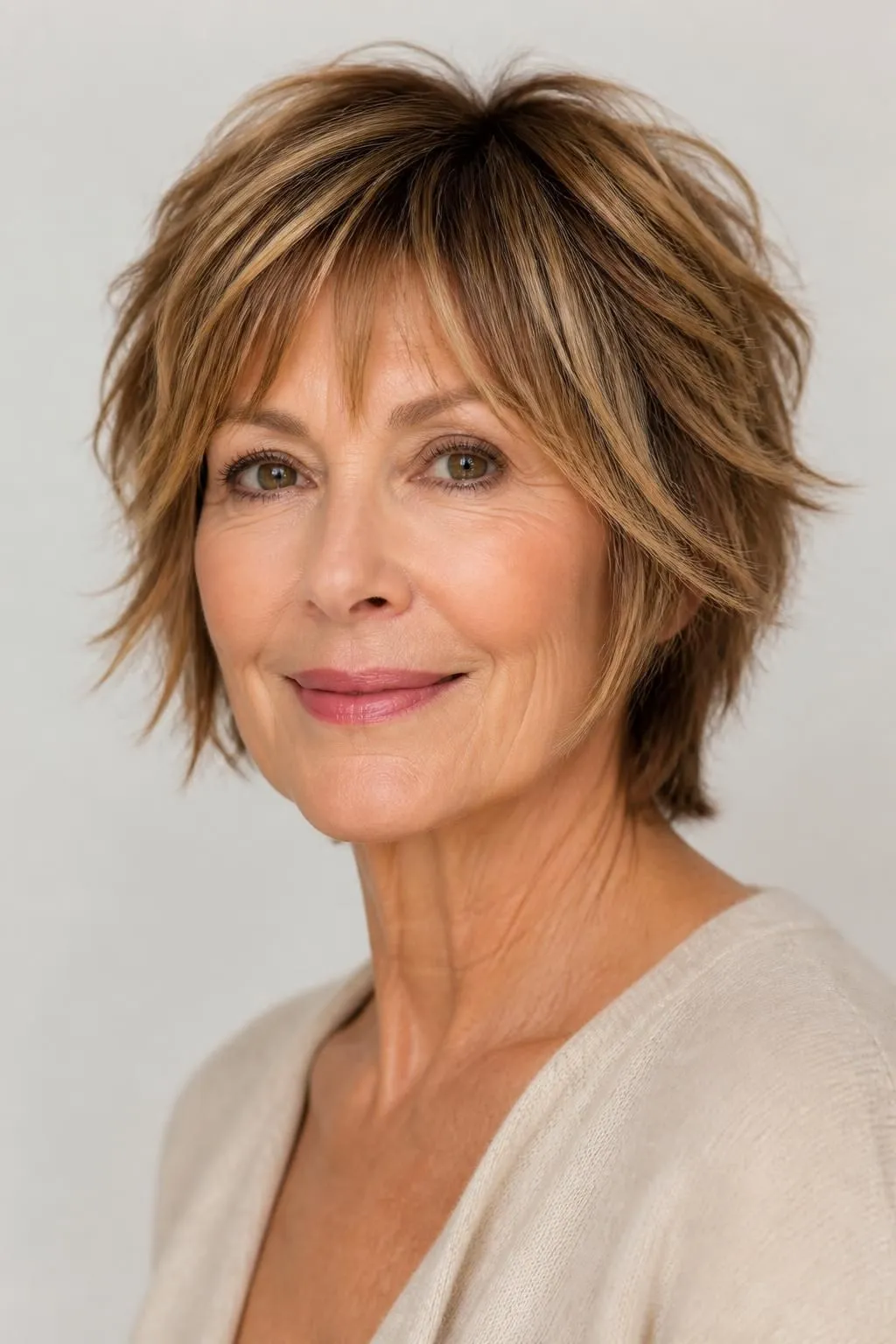
Adding balayage highlights to a short shag enhances the natural movement of the layers, since the hand-painted color follows the hair’s texture rather than sitting in uniform stripes. Lighter pieces catch the eye as the layers shift and fall throughout the day.
This combination is especially flattering for adding dimension to gray or graying hair, softening the transition and creating a more blended, natural-looking color overall. Because balayage grows out softly without a harsh root line, it also requires fewer touch-up appointments than traditional foil highlights.
The result is a multidimensional, youthful look that pairs beautifully with the shag’s inherent texture.
Tips for Long-Lasting Balayage Color
Use a color-safe shampoo. This helps prevent the lightened pieces from fading too quickly. Schedule a gloss refresh every few months. This keeps highlighted tones looking fresh and vibrant between full color appointments.
13. Voluminous Crown Shag
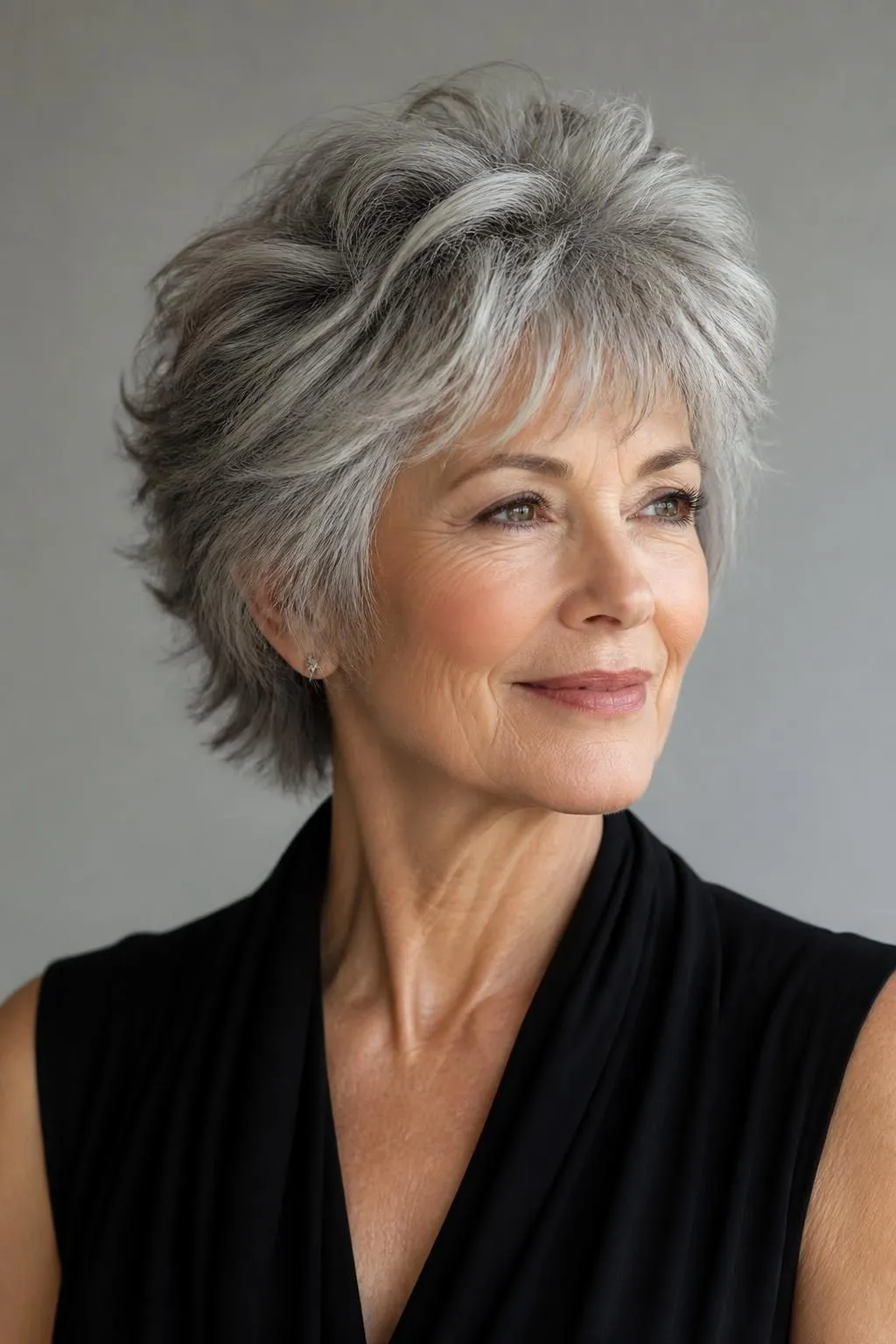
This variation focuses heavily on building volume right at the crown, where hair often flattens or thins first with age. Shorter layers are cut at the top of the head, allowing hair to stand up and out rather than lying flat against the scalp.
The longer layers around the sides and back balance out the added crown height, keeping the overall shape proportional rather than top-heavy. This style is a favorite among women specifically looking to counteract flatness at the roots, since the cut itself does much of the volumizing work before any styling product is even applied.
It’s an especially practical option for women who feel their hair has lost its natural lift over time.
Tips for Boosting Crown Volume
Blow dry the crown first, upside down. This encourages roots to lift before the rest of the style is set. Apply root-lifting spray while damp. Focused application at the roots gives the volume extra staying power.
14. Shag with Side-Swept Fringe
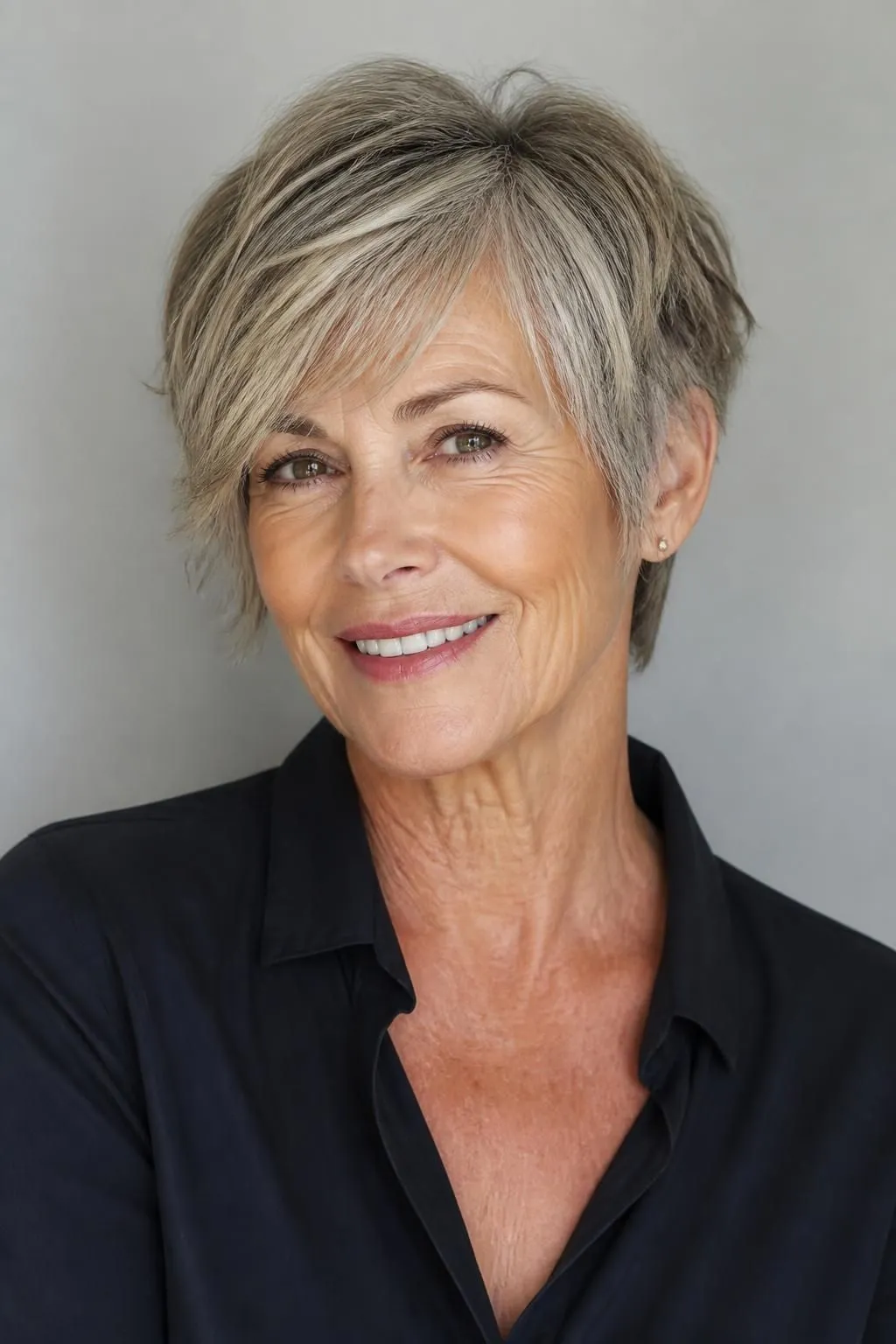
A longer, side-swept fringe adds softness to the short shag while still allowing plenty of forehead to show, striking a nice balance between coverage and openness. The fringe blends into the side layers, creating one continuous flow rather than a separate, distinct section.
This style is especially flattering for women wanting to soften a high forehead or add a bit of visual interest without committing to a full, structured bang. Because the fringe is longer and swept to the side, it also requires less frequent trimming than a shorter, more defined fringe style.
The overall look feels relaxed and easy, while still adding a clear style statement to the cut.
Tips for Sweeping the Fringe Correctly
Dry in the direction you want it to fall. This trains the fringe to sit naturally to one side. Use a small clip while drying. Holding the fringe in place as it cools helps set the swept shape.
15. Piecey Shag for Fine Hair
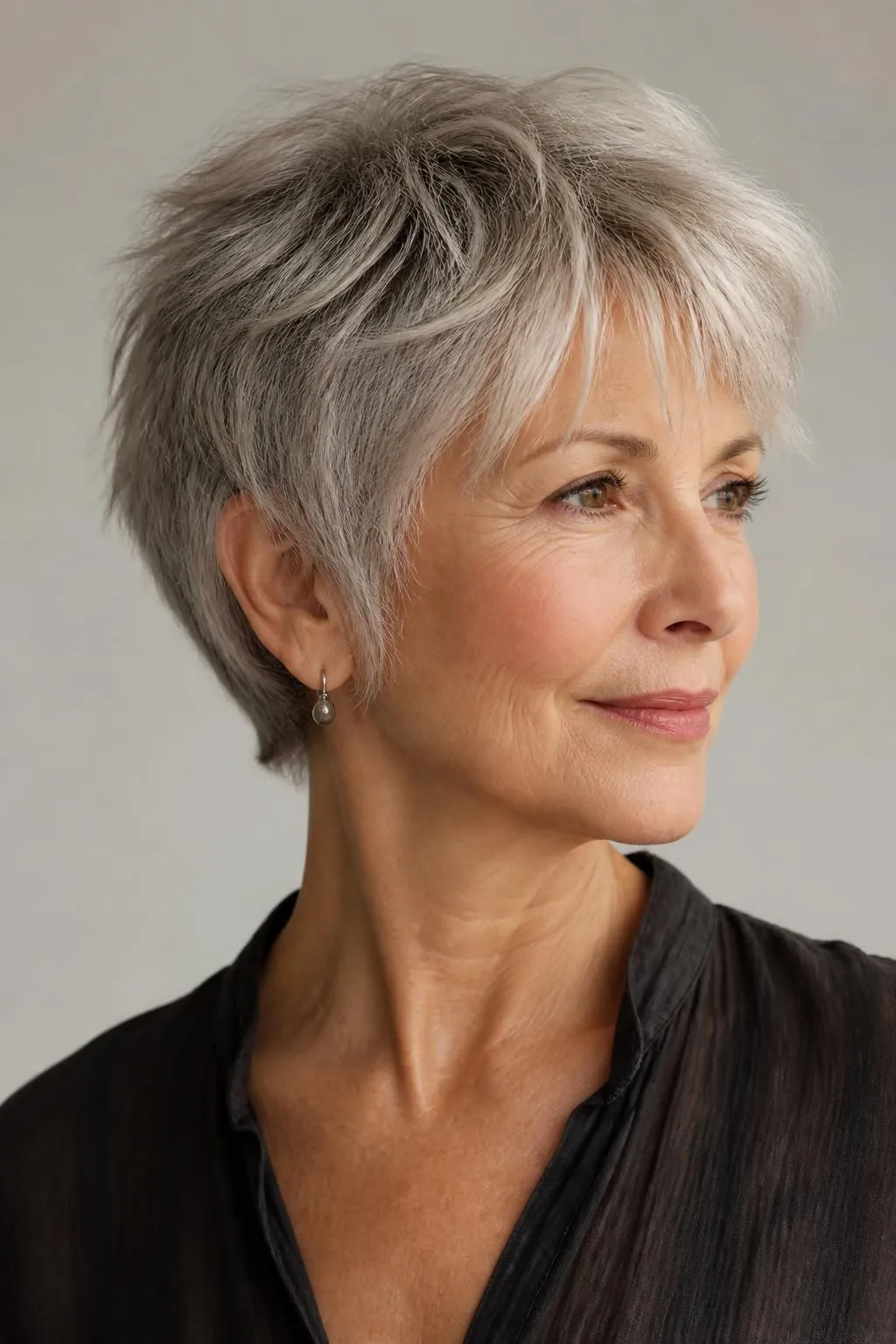
Fine hair often struggles to hold volume, but a piecey shag is specifically cut to work with thinner strands rather than fight against them. Shorter, textured layers are placed strategically to create the appearance of thickness without requiring excessive layering that could make fine hair look sparse.
This cut relies heavily on precise, intentional texturizing rather than sheer volume of layers, since too many heavy layers can actually make fine hair appear thinner. Stylists often use point-cutting techniques to create soft, piecey ends that give the illusion of fuller, more textured hair.
For women with fine hair specifically, this tailored approach tends to outperform generic shag cuts in terms of everyday fullness and manageability.
Tips for Styling Fine, Piecey Hair
Avoid heavy oils or serums. These products can weigh down fine hair and flatten the piecey texture. Use a volumizing dry shampoo. Applying this at the roots between washes adds texture and lift throughout the week.
16. Curly Shag
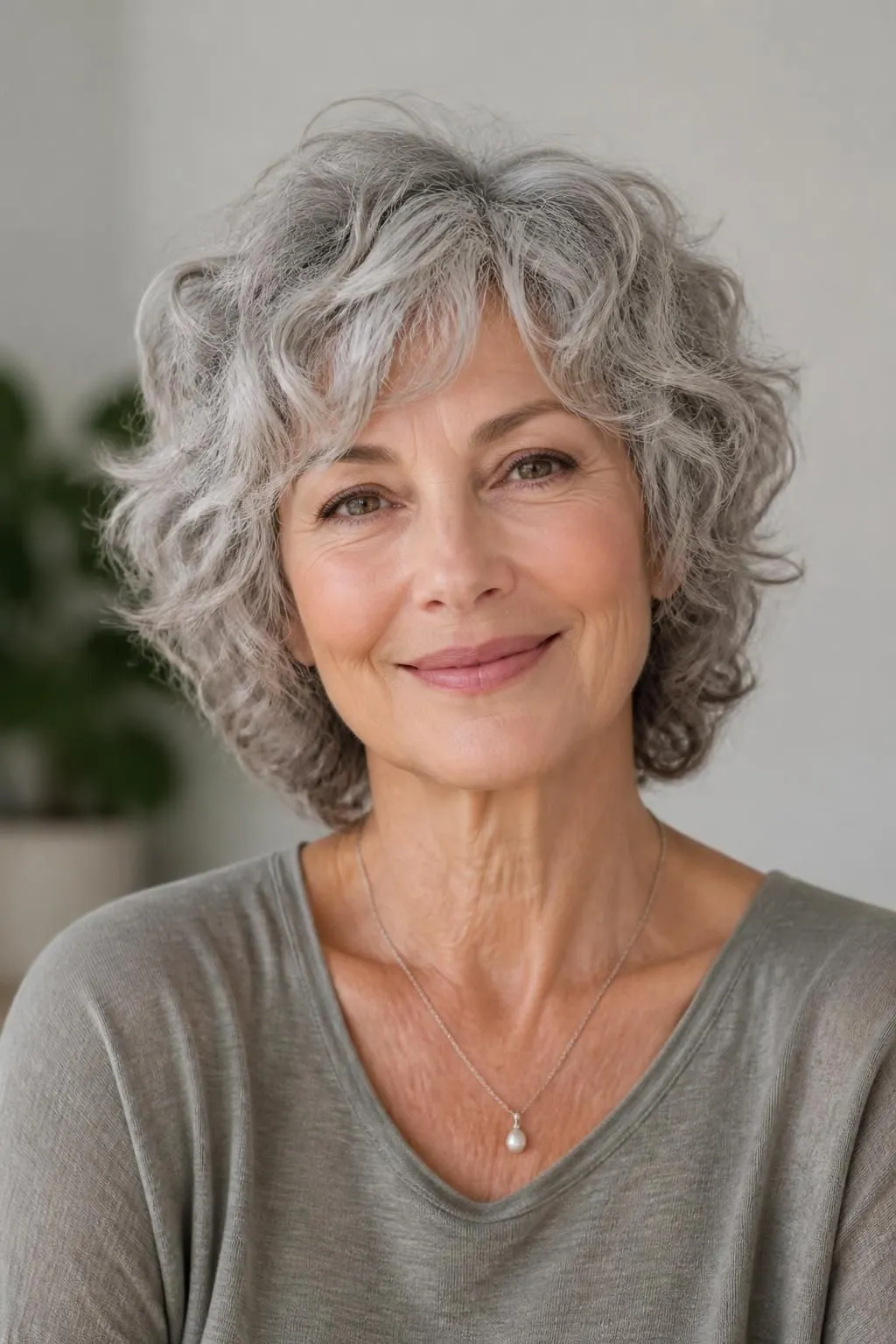
For women with naturally curly hair, the shag cut enhances curl definition by removing excess bulk and allowing individual curls to spring into place. Traditional layering can sometimes create a triangular shape on curly hair, but shag layers are specifically designed to control width while preserving volume.
This cut works with the hair’s natural pattern rather than requiring curls to be forced into a uniform shape, which tends to result in healthier-looking, more defined texture overall. Many women with curly hair find that a well-cut shag actually reduces daily styling time, since the curls fall into a flattering shape with minimal effort.
The result is a bouncy, youthful look that celebrates natural texture instead of smoothing it away.
Tips for Curly Shag Maintenance
Get curly hair cut dry. This allows the stylist to see exactly how each curl falls and shape the layers accordingly. Use a curl-defining cream, not gel. Cream tends to provide bounce without the stiffness that heavier gels can create.
17. Shag with Long Bangs
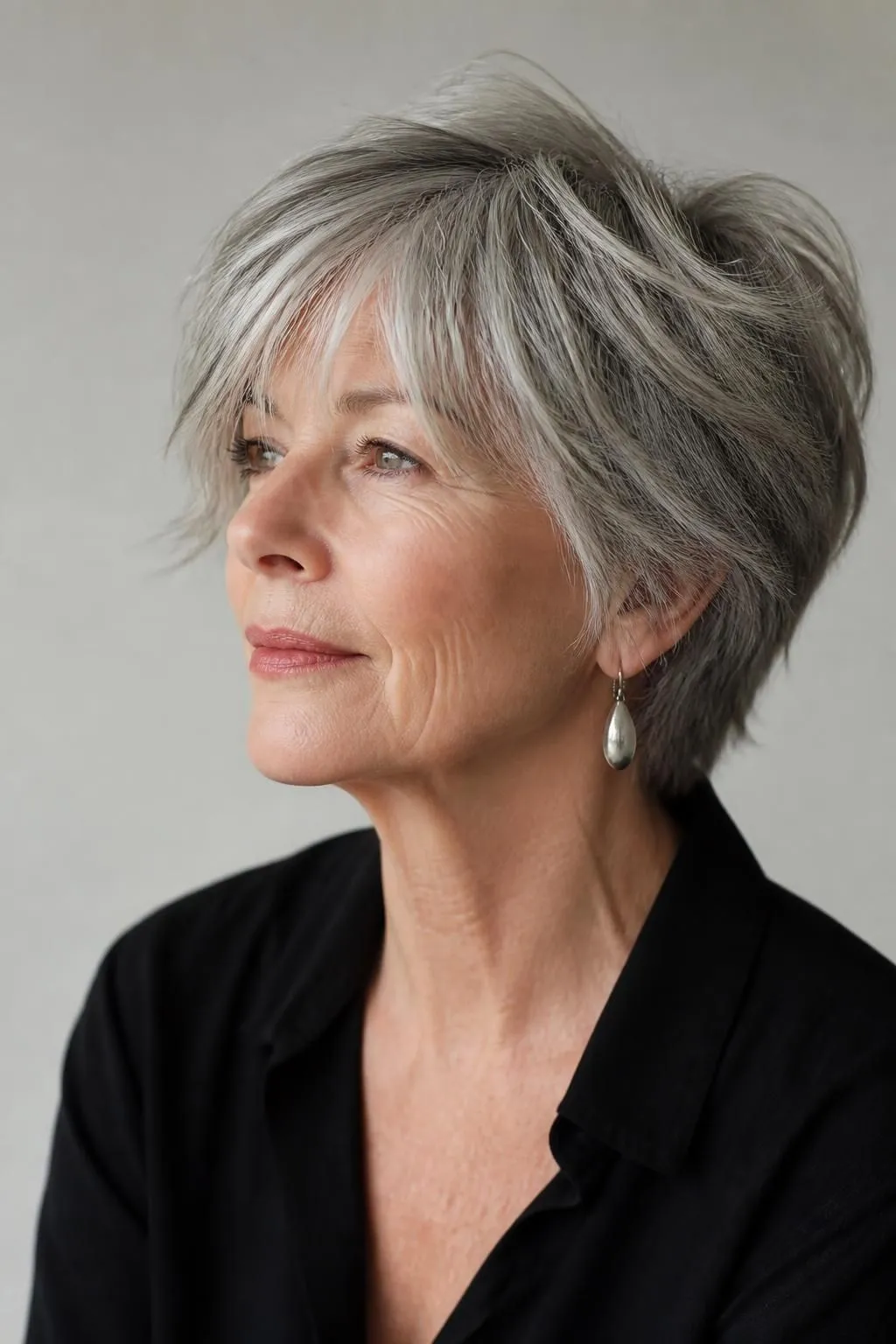
Long, layered bangs that blend into the rest of the shag offer a softer alternative to shorter, more defined fringes. These bangs typically graze the brow line or fall just above the eyes, giving plenty of styling flexibility depending on the day.
This style is a great transitional option for women who aren’t ready to commit to a shorter, choppier fringe but still want the softening effect that bangs provide. Because the bangs are cut long and blended, they can also be tucked to the side or pushed back easily when a different look is needed.
This adaptability makes it one of the more versatile bang options within the broader shag family of cuts.
Tips for Versatile Long Bangs
Ask for bangs cut on an angle. This makes it easier to style them multiple ways without looking uneven. Use bobby pins for a quick change. Pinning bangs back offers an easy way to switch up the look without extra styling time.
18. Asymmetrical Shag
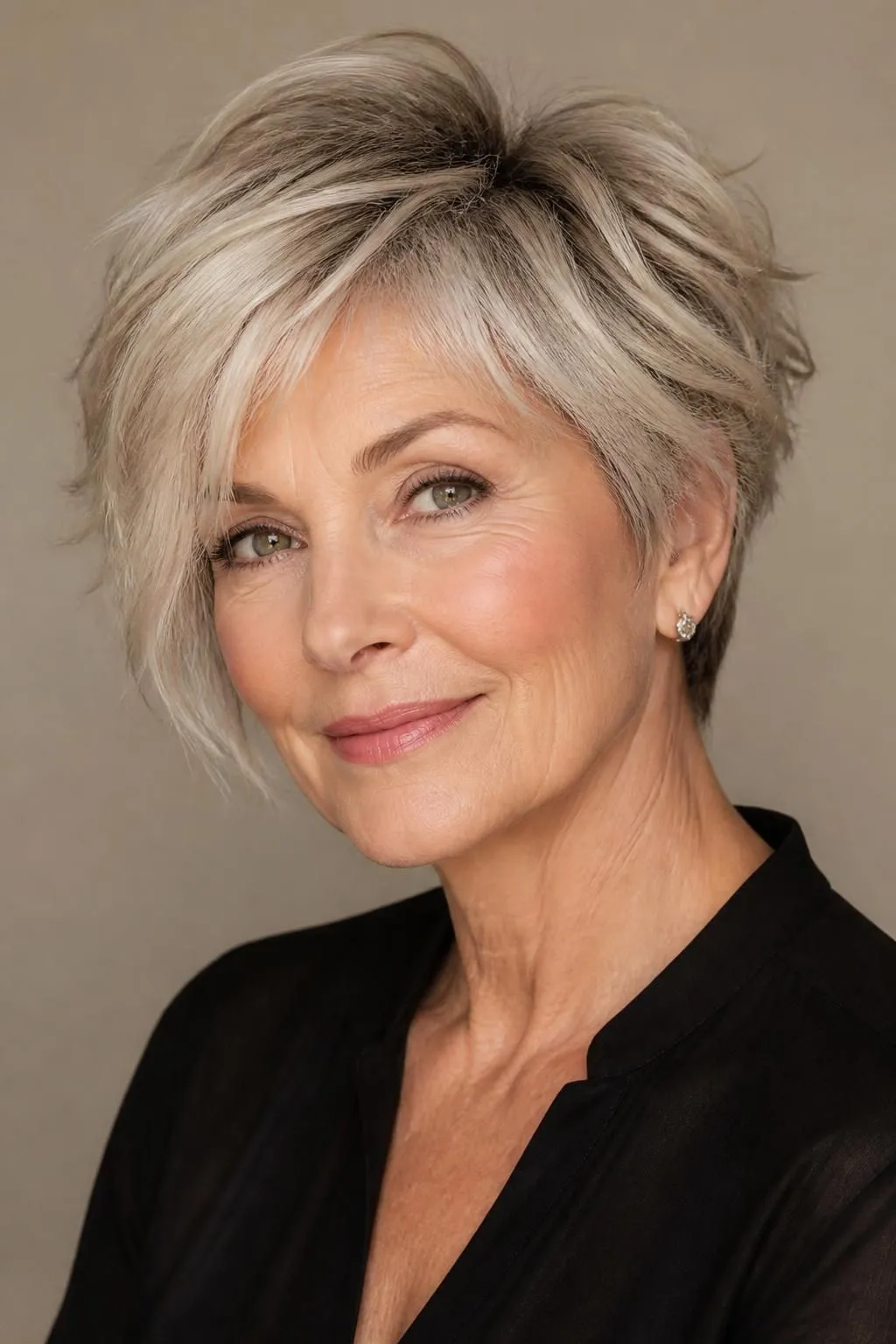
An asymmetrical shag plays with uneven lengths, often keeping one side slightly longer than the other for a modern, artistic effect. This intentional imbalance draws the eye and adds a sense of movement that a perfectly symmetrical cut simply can’t achieve.
This style tends to appeal to women who already have a bold, confident sense of personal style and want their haircut to reflect that same energy. Despite its edgier appearance, the asymmetry is usually subtle enough to remain workplace-appropriate and easy to style for daily wear.
Because the layers are already cut with intentional variation, small styling imperfections tend to blend in naturally rather than looking like mistakes.
Tips for Styling Asymmetrical Layers
Part hair consistently. Keeping the same part each time helps the asymmetry read clearly and intentionally. Use flexible-hold products. This allows the uneven layers to move naturally without stiffening into an unnatural shape.
19. Shag Bob with Root Volume
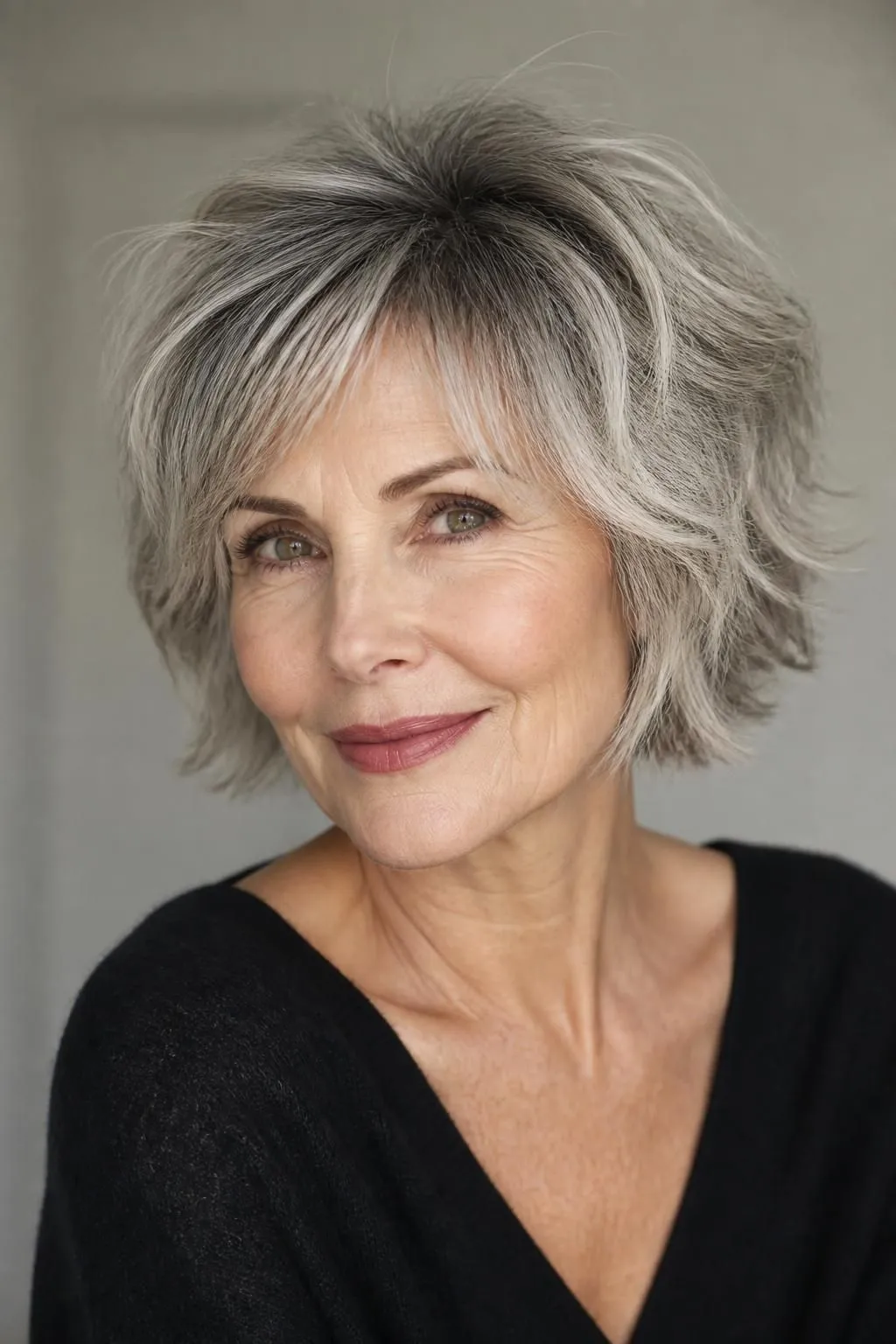
This variation pairs bob-length hair with a shag’s layering technique, specifically focused on lifting the roots for a fuller, more youthful appearance. The layers are concentrated near the crown and temples, where volume tends to be most noticeably lost over time.
Because the added volume is built into the cut itself, this style requires far less daily effort than trying to create lift through styling alone. Many women find this particularly helpful for thinner hair that struggles to hold volume through the day, regardless of how much product is applied.
The bob length also keeps the overall style polished and professional, making it a practical choice for both casual and formal settings.
Tips for Maximizing Root Lift
Dry hair with your head tilted forward. This encourages roots to lift away from the scalp before styling. Use velcro rollers briefly. A few minutes with rollers at the crown can add noticeable, long-lasting lift.
20. Low-Maintenance Blunt Shag
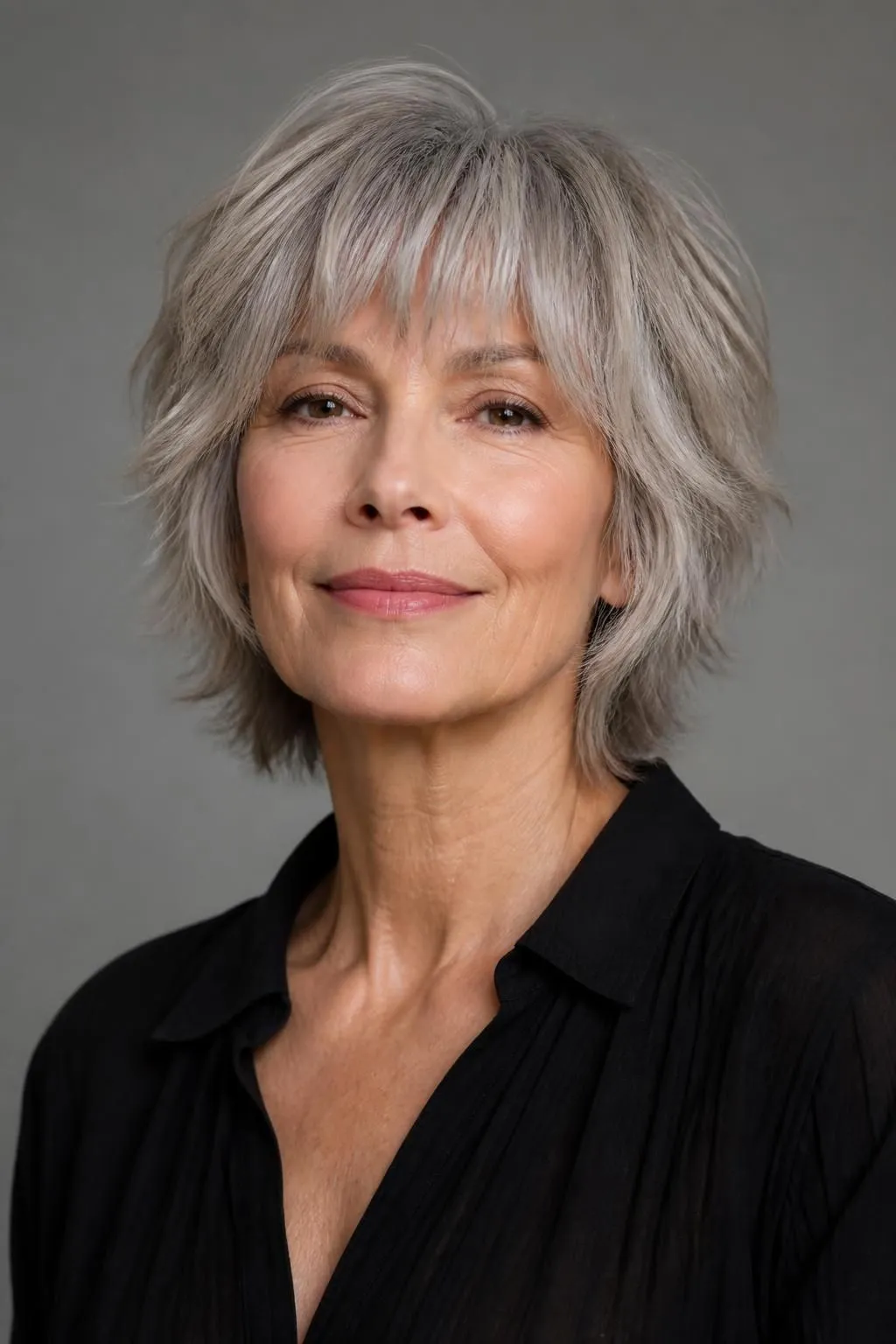
While most shags rely on heavy texturizing, this version keeps the ends slightly blunter for a cleaner, more polished finish while still incorporating layers throughout the top and sides. The result is a style that reads as intentional and put-together, even on days with minimal styling time.
This cut is particularly appealing to women who want the volume and movement of a shag without an overly tousled or undone appearance. Because the ends are less heavily textured, this style also tends to require slightly less frequent trims to maintain its clean shape.
It’s an excellent choice for women wanting a shag that leans polished rather than deliberately messy.
Tips for a Polished Blunt Shag
Smooth ends with a flat iron briefly. This keeps the blunt finish looking crisp without eliminating the layered volume above. Use a light shine spray. This adds polish without disrupting the clean line at the ends.
21. Shag with Subtle Highlights
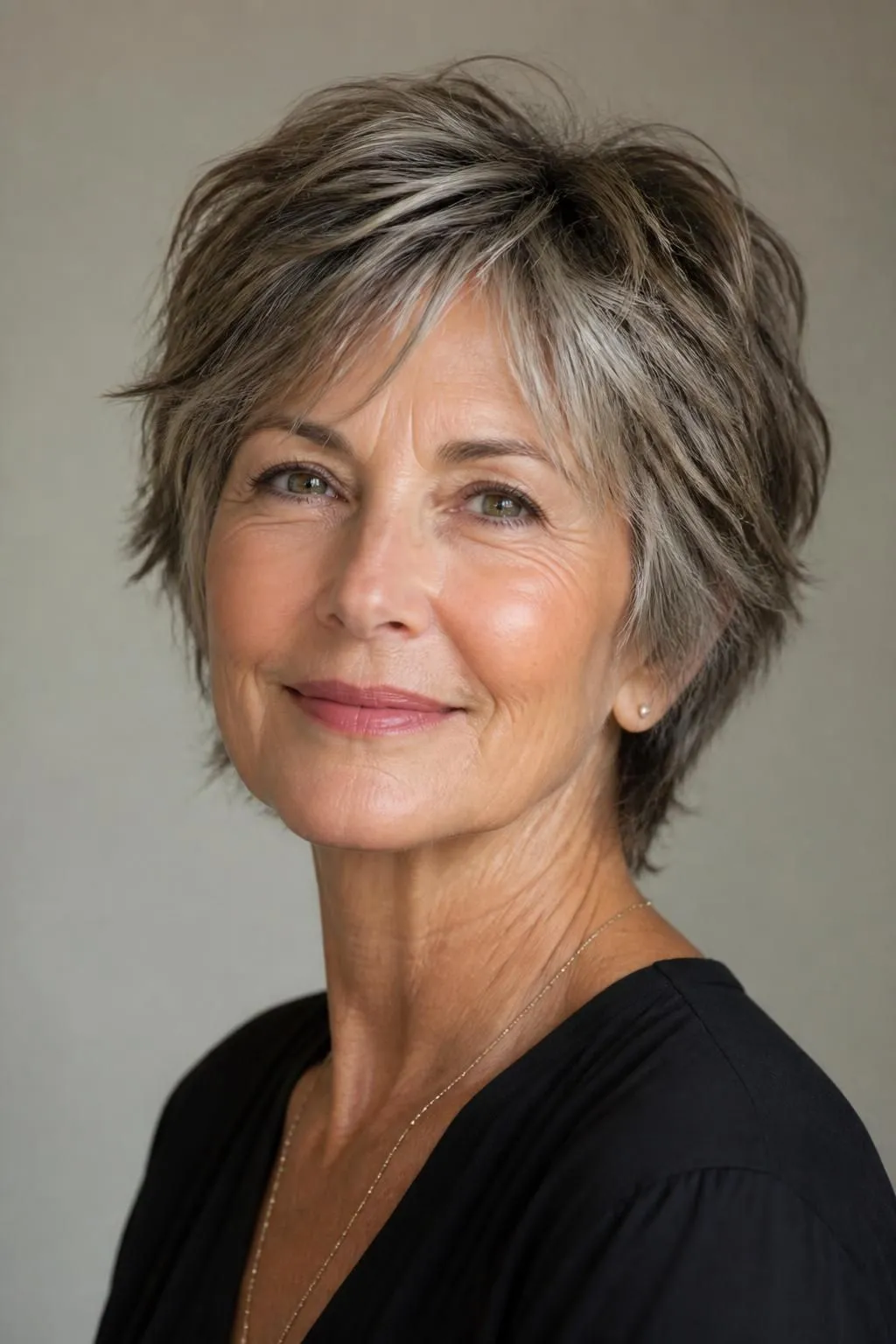
Rather than bold, high-contrast color, this version uses subtle, low-maintenance highlights to add gentle dimension to the shag’s natural layers. The soft color variation catches the light as the layers move, without demanding frequent salon visits to maintain.
This approach works particularly well for women wanting to brighten their overall look without a dramatic color change, offering a refreshed appearance that still feels natural. Because the highlights are subtle, they also blend more seamlessly as hair grows out, extending the time between necessary touch-ups.
This makes it an ideal choice for anyone wanting a youthful boost without a significant time or cost commitment to hair color upkeep.
Tips for Subtle Highlight Upkeep
Request highlights two shades lighter. This creates noticeable dimension without looking artificial or overly bright. Use a weekly hydrating mask. Highlighted hair benefits from extra moisture to keep both color and texture looking healthy.
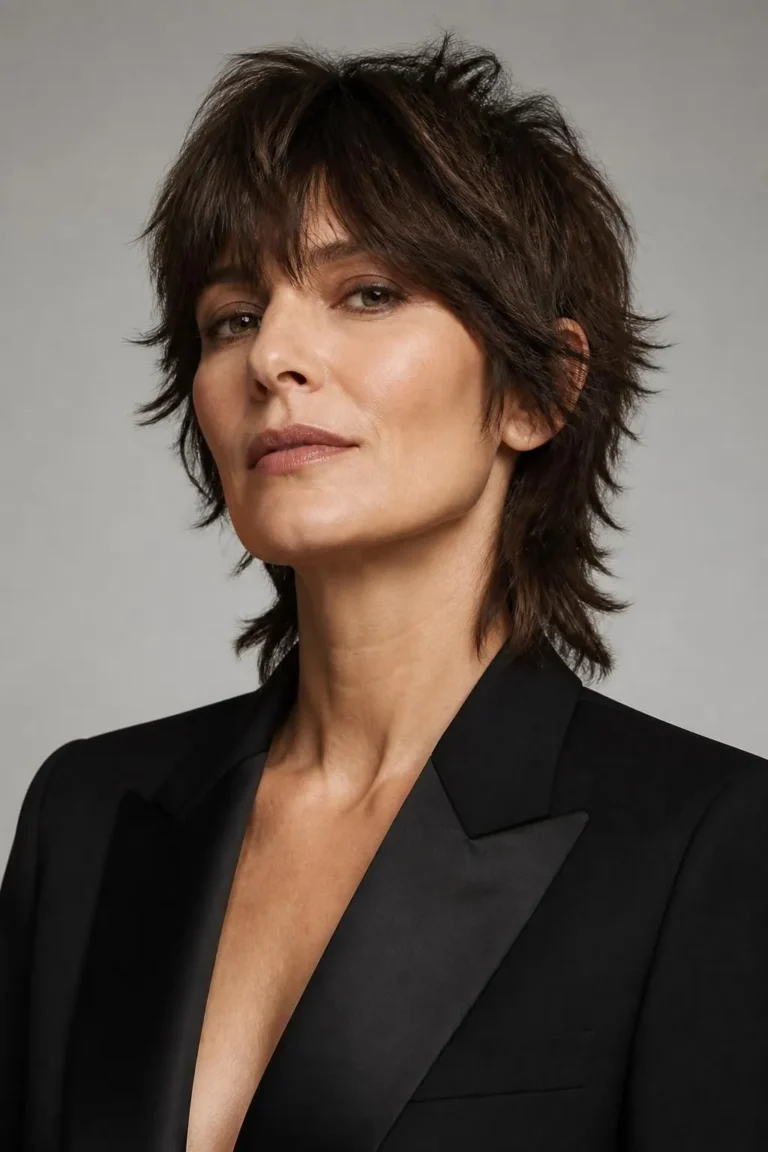
22. Modern Mullet-Inspired Shag
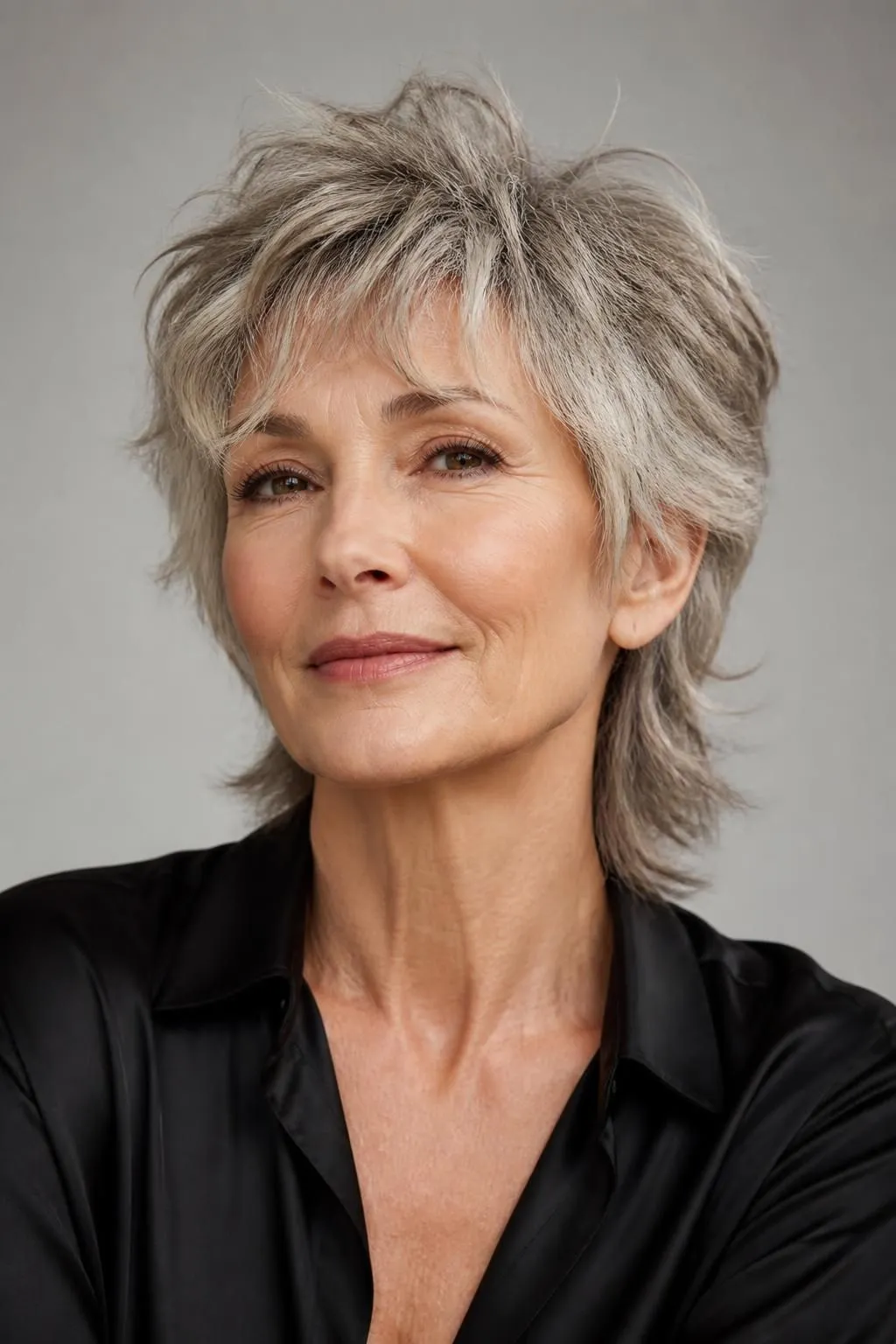
This bold take on the shag borrows subtle inspiration from the mullet, with slightly shorter layers on top and a bit more length left at the back and sides. The effect is a distinctly modern, fashion-forward silhouette that still remains wearable for everyday life.
This style tends to appeal to women who want a haircut that feels current and a little daring, without committing to an extreme or high-maintenance cut. Because the layering is still rooted in traditional shag techniques, the style retains the same easy volume and texture that makes shags so popular in the first place.
For women wanting a standout look that still functions as a practical, everyday hairstyle, this modern twist offers the best of both worlds.
Tips for Wearing a Modern Shag Confidently
Embrace texture over sleekness. This style looks its best with natural movement rather than a heavily smoothed finish. Ask your stylist for reference photos. Since this cut varies widely in interpretation, clear photos help ensure you get the exact balance of length you want.
FAQs
Is a short shag a good choice for thinning hair?
Yes, the layered structure of a shag is specifically designed to add the appearance of volume and thickness, making it one of the most recommended cuts for women noticing hair thinning with age.
How often does a short shag need to be trimmed?
Most short shags need a trim every six to eight weeks to maintain their shape, though styles with blunt ends or undercuts may need slightly more frequent visits.
Will a short shag work with curly or wavy hair?
Absolutely. Shag layers are especially popular with curly and wavy hair types, since the reduced bulk allows natural texture to show through more clearly.
What face shapes suit a short shag the best?
Short shags are known for being flattering across nearly all face shapes, thanks to the customizable bangs and layering that can be adjusted to soften or balance different features.
Is a short shag actually low maintenance?
Yes, most short shag styles dry quickly and rely on natural texture rather than intensive daily styling, making them one of the more practical options for busy schedules.
Can a short shag be styled for both casual and formal occasions?
Definitely. The layered texture works well loose for a casual day, and can also be smoothed or lightly styled for a more polished, formal appearance when needed.
How to Choose the Right Short Shag for Your Hair Type
Choosing the right short shag comes down to your hair’s natural texture and how much time you want to spend styling it daily. Fine hair benefits most from piecey, texturized cuts, while curly or wavy hair often looks best with lighter layering that lets natural movement shine. Thicker hair can handle bolder, choppier versions without losing shape. Bringing reference photos to your stylist and being clear about your maintenance preferences ensures the final cut matches both your lifestyle and your hair’s natural behavior.
Final Words
A short shag proves that youthful, effortless style doesn’t require hours in front of the mirror. With the right layers, bangs, and a touch of texture, this cut adapts to nearly any hair type, face shape, or lifestyle. Whichever of these 22 styles catches your eye, a great shag haircut is one of the easiest ways to feel refreshed, confident, and low-maintenance every single day.