Azzedine Alaïa – Bio, Net Worth, Age, Family
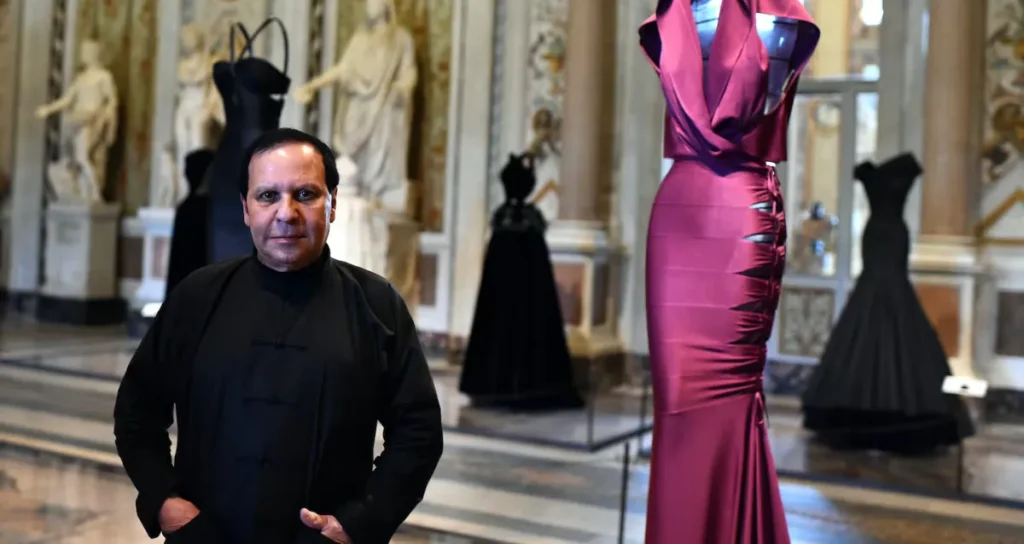
PROFILE DETAILS
NAME: Azzedine Alaïa
REAL NAME: Azzedine Alaïa
AGE: Deceased (Passed away at age 82 on November 18, 2017)
Gender: Male
weight: Information not publicly available
Height: 5′ 2″ (158 cm)
Birthdate: February 26, 1935
Birth Sign: Pisces
Birthplace: Tunis, Tunisia
NET WORTH: Estimated at $100 Million+ (at time of death/estate value)
Salary: N/A (Deceased)
MAIN INCOME SOURCE: Fashion Design and Luxury Goods
Profession: Fashion Designer, Couturier
RELIGION: Islam
FAMILY: Hafida Alaïa (Sister)
PARENTS: Wheat farmers in Tunisia
SPOUSE: None (Long-term partner: Christoph von Weyhe)
CHILDREN: None
CAREER: Founder of Maison Alaïa; former designer for Christian Dior and Guy Laroche
Nationality: Tunisian-French
SOCIAL PROFILES: @azzedinealaiaofficial (Instagram – Brand Account)
What is Azzedine Alaïa Net Worth and salary?
At the time of his passing in 2017, Azzedine Alaïa’s personal net worth was estimated to be in excess of $100 million. This valuation included his extensive archives, his historic headquarters in the Marais district of Paris, and his significant art collection. Since his death, the brand “Alaïa” has continued to operate under the Richemont Group (which acquired a majority stake in 2007). As of 2026, the brand remains a high-performing asset within the Richemont portfolio, with annual revenues estimated in the hundreds of millions. While Alaïa himself no longer draws a salary, the estate and the Fondation Azzedine Alaïa continue to benefit from the commercial success of the brand’s ready-to-wear, footwear, and accessory lines.
Early Life
Azzedine Alaïa was born in Tunis, Tunisia, to a family of wheat farmers. However, he was largely raised by his grandparents. His interest in the arts was sparked early by a family friend, Madame Pineau, who encouraged his creativity and provided him with copies of Vogue. Despite his father’s initial reservations, Alaïa enrolled at the École des Beaux-Arts in Tunis to study sculpture. This formal training in three-dimensional form would later become the hallmark of his fashion career, as he approached dressmaking as a sculptural discipline.
Before fame
Alaïa moved to Paris in 1957, during the height of the Algerian War. His first job was at Christian Dior, but he was dismissed after only five days due to the political climate regarding North Africans at the time. Undeterred, he moved to Guy Laroche for two seasons and then to Thierry Mugler. During this period, he began building a private clientele, working out of a small apartment. He gained a reputation among the Parisian elite by dressing figures such as the Comtesse de Blegiers and Louise de Vilmorin, who helped integrate him into the high-society circles of France.
Awards
- Best Designer of the Year: French Ministry of Culture (1984)
- Best Collection of the Year: French Ministry of Culture (1984)
- Chevalier de la Légion d’honneur: Government of France (2008)
- Special Recognition: For his contribution to the arts and fashion by the City of Paris.
Personal Life and Relationships
Azzedine Alaïa was known for his intense privacy and his rejection of the traditional “celebrity designer” lifestyle. His most significant relationship was with the German painter Christoph von Weyhe, who was his life partner for over 50 years. The two shared a home and studio in Paris, creating a sanctuary for artists and intellectuals. Alaïa was also famous for his “kitchen dinners,” where he would cook for a diverse group of guests, ranging from seamstresses to supermodels and world leaders.
Family life
Alaïa remained close to his sister, Hafida, who was a significant influence on his early interest in fashion. He never had biological children but was a father figure to many in the industry. Most notably, he “adopted” Naomi Campbell when she was 16 years old; she lived with him in Paris and referred to him as “Papa” until his death. His “family” was largely composed of his studio staff and the models he mentored.
Associated with
- Naomi Campbell: His most famous muse and “surrogate daughter.”
- Grace Jones: For whom he designed the iconic costumes in the film A View to a Kill.
- Michelle Obama: Who famously wore his designs during her time as First Lady.
- Pieter Mulier: The current Creative Director of Maison Alaïa (as of 2026), who has successfully revitalized the brand’s aesthetic.
- Carla Sozzani: Close friend and President of the Fondation Azzedine Alaïa.
Real Estate
The crown jewel of Alaïa’s real estate holdings was his headquarters at 18 Rue de la Verrerie in the Marais, Paris. This massive complex served as his home, atelier, showroom, and a boutique. It also featured a small hotel with only three rooms. Following his death, this location became the seat of the Fondation Azzedine Alaïa, housing his vast archives of over 15,000 garments, including his own designs and his collection of historical pieces by masters like Charles James and Cristóbal Balenciaga.
Net Worth History
- 1980s: Rapid growth following the launch of his first ready-to-wear line; became a multi-millionaire through global boutique sales.
- 2000: Partnership with Prada Group (later bought back his brand).
- 2007: Majority stake sold to Richemont, securing his financial legacy and the brand’s global expansion.
- 2017-2026: Posthumous growth; the brand’s value has increased significantly under the creative direction of Pieter Mulier, with the estate’s value maintained by the Foundation.
Trivia
- He was known as the “King of Cling” for his ability to use knitwear to perfectly contour the female body.
- Alaïa famously refused to participate in the official Fashion Week calendar, showing his collections only when he felt they were “ready.”
- He almost exclusively wore a black Chinese cotton tunic and trousers.
- He was a prolific collector of fashion history, owning one of the world’s largest private collections of haute couture from other designers.
BIOGRAPHY
Executive Summary
Azzedine Alaïa (1935–2017) was a titan of the fashion world, revered as one of the last true couturiers who could draft, cut, and sew his own garments. Born in Tunisia, he moved to Paris in the late 1950s and transformed the landscape of contemporary fashion by treating the female form as a canvas for sculpture. Unlike his contemporaries, Alaïa operated outside the traditional fashion system, ignoring seasonal deadlines and marketing trends in favor of technical perfection and timelessness.
His rise to global prominence in the 1980s was fueled by his mastery of stretch fabrics and leather, earning him the moniker “The King of Cling.” His designs were celebrated for their ability to empower women, providing a “second skin” that enhanced the natural silhouette. Throughout his career, he maintained an fiercely independent spirit, famously turning down the Légion d’honneur in 2008 (though he later accepted it) and criticizing the commercialization of the industry.
Beyond his technical prowess, Alaïa was a cultural connector. His home in the Marais was a legendary hub where fashion, art, and politics converged over communal meals. He mentored a generation of supermodels, most notably Naomi Campbell, and dressed icons ranging from Greta Garbo to Rihanna.
As of 2026, the legacy of Azzedine Alaïa is more vibrant than ever. Under the stewardship of the Richemont Group and the creative vision of Pieter Mulier, Maison Alaïa has seen a massive resurgence, blending the founder’s archival codes with modern sensibilities. The Fondation Azzedine Alaïa continues to preserve his work and his massive collection of fashion history, ensuring that his philosophy of “garments that last” remains a cornerstone of the luxury industry. His life remains a testament to the power of craftsmanship over commerce and the enduring nature of true artistic genius.