Thai Green Curry Recipe
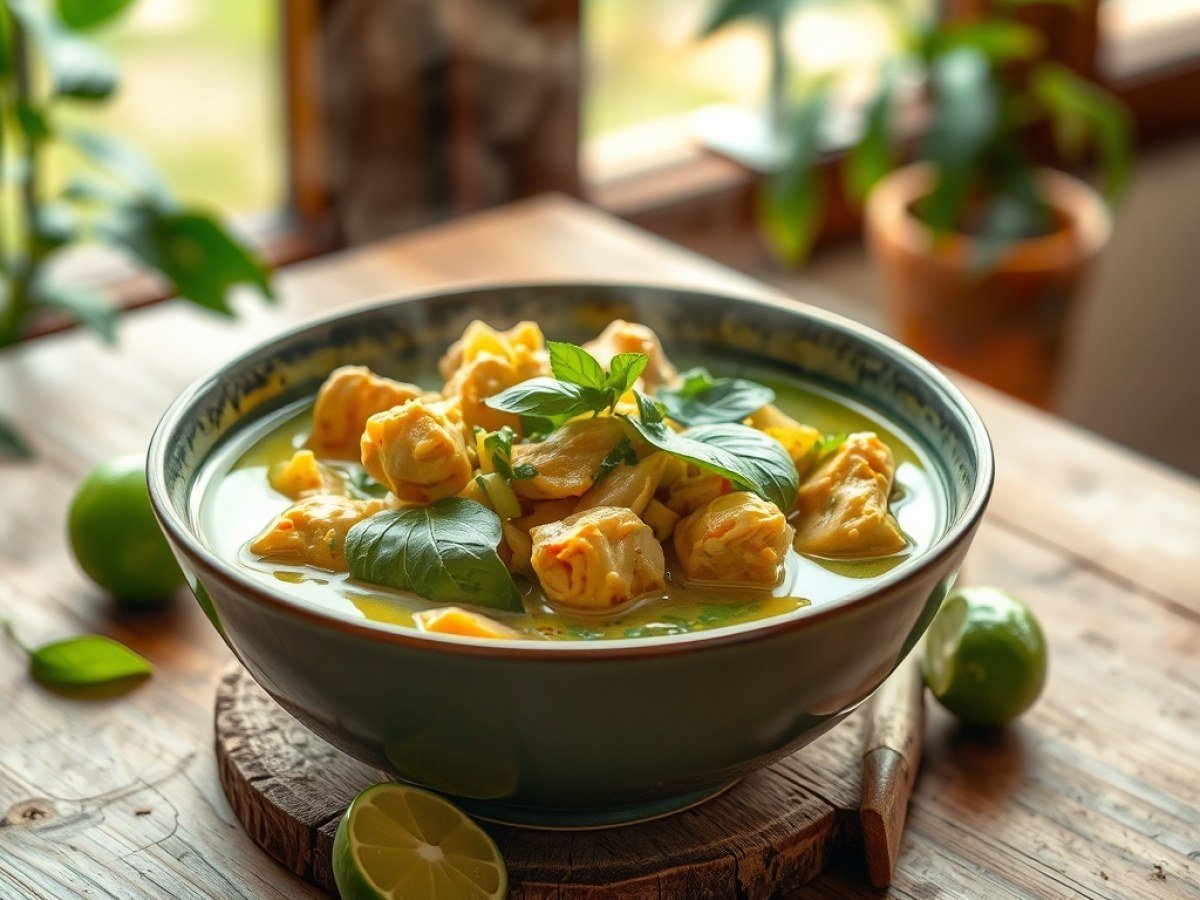
Skip the takeout menu—this Thai green curry is ready in 30 minutes and delivers the same aromatic, creamy, spicy-sweet punch you crave, with tender chicken and crisp vegetables in a fragrant coconut sauce. If you’ve ever ordered green curry at a restaurant and wondered why yours at home tastes thin or flat, the answer almost always comes down to two things: how you treat your coconut milk and how you balance the sauce at the end. Get those right, and you’ll be ladling out bowls that rival your favorite Thai spot—on a weeknight, with one pan and a pot of jasmine rice.
Why This Recipe Works
Using full-fat coconut milk and blooming the curry paste in coconut cream creates a rich, restaurant-style sauce that won’t separate. A balance of fish sauce, palm sugar, and lime hits all the Thai flavor notes—salty, sweet, sour—without overpowering the green curry’s herbal heat. Slicing chicken thinly and stir-frying it briefly keeps it tender, while adding vegetables in stages preserves their crunch. And Thai basil plus makrut lime leaves (if you have them) add an authentic fragrance that dried herbs simply can’t match.
Ingredients
Servings: 4 | Prep time: 10 minutes | Cook time: 20 minutes | Total time: 30 minutes
- 1 lb (450 g) boneless, skinless chicken thighs, thinly sliced
- 2 tbsp coconut oil or vegetable oil
- 3 tbsp Thai green curry paste (adjust to taste; Mae Ploy or Maesri recommended)
- 1 can (13.5 oz / 400 ml) full-fat coconut milk, chilled (do not shake)
- 1 cup chicken broth or water
- 1 tbsp fish sauce, plus more to taste
- 1 tbsp palm sugar or light brown sugar
- 1 cup bamboo shoots, drained and sliced (optional)
- 1 cup Thai eggplant or small Japanese eggplant, cut into bite-size pieces
- 1 red bell pepper, sliced
- 1 cup Thai basil leaves, plus more for garnish
- 4 makrut lime leaves, torn (optional)
- 1–2 Thai bird’s eye chilies, sliced (optional, for extra heat)
- 1 tbsp fresh lime juice, plus wedges for serving
- Cooked jasmine rice, for serving
Instructions
- Prep the ingredients: Thinly slice the chicken against the grain. Cut vegetables into bite-size pieces. Chilling the coconut milk helps separate the cream for step 2. Have everything ready—this curry cooks fast.
- Bloom the curry paste: Scoop the thick coconut cream from the top of the chilled can into a large skillet or wok over medium heat. Add the curry paste and cook, stirring constantly, for 1–2 minutes until fragrant and the oil starts to separate—this is key to developing flavor.
- Sear the chicken: Add the chicken to the pan and stir-fry for 2–3 minutes until mostly opaque. It will finish cooking in the sauce. Remove chicken and set aside if you prefer to keep it tender, or leave it in for a one-pan meal.
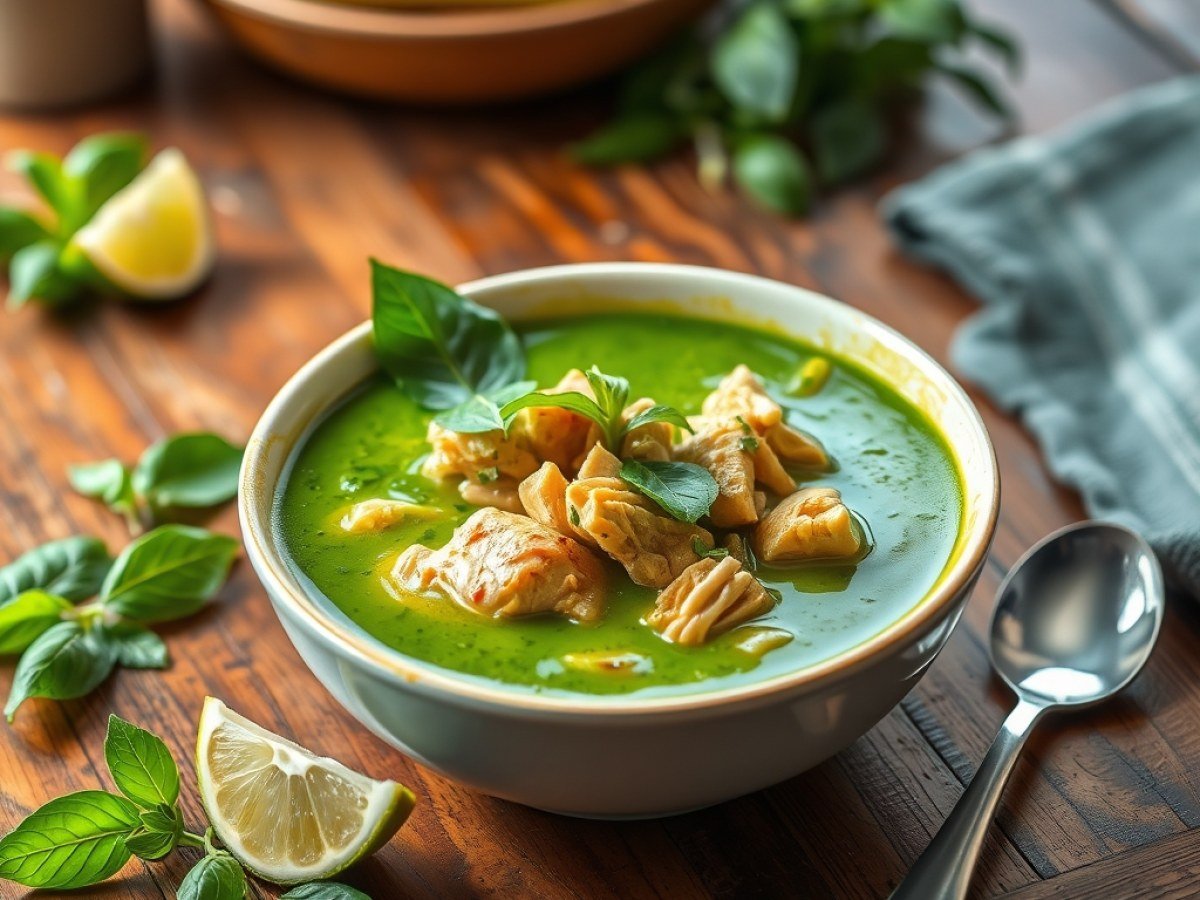
- Build the sauce: Pour in the remaining coconut milk, chicken broth, fish sauce, and palm sugar. Stir to combine, scraping up any browned bits. Bring to a gentle simmer.
- Add the vegetables: Add bamboo shoots, eggplant, and bell pepper. Simmer for 5–7 minutes until the eggplant is tender but still holds its shape. If using Thai eggplant, it will soften faster, so check at 4 minutes.
- Finish with aromatics: Return the chicken (if removed) to the pan. Add Thai basil, makrut lime leaves, and chilies (if using). Simmer for 1 minute until the basil wilts. Turn off the heat.
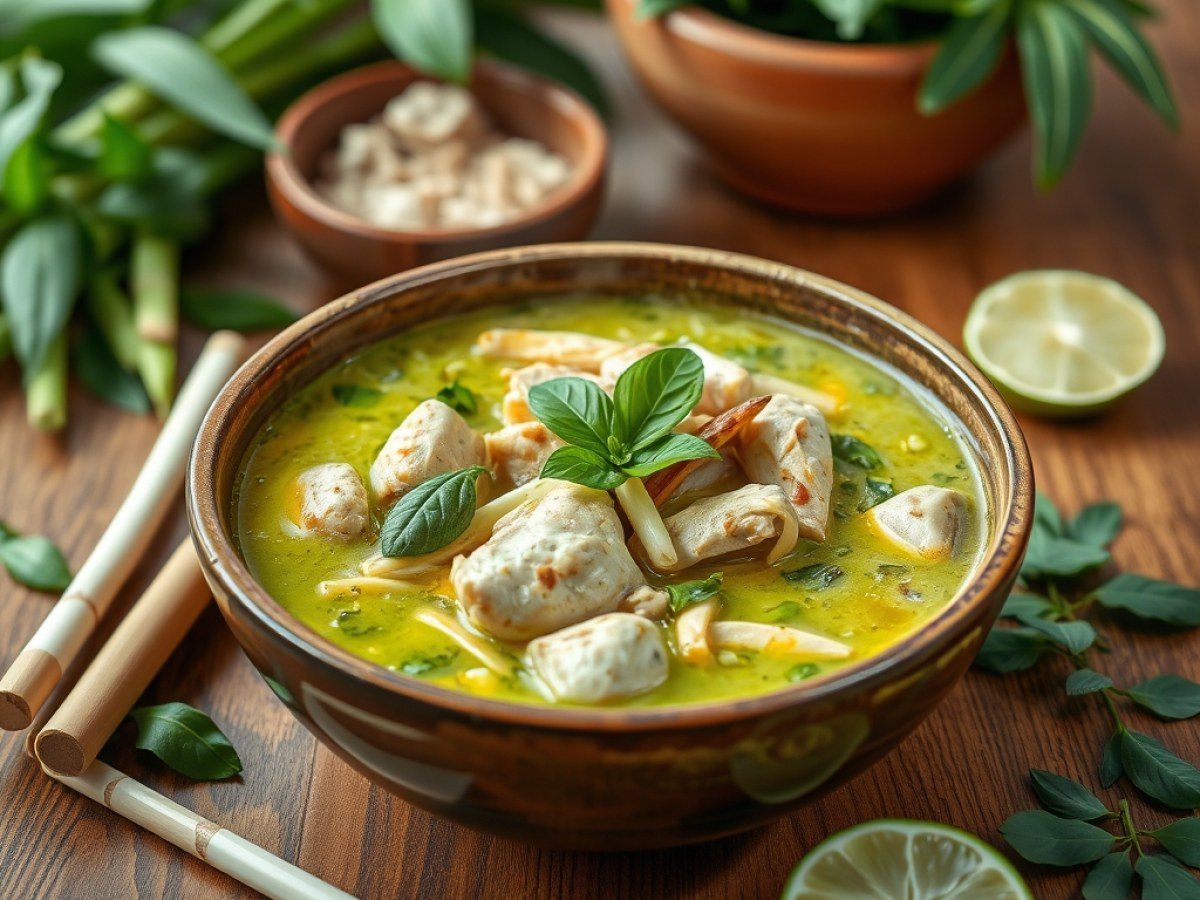
- Balance the flavors: Stir in fresh lime juice. Taste and adjust: more fish sauce for salt, a pinch of sugar for sweet, a squeeze of lime for sour. The curry should taste vibrant, creamy, and slightly spicy.
- Serve: Ladle over jasmine rice and garnish with extra Thai basil and lime wedges. Serve immediately.
Tips & Variations
- Curry paste varies in heat—start with 3 tbsp and add more after tasting. For a milder curry, use 2 tbsp.
- For a vegetarian version, swap chicken for firm tofu or extra vegetables like mushrooms and green beans, and use soy sauce instead of fish sauce.
- Don’t shake the coconut milk can before opening—you want the thick cream separated to bloom the paste.
- If you can’t find Thai basil, regular basil works, but add it at the very end to preserve its flavor.
- Make it creamier by adding 2 tbsp coconut cream at the end, or thinner with a splash of broth.
- For extra protein, add shrimp in the last 2 minutes of cooking.
- Palm sugar gives a rounder sweetness; brown sugar is a fine substitute.
- Avoid boiling the curry after adding the lime juice—high heat makes it taste bitter.
Storage & Make-Ahead
Store leftovers in an airtight container in the fridge for up to 3 days. Reheat gently on the stovetop or microwave, adding a splash of water or coconut milk if the sauce has thickened. Freeze for up to 2 months; thaw overnight in the fridge. Fresh basil is best added after reheating.
Nutrition Information
- Calories: 420
- Carbohydrates: 15 g
- Protein: 28 g
- Fat: 28 g
- Saturated Fat: 18 g
- Fiber: 4 g
- Sugar: 8 g
- Sodium: 980 mg
Nutrition values are an estimate and will vary based on exact ingredients and portion sizes.
FAQs
Can I use curry powder instead of green curry paste?
No, they are not interchangeable. Green curry paste is a blend of fresh herbs, chilies, and aromatics that gives the dish its distinct flavor. Curry powder is a different spice blend and won’t taste the same.
How do I make it less spicy?
Use less curry paste—start with 1–2 tablespoons. You can also add more coconut milk or a dollop of coconut cream to mellow the heat. Removing the seeds from the chilies before adding them helps too.
What can I use instead of fish sauce?
For a vegetarian or vegan version, substitute soy sauce or tamari. Coconut aminos also work for a soy-free option. Adjust the amount to taste, as they are less salty than fish sauce.
Can I make this in a slow cooker?
Yes. Brown the chicken and bloom the curry paste in a skillet first, then transfer everything except the basil, lime juice, and chilies to a slow cooker. Cook on low for 4–5 hours, then stir in the finishing ingredients before serving.
What is the best brand of green curry paste?
Mae Ploy and Maesri are widely available and have a good balance of heat and flavor. Avoid pastes with added preservatives or artificial colors. For a homemade version, blend fresh green chilies, lemongrass, galangal, garlic, shallots, and shrimp paste.