6 hairstyles for woman over 70 fine hair
1. Textured Collarbone Lob
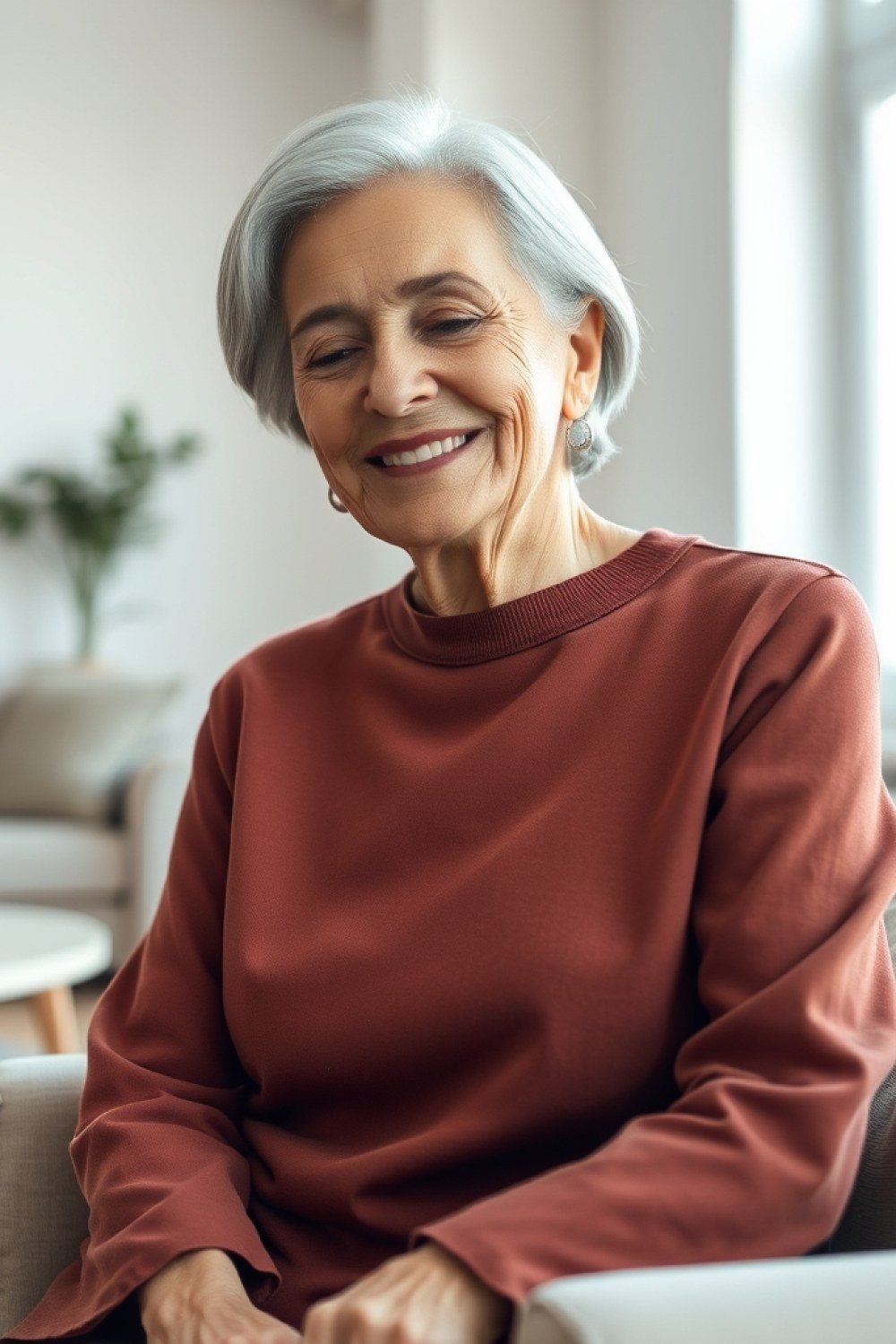
A collarbone-length lob is the sweet spot for fine hair after 70—long enough to feel feminine and familiar, short enough that it doesn’t drag you down. Invisible layers remove the weight that flattens fine strands, while the blunt perimeter keeps the ends looking dense and full. Ask your stylist for a blunt perimeter with soft, point-cut layers starting at the chin so the thickness stays at the bottom and movement lives near the top.
Style it by wrapping 1-inch sections around a 1-inch curling iron, always twisting away from your face, then spritz volumizing spray at the roots and finish with a light-hold hairspray—skip heavy serums that pull fine hair flat within an hour.
2. Root-Lifted Pixie with Side Swept Bangs
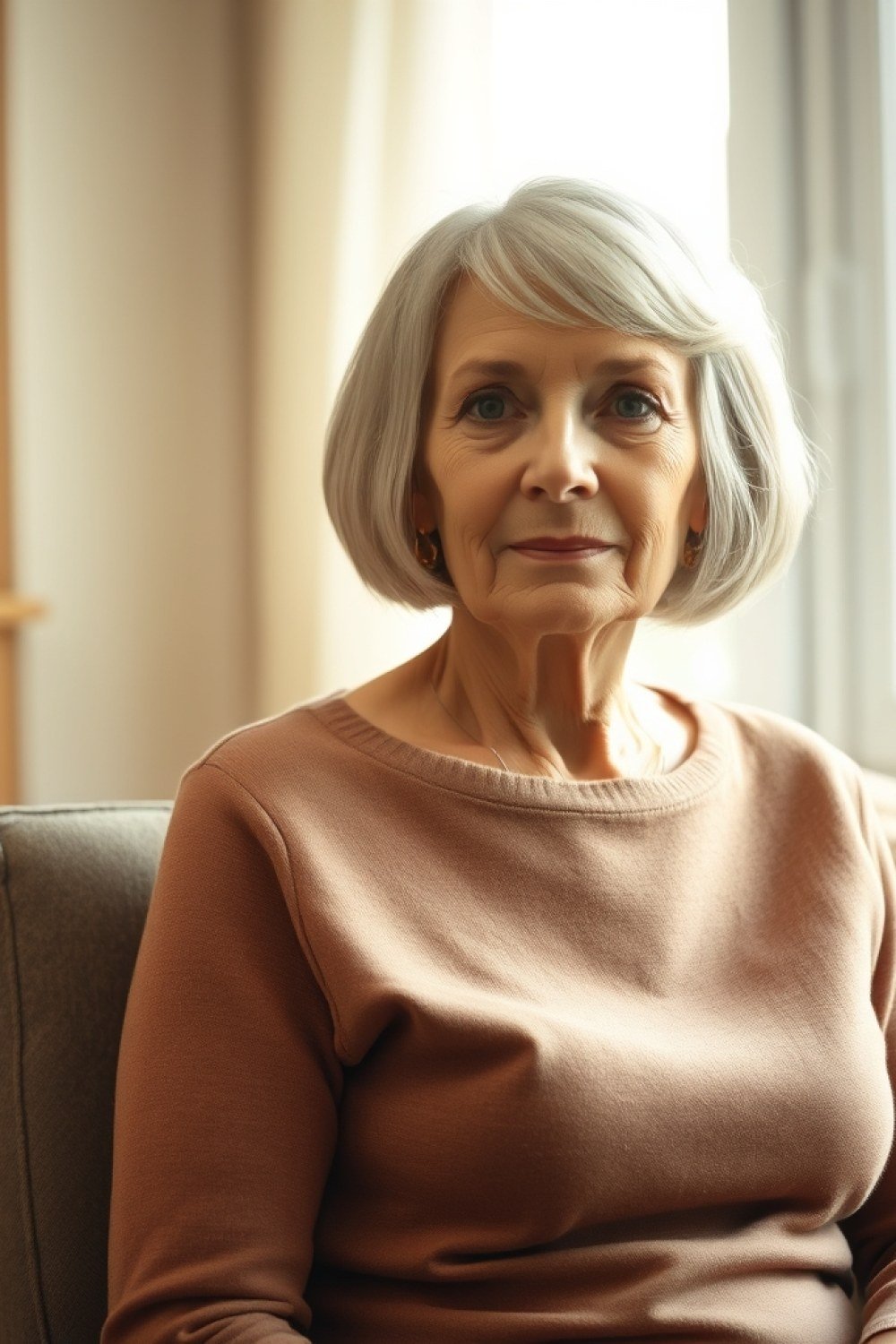
Nothing lifts a face like a pixie that exposes the neck and builds height at the crown, and side-swept bangs add softness while discreetly covering a thinning hairline. Request a tapered back with longer, textured pieces on top so you get that instant lift without a severe, helmet-like shape. The shorter sides also mean less daily styling time, which matters when fragile strands tire easily.
Blow-dry with a small round brush, lifting the roots upward as you go, then press a little root-lifting powder or dry shampoo into the crown—and book a trim every 4–5 weeks so the silhouette never loses its shape.
3. Soft Curls with a 1-Inch Wand
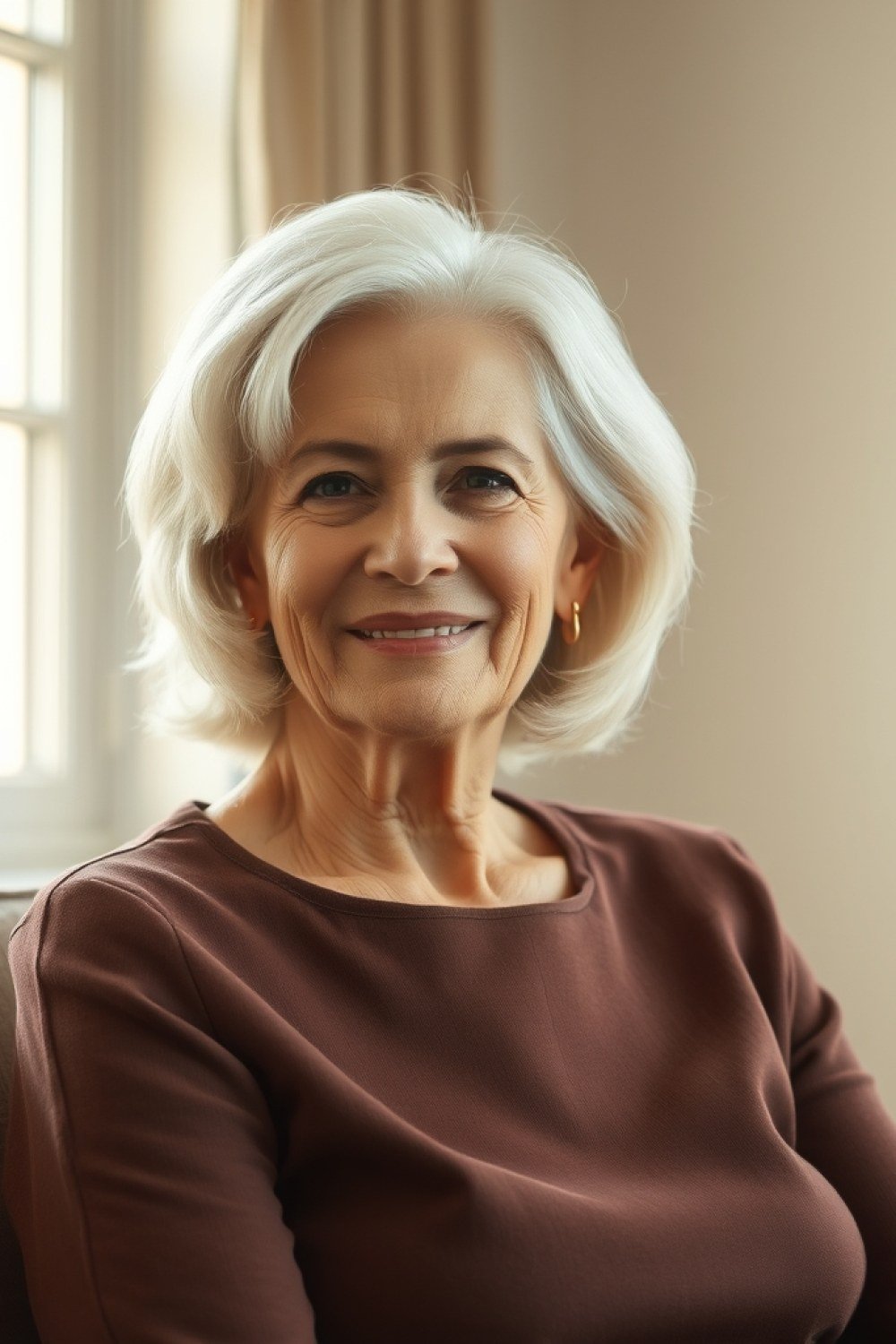
Loose, brushed-out curls are the quiet secret to making fine hair look twice as full. Wrapping 1-inch sections around a 1-inch barrel and alternating the direction of each curl creates a natural, romantic finish instead of a stiff, uniform set. Once the curls cool completely, a gentle pass with a paddle brush turns them into soft waves that read elegant rather than “done.”
Start on completely dry hair, finish with a flexible-hold hairspray, and skip heavy gels or mousses that leave fine hair crunchy and impossible to brush through.
4. Half-Up Twist with Volume at the Crown
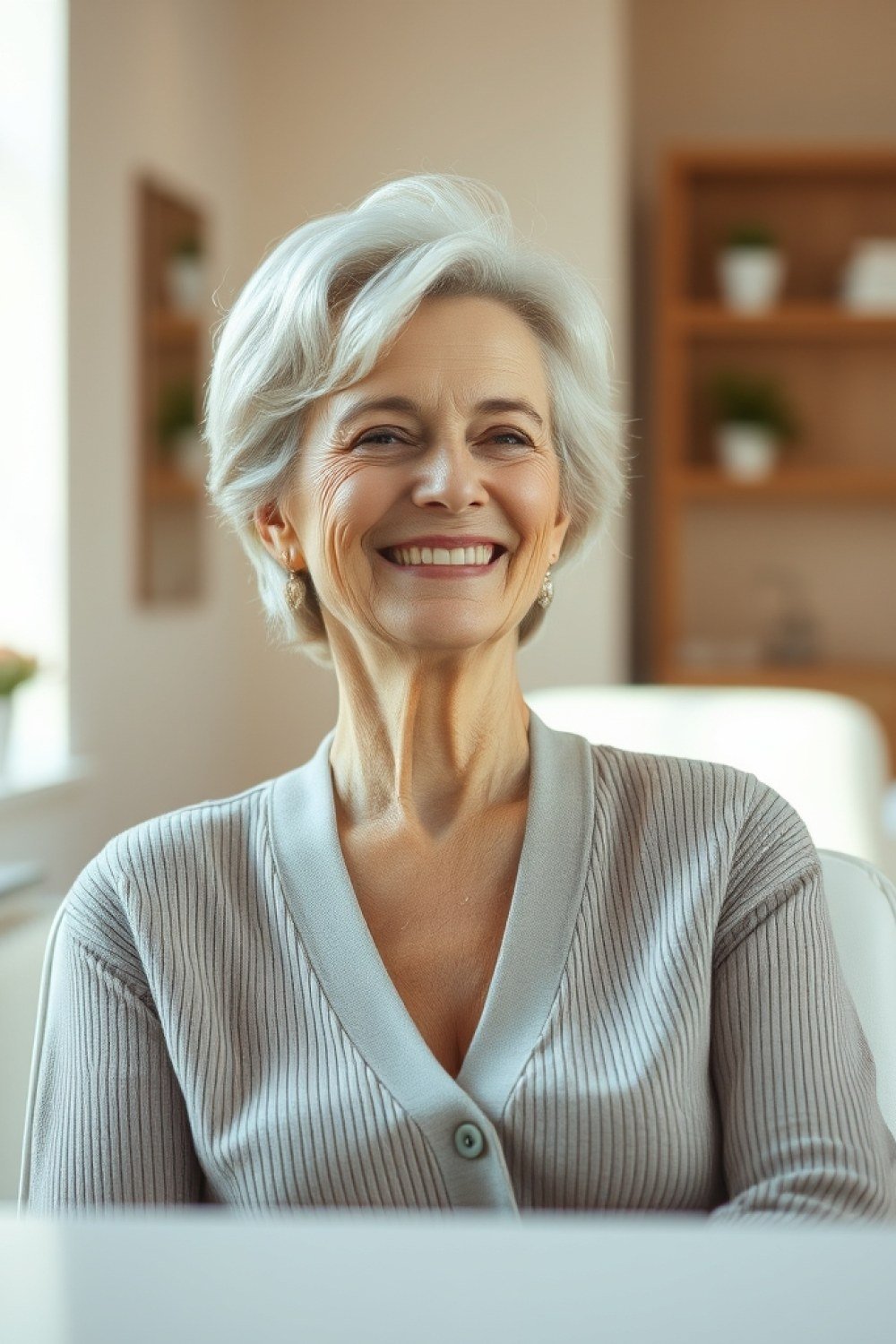
This style pulls hair off the face while keeping your length, so it flatters without committing to a full updo. The real magic is at the crown: a light tease with a fine-tooth comb builds height that makes the whole head of hair appear thicker. Gathering the top section and twisting it inward, then pinning with two bobby pins, takes about three minutes once you’ve practiced it.
Use a texturizing spray on the twisted section for grip, then pull out a few face-framing tendrils—this works best on shoulder-length hair or longer.
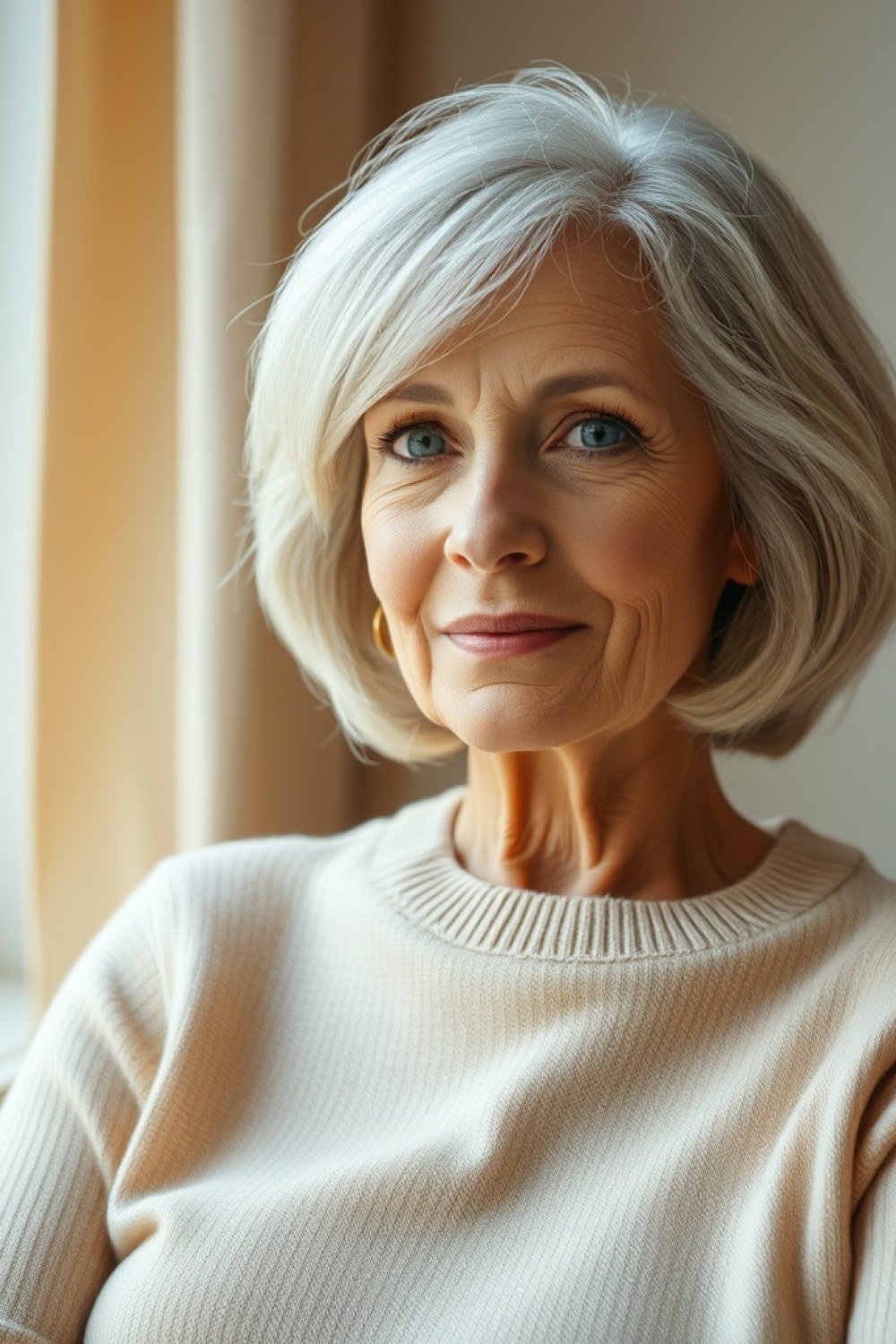
5. Blunt Bob with a Deep Side Part
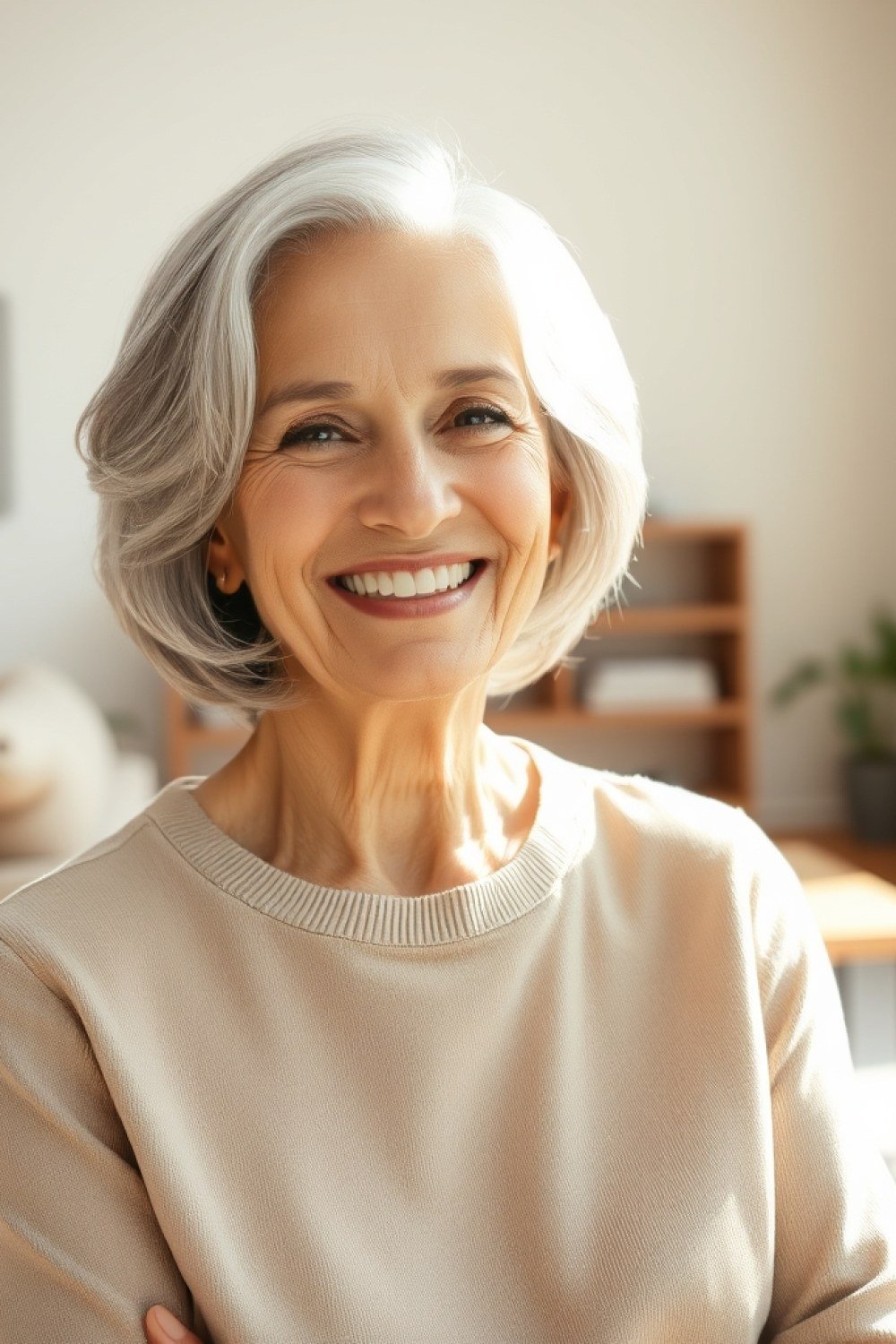
A chin- or jaw-length blunt bob creates one strong, clean line, and strong lines make fine hair read as denser than it is. The deep side part is doing double duty: it adds asymmetric volume up top and draws the eye upward, away from any thin spots. Ask for a slight undercut at the nape so the back doesn’t balloon into bulk you didn’t want.
Blow-dry with a round brush, directing hair away from the part, apply a lightweight volumizing mousse to the roots only, and keep it sharp with trims every 6 weeks.
6. Loose French Braid with Hidden Volume
A soft French braid is the most forgiving style on this list—it disguises thinning areas, keeps hair secure, and never pulls at fragile roots the way a tight ponytail can. The trick is pancaking: after braiding loosely, gently pull the edges of each section outward to create width and the illusion of thickness. Tucking the tail under and pinning it hides the thin ends entirely.
Start with day-old hair for better grip, dust a little dry shampoo on the roots beforehand, and keep your tension loose—tight braiding causes breakage exactly where you can least afford it.
FAQs
How do I add volume to fine hair without making it look frizzy?
Apply a root-lifting spray or mousse to damp roots, then blow-dry upside down or with a round brush lifting hair away from the scalp. Once dry, smooth a tiny amount of lightweight serum through the ends only, and avoid over-brushing—a little dry shampoo at the roots on non-wash days adds lift without frizz.
What haircut is best for thinning hair on the crown?
Layers that begin around the chin or collarbone mask crown thinning beautifully, and a side part with textured bangs adds coverage. A pixie or short bob with volumizing layers also works well—just ask your stylist to avoid heavy blunt layers on top, which flatten the crown instead of lifting it.
Should I use hot rollers or a curling iron on fine hair?
Hot rollers are the gentler choice and hold volume longer because they lift at the root. Use them on dry hair with a heat protectant and let them cool fully before removing. A curling iron is fine too, but keep it below 300°F and limit heated styling to about once a week.
How often should I wash fine hair to keep it looking full?
Every other day or every third day is ideal—daily washing strips the natural oils that give fine hair body. On off days, dry shampoo at the roots absorbs oil and adds texture. If you’ve been sweating, a conditioner-only rinse refreshes without over-cleansing; fine hair often looks its thickest on day two.
What products should I avoid with fine hair?
Skip heavy pomades, waxes, and thick creams that weigh strands down and turn greasy by noon, along with alcohol-heavy hairsprays that dry hair out. Stick to lightweight mousses, volumizing sprays, and dry shampoos, and use silicone serums sparingly on the ends only.
Wrap Up
Fine hair after 70 can be soft, stylish, and full of life with the right cut and a few gentle styling habits. These six hairstyles prove you don’t need thick hair to have a beautiful, modern look—just smart layers, the right products, and a light hand with heat.
Try one this week—your mirror will thank you.