
Greg Hayes and Jim Taiclet: The Duopoly Shaping Modern Aerospace and Defense
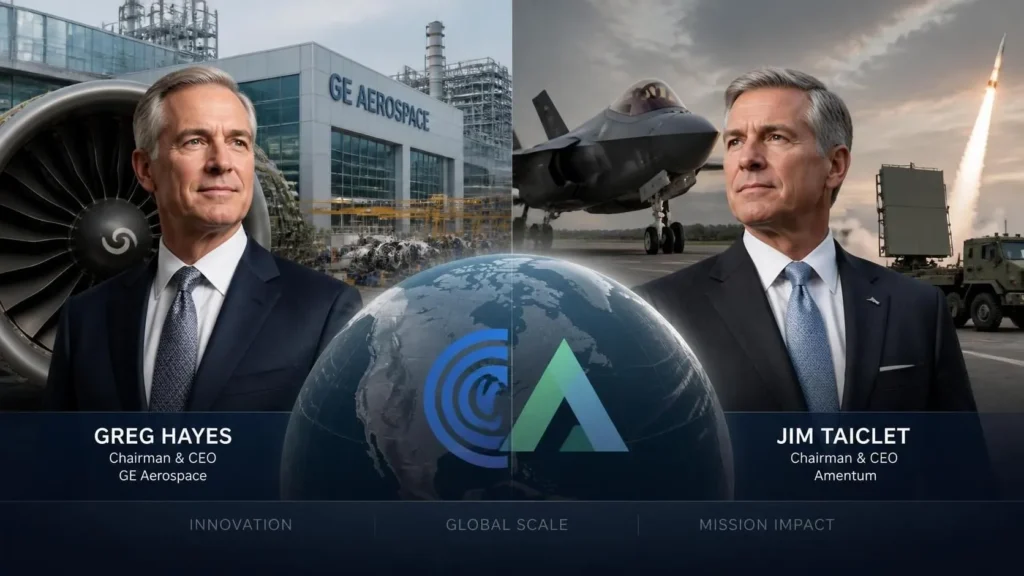
When analyzing the modern landscape of global security, commercial aviation, and defense technology, the collaborative and competitive dynamics between Greg Hayes and Jim Taiclet stand as the ultimate blueprint for industrial leadership. As the visionary executives who steered Raytheon Technologies (now RTX) and Lockheed Martin through unprecedented geopolitical shifts, Greg Hayes and Jim Taiclet redefined how defense contractors operate in an era of rapid algorithmic warfare and commercial aerospace recovery. Understanding the decisions made by Greg Hayes and Jim Taiclet provides critical insight into the supply chain strategies, military modernization frameworks, and corporate mergers that dictate global security today. This comprehensive analysis evaluates the leadership philosophies of Greg Hayes and Jim Taiclet, examining how their contrasting backgrounds and shared strategic objectives resolved critical aerospace supply bottlenecks, advanced next-generation defense systems, and shaped the defense industrial base for the next decade.
The Architectural Blueprint of Modern Defense Leadership
To understand the current state of national security infrastructure, one must examine the foundational corporate maneuvers executed by these two corporate titans. The alignment of their tenures created a unique era where cooperation on joint defense programs coexisted with fierce competition for multi-billion-dollar government contracts.
Greg Hayes and the Formation of RTX
Greg Hayes carved his legacy by executing one of the largest corporate mergers in aerospace history: the combination of United Technologies Corporation (UTC) with Raytheon Company in 2020. This massive consolidation brought commercial aviation powerhouses like Pratt & Whitney and Collins Aerospace under the same umbrella as advanced defense electronics and missile defense systems. Hayes’s strategy was clear: build a balanced, diversified powerhouse capable of weathering cyclical downturns in either the commercial or military sectors.
Jim Taiclet and the Digital Transformation of Lockheed Martin
Jim Taiclet took the helm of Lockheed Martin in 2020, bringing a distinct perspective forged not just in defense, but in telecommunications as the former CEO of American Tower Corporation. A former U.S. Air Force pilot, Taiclet recognized that the future of warfare lay in connectivity, data processing, and digital network architecture. His signature strategy, 21st Century Security, focused on integrating advanced digital technologies like 5G, artificial intelligence, and edge computing into legacy military hardware like the F-35 Lightning II.
Comparative Leadership Framework: Hayes vs. Taiclet
While both executives shared the ultimate goal of supporting allied national security, their operational methodologies, corporate backgrounds, and strategic focuses differed significantly.
| Feature / Executive | Greg Hayes (RTX) | Jim Taiclet (Lockheed Martin) |
| Primary Strategic Focus | Portfolio diversification, cost synergy, commercial-defense balance | Digital network integration, 21st Century Security, AI implementation |
| Signature Corporate Move | Mega-merger of United Technologies and Raytheon | Deep tech partnerships with Silicon Valley (e.g., Intel, Microsoft) |
| Core Product Strengths | Pratt & Whitney engines, Collins avionics, Patriot missile systems | F-35 fighter jets, Javelin missiles, Aegis Combat System |
| Background Paradigm | Corporate finance, aggressive M&A, industrial operations | Military aviation, telecommunications infrastructure, digital networks |
Financial Engineering vs. Network Engineering
Greg Hayes approached corporate growth through the lens of strict financial discipline, integration synergies, and shareholder returns. His mastery of portfolio optimization allowed RTX to remain highly resilient even during the commercial aviation collapse of the early 2020s. Conversely, Jim Taiclet approached defense as a network engineering challenge. He viewed modern military assets not as isolated platforms, but as nodes within a massive, interconnected digital ecosystem.
Joint Venturing and the Co-opetition Model
Despite competing fiercely for prime contractor status on major Pentagon initiatives, the organizations led by these two men are deeply interdependent. The relationship between their companies highlights a complex ecosystem of “co-opetition,” where rival firms must collaborate to deliver critical national defense capabilities.
The Javelin Missile Success Story
The clearest manifestation of this collaborative rivalry is the Javelin Joint Venture. Produced jointly by Lockheed Martin and RTX, the Javelin anti-tank missile became an international symbol of modern tactical defense. Lockheed Martin handles the missile engineering and final assembly, while RTX produces the command launch unit (CLU) and missile guidance systems. The seamless execution of this program required absolute alignment between the supply chains and engineering protocols championed by both CEOs.
Integrating RTX Systems into Lockheed Platforms
Another critical point of intersection is the F-35 Lightning II program, the crown jewel of Lockheed Martin’s defense portfolio. While Lockheed Martin acts as the primary airframe manufacturer and integrator, the aircraft is powered exclusively by Pratt & Whitney engines—a core subsidiary of RTX. Additionally, RTX provides the advanced electro-optical targeting systems and avionics that make the F-35 an effective fifth-generation platform. This means the success of Taiclet’s premier defense program depends directly on the production efficiency and technological precision of the manufacturing plants managed by Hayes.
Overcoming Global Supply Chain and Macroeconomic Bottlenecks
The simultaneous leadership of these executives occurred during one of the most volatile macroeconomic environments in recent history. Both leaders had to navigate severe structural challenges that threatened production timelines for essential defense equipment.
Addressing Post-Pandemic Labor and Material Shortages
Following global disruptions, both corporate operations faced severe shortages of specialized components, castings, microchips, and skilled labor. Hayes frequently addressed the challenges of sourcing aerospace-grade titanium and structural castings required for aircraft engines. Taiclet simultaneously confronted microchip bottlenecks that threatened the production scaling of advanced missile systems and electronic warfare suites.
Subtier Supplier Stabilization Efforts
To mitigate these risks, both executives shifted away from just-in-time inventory models toward proactive supply chain management. They invested capital directly into lower-tier suppliers, sent corporate engineering teams to assist struggling vendors, and signed long-term agreements for raw materials to guarantee industrial stability for the Department of Defense.
The Transition to Digital Warfare and Next-Generation Tech
As warfare shifted toward distributed operations and autonomous systems, both leaders pivoted their R&D spending toward software-defined defense capabilities, high-speed propulsion, and advanced computing.
Hypersonic Technology and Counter-Hypersonics
The race for hypersonic flight capability became a primary focus for both corporations. Lockheed Martin focused on offensive hypersonic strike platforms, developing air-launched and surface-launched systems. RTX specialized in counter-hypersonic defense, building advanced radar arrays and interceptors capable of tracking and neutralizing highly maneuverable targets traveling above Mach 5.
JADC2 and the Connected Battlespace
The Pentagon’s Joint All-Domain Command and Control (JADC2) initiative served as a major strategic catalyst for both corporate leaders. Taiclet positioned Lockheed Martin as the premier architect of the connected battlespace, forging alliances with major technology companies to bring commercial cloud computing to the tactical edge. Hayes counterbalanced this by optimizing RTX’s communications and intelligence divisions to ensure that every sensor and effector could transmit secure data across domains instantly.
The Long-Term Impact on the Defense Industrial Base
The structural changes implemented during the eras of these two executives will influence corporate strategies, military readiness, and geopolitical deterrence paradigms for decades to come.
Consolidating Power and Influence
The scale of the corporations led by these executives created a formidable duopoly within the defense sector. This immense scale allowed them to absorb massive R&D costs and manage long-term development programs that smaller defense firms could not sustain, establishing their companies as indispensable pillars of Western defense architecture.
Setting the Standard for Successor Leadership
As leadership transitions occur—such as Christopher Calio succeeding Greg Hayes as CEO of RTX—the operational blueprints established by these pioneers remain the standard. The integration of commercial tech pipelines, proactive supply chain defense, and digital platform connectivity are now permanent fixtures of defense aerospace management.
Frequently Asked Questions
What major defense programs did Greg Hayes and Jim Taiclet collaborate on?
The most notable collaboration between their companies is the Javelin Joint Venture, where Lockheed Martin and RTX jointly manufacture the anti-tank weapon system. Additionally, RTX supplies the Pratt & Whitney F135 engines and advanced avionics for Lockheed Martin’s F-35 Lightning II fighter jet.
How did Greg Hayes transform the structure of RTX?
Greg Hayes engineered the historic 2020 merger between United Technologies Corporation (UTC) and Raytheon Company, creating Raytheon Technologies (now RTX). This strategic move balanced the company’s portfolio by combining commercial aerospace manufacturing with advanced military electronics and defense systems.
What is Jim Taiclet’s 21st Century Security strategy?
Jim Taiclet’s 21st Century Security initiative focuses on integrating advanced commercial digital technologies, such as artificial intelligence, 5G networks, edge computing, and cloud infrastructure, into legacy military hardware to create a fully connected and resilient defense network.
How did these leaders handle supply chain challenges during their tenures?
Both executives shifted their corporate strategies from just-in-time inventory models to proactive vendor support. They invested capital directly into subtier suppliers, built up strategic reserves of raw materials like titanium, and worked closely with government agencies to stabilize the industrial base.
What roles did their companies play in the JADC2 initiative?
Lockheed Martin focused on building the overarching software and network infrastructure to connect multi-domain military assets. RTX focused on developing the highly advanced sensors, secure communications links, and intelligent interceptors that feed data into and execute commands from that network.